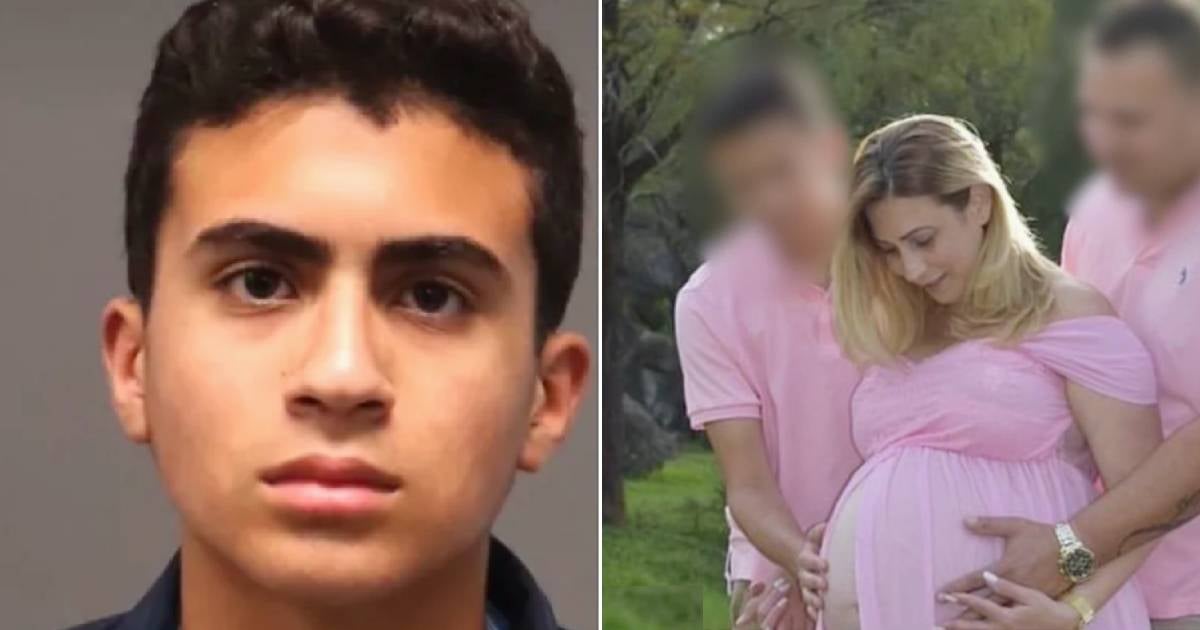
New insights have emerged this week regarding Derek Rosa, a young Cuban from Hialeah accused of fatally stabbing his mother in 2023.
According to El Nuevo Herald, prosecutors and defense attorneys clashed over the admissibility of "controversial" evidence after the prosecution suggested a chilling motive for the murder: the teen allegedly killed Irina García to share grisly photos with friends.
Prosecutors characterized this behavior as an obsession with blood and violence.
Authorities reported that on October 12, 2023, Rosa—then 13 years old—stabbed his mother 46 times with a kitchen knife while she slept, with a two-week-old infant in a nearby crib.
While the teenager confessed, the case has drawn national attention due to supporters claiming his innocence.
Fascination with Violence and Disturbing Online Searches
During the hearing, prosecutor Jonathan Borst indicated the State's intention to present evidence revealing the teen's interest in violent content to the jury.
Among the items cited was testimony from a girlfriend who informed investigators that Rosa showed her a video of a suicide on the school bus the day of the crime, laughing and joking, which prompted her to end the relationship.
The prosecution also claimed that the teen shared this video in a group chat with friends.
Prosecutors further alleged that later that day, Rosa conducted online searches related to homicides, including queries like "best place to stab someone," "carotid artery," and "can a knife cut bone?"
Graphic Evidence and Trial Challenges
Within ten minutes of the stabbing, Rosa allegedly sent photos of his mother's body and a selfie with his blood-stained hand to a gaming friend, who testified about the event and Rosa's reaction.
The defense, led by attorney Dayliset Rielo, sought to block portions of this evidence, arguing irrelevance or prejudice, while also pursuing alternative investigative lines, as reported by Univisión.
In court, prosecutors requested the defense be blocked from suggesting other suspects, particularly Derek's stepfather, as he was reportedly working as a truck driver in Georgia at the time of the crime.
The State also called for limits on questioning regarding investigation procedures, while the defense intends to explore potential internal mishandlings related to shared crime scene images.
Another contentious issue involved DNA results from the crime scene, which prosecutors claimed linked Derek to a man arrested in 2016 for sexual assault.
The defense countered that this individual was not a known relative and his whereabouts during the murder were unclear.
Legal and Community Repercussions
The teen's lawyers are also fighting to exclude statements he made to detectives, including a confession.
Prosecutors referenced an account where the teen described cutting his mother’s neck and stabbing her where "a lot of blood comes out."
The defense argues these statements should be inadmissible due to the teen's alleged immaturity: he reportedly asked "What is a lawyer?" during interrogation, didn’t know his address or phone number, and struggled to read "coercion" before waiving his right to silence.
The case continues to accumulate pre-trial motions, including disputes over graphic evidence.
In other local coverage, the defense has pushed to exclude autopsy photographs as unnecessary and harmful, while the prosecution maintains their relevance.
Judge Richard Hersch denied a defense motion for recusal and scheduled further hearings for early January to decide on pending motions.
Understanding the Legal Developments in Derek Rosa's Case
What was the alleged motive for the murder?
Prosecutors suggested that Derek Rosa's motive for the murder was to share photos of the crime scene with friends, indicating a disturbing fascination with violence.
What kind of evidence is being contested in court?
The court is debating the relevance and admissibility of evidence such as videos, online search history, and DNA results, with the defense challenging some as prejudicial or irrelevant.
Why is the confession being challenged by the defense?
The defense argues that the confession should be excluded due to Derek's alleged lack of maturity and understanding during the interrogation process.