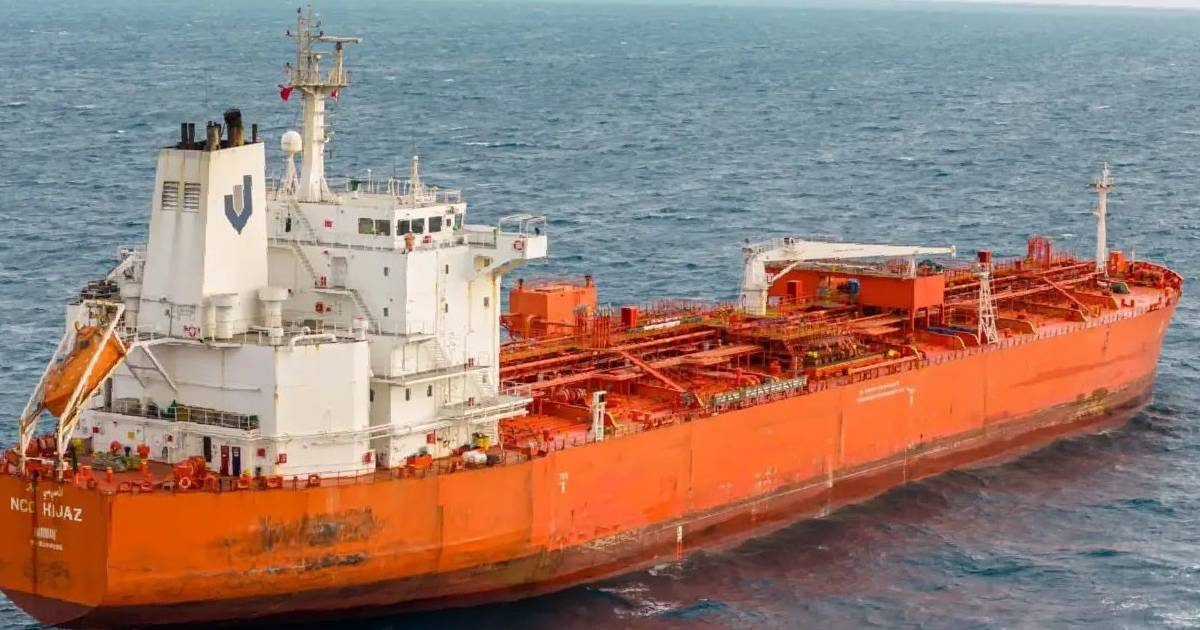
The tanker known as the Jasper, which has been sanctioned by the European Union for its role in Russia's so-called "ghost fleet" used for oil transportation, is scheduled to arrive at Matanzas port on Tuesday, December 23, as per satellite tracking data reported by Diario de Cuba.
Flying under the flag of Vanuatu, the Jasper is transporting approximately 300,000 barrels of Russian crude oil. This information was provided to the mentioned media outlet by Jorge Piñón, a non-resident fellow at the University of Texas's Energy Institute.
The Jasper's arrival in Cuba comes shortly after the United States intensified its maritime blockade against sanctioned vessels carrying Venezuelan oil. This action led to the seizure of three tankers over the past ten days.
In response, Russia demanded an explanation from the United States last week regarding the seizure of an oil tanker in waters near Venezuela. This action had been announced the previous day by U.S. President Donald Trump as part of an operation targeting drug trafficking and oil smuggling.
Russian Foreign Minister Sergei Lavrov expressed his concern, stating that he anticipated the United States would clarify the basis of its actions "out of respect for other members of the international community."
EU Sanctions and Ongoing Operations
The situation raises a pertinent question: can EU-sanctioned ships continue operating in the Caribbean without facing similar repercussions?
According to the EU, the Jasper is "involved in the export of Russian crude oil and petroleum products" and is linked to the Turkish company Beks Tanker Isletmeciligi AS. This firm is a major player in the industry, having transported hundreds of millions of barrels of Russian crude and derivatives in 2023.
Since March 2024, the tanker has been managed by the Turkish company Sand Gemi Isletmeciligi AS. Brussels reported that eight tankers from these companies were operated by Beks Tanker in 2023 and early 2024, while another was managed by an already sanctioned subsidiary, forming the basis for additional restrictive measures.
On May 20, 2025, the European Union formally sanctioned the Jasper for contributing to Kremlin revenues supporting the invasion of Ukraine. The sanctions highlighted the vessel's use of "high-risk irregular shipping practices," in violation of International Maritime Organization regulations. Switzerland and the United Kingdom joined these sanctions in June and July, respectively.
Energy Shipments Amidst Sanctions
Alongside the arrival of Russian oil, two other shipments from Mexico are also expected to reach Cuba, transported by vessels operated by GAESA, the Cuban Armed Forces' business conglomerate. The Ocean Mariner is set to dock in Havana on Monday, December 22, while the Eugenia Gas is scheduled to arrive in Moa during the same week.
Both ships, under the Liberian flag, loaded fuel at the Pajaritos petrochemical complex owned by Mexico's state oil company PEMEX, carrying about 80,000 barrels each.
Cuba requires around 110,000 barrels per day to meet its basic energy needs, with approximately 40,000 barrels sourced from domestic production, according to official estimates.
The current U.S. naval deployment off the Venezuelan coast and the reduced shipments from Mexico—dropping from an average of 22,000-25,000 barrels daily to around 5,000—have placed the island in a severe energy predicament.
Impact of Sanctions on Cuban Oil Supply
What is the significance of the Jasper's arrival in Cuba?
The Jasper's arrival is significant because it highlights the ongoing efforts by Russia to bypass international sanctions and continue its oil trade, which has implications for Cuba's energy supply amid U.S. maritime blockades.
How do EU sanctions affect the Jasper?
The EU sanctions against the Jasper are due to its involvement in transporting Russian oil, which is seen as contributing to Kremlin revenues used to support military actions in Ukraine. These sanctions restrict its operations and financial transactions.
What challenges does Cuba face with its current energy situation?
Cuba is facing an energy crisis due to reduced oil shipments from Mexico and the U.S. naval blockade affecting Venezuelan oil imports, leaving the country short of the necessary 110,000 barrels per day to meet its basic energy needs.