Rolando Luis Pérez Vizcaíno, a Cuban professor, has cast doubt on the credibility of the Central Bank of Cuba's (BCC) floating exchange rate. He argues that without involvement in the informal market or official currency sales, the BCC lacks the necessary real data to establish a reliable exchange rate.
Pérez Vizcaíno, who manages the Facebook group Economistas Libres de Cuba, highlighted a significant paradox within the new exchange rate system on Saturday. The BCC purchases dollars at a fixed rate, scarcely sells foreign currency, and remains absent from the informal market where the actual price is determined.
In this scenario, he questioned the basis on which a reference rate or an average that justifies daily fluctuations can be calculated.
The economist also scrutinized the recent reduction of the official rate from 410 to 407 pesos per dollar. He pointed out that the BCC does not record sales transactions while the informal market continues to operate beyond its reach.
In his view, this move is a strategy to attract foreign currency into the banking system, subsequently forcing the price down without a genuine correlation between supply and demand.
Pérez Vizcaíno also criticized efforts to "blind" the public, referencing attacks on independent platforms like El Toque, which publish informal market exchange rates.
According to these platforms, the dollar remains around 440 pesos, the euro at 480, and the MLC at 310, figures that starkly contrast with the official exchange rate.
The response was swift. Many users agreed that an official exchange market cannot exist as long as the state refrains from selling foreign currency and restricts operations to selective purchases.
Others cautioned that without a real reduction in prices, an artificial lowering of the dollar only diminishes the purchasing power of those reliant on remittances.
Several comments drew parallels between the current scheme and past experiences, like the 1x120 rate, predicting its failure for defying economic logic.
"It's a trap, and people aren't fools. Dollars are of little use for purchasing in dollar stores due to shortages and USD prices being higher than MLC. Many exchange them for CUP to buy from the private sector, which, though exploitative, offers alternatives and is slightly cheaper," remarked a user named Juan Manuel.
For many, the so-called floating rate is merely an administrative figure, lacking real transaction support and intended to project control in a landscape of scarcity, opacity, and distrust.
The BCC announced the floating rate on Wednesday, a new exchange rate category that will be updated daily based on supply and demand. This measure targets individuals and the private sector as part of the government's attempt to align the official value of the dollar and euro with informal market prices.
However, in practice, the informal market remains more pertinent to Cubans.
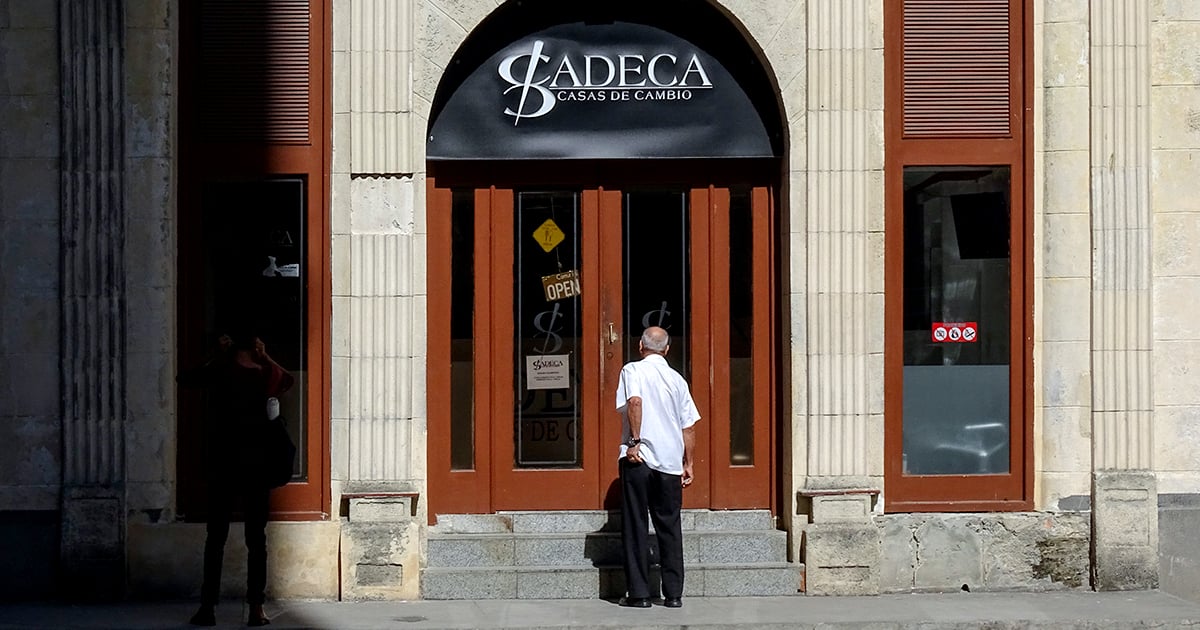
While the BCC provides an official exchange rate as a reference for the currency market, the Casa de Cambio (CADECA) and other financial institutions set their buying and selling rates by applying a commercial margin.
This leads to visible discrepancies for the public and fuels complaints on social media about the gap between what the BCC announces and what is ultimately offered at counters.
Just this past Saturday, the US dollar showed an eight-peso difference between the BCC rate (408 CUP) and the CADECA rate (416 CUP).
With an official rate of 408 pesos per dollar, the average salary equates to just over 16 dollars a month, which remains insufficient to meet basic needs given the high cost of living that exceeds 50,000 pesos monthly.
FAQs on Cuba's Floating Exchange Rate
What issues does Pérez Vizcaíno have with the Central Bank's floating rate?
Pérez Vizcaíno questions the credibility of the floating rate due to the lack of real market data, as the BCC does not engage in the informal market where actual prices are set.
Why is the informal market more relevant in Cuba?
The informal market is more relevant because it reflects the true exchange rates based on actual supply and demand, unlike the official rates which are administratively set and often disconnected from market realities.
How do discrepancies between official and informal rates affect Cubans?
Discrepancies lead to reduced purchasing power, especially for those relying on remittances, as the official rates do not match the higher rates in the informal market.