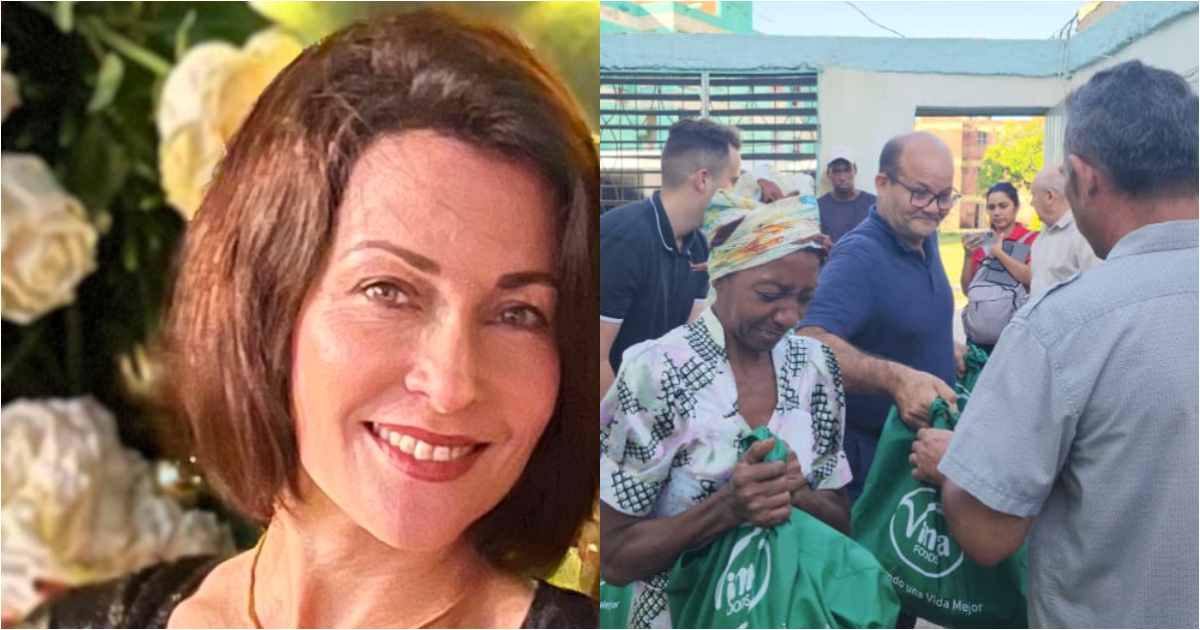
Renowned Cuban actress Maikel Amelia Reyes took to social media to share a heartfelt message that quickly garnered tens of thousands of reactions. Her post, calling for "living with more love" amid the numerous crises plaguing Cuba, struck a chord with many. On Saturday, she acknowledged the "extremely difficult" times in Cuba, characterized by material shortages, power outages, diseases, and the family separations due to emigration. Yet, she insists that even amidst these challenges, individuals can choose how they confront reality.
Reyes expressed the pain of being far from her mother, brother, and other family members, emphasizing the economic barriers that prevent frequent reunions. Despite these hardships, she is determined to embrace gratitude and fulfillment, believing that taking personal responsibility can prevent blaming others for one's misfortunes.
The actress argues that material poverty has been accompanied by a spiritual and emotional decline, manifesting as increased hatred, envy, and social aggression. "I miss seeing people being kind to one another, the smells of charcoal mixed with barbecue, I miss wishing each other well without the pettiness and spiritual poverty that material deprivation and ignorance bring," she reflected.
She further added, "If instead of hating, envying, and criticizing, we blessed more, helped more, and rejoiced more in our neighbor's or colleague's success, we would be more abundant in every positive sense and resonate with love and gratitude."
In one of the most debated parts of her message, Reyes asserted that no country or social system guarantees equality, but respect, love, and kindness are always possible. "The fact that you have a better economy than I do doesn't diminish me... the more those around you have, the more you will have."
As the new year approaches, she hopes 2026 will allow people to recognize that they have the power to transform at least their immediate surroundings and can choose to live with more love amid chaos, attracting more miracles, opportunities, and positive abundance.
Closing her message with religious references and a wish for mental and emotional renewal in the coming year, Reyes sparked mixed reactions.
Responses to Reyes' Message
While hundreds of users appreciated her call for faith and resilience, others pointed to the political leadership's responsibility for a crisis defined by collapsing basic services, lack of prospects, and an increasingly uncertain future for millions of Cubans.
Critics argued that as long as Cuba remains under Communist Party control, citizens will lack the freedom to choose their destinies. In the Facebook group "Desmintiendo al NTV de Cuba," user Ghostman Barceló penned an extensive critique of Reyes' message, associating it with official rhetoric that shifts political responsibility onto individuals.
Barceló even likened the actress to her character Lucía in the police series "Tras la huella," suggesting her reflection mirrors the moral logic of a repressive system. He rejected the notion that Cuba's crisis can be addressed through a personal attitude change or a "spiritual perspective" on reality.
He argued that asking for gratitude, calm, or love amid scarcity, fear, and repression amounts to demanding resignation. He maintained that the capacity to choose is not mystical but a material privilege that many Cubans lack.
Barceló criticized framing poverty as an emotional or "vibrational" problem, calling it a sophisticated way of blaming victims. He frequently cited José Martí to contrast justice with emotional charity and accused such discourse of masking structural inequality and power-associated privileges.
Barceló concluded that indignation and critique are not rooted in hatred or envy but are expressions of dignity. Loving Cuba doesn't mean accepting its collapse with serenity; it means holding those responsible accountable and demanding real change, even if it causes discomfort.
Meanwhile, the popular actress is recovering from chikungunya but assures that she continues to work despite the severe pain caused by the disease.
Questions about Cuba's Current Challenges and Personal Responsibility
What challenges did Maikel Amelia Reyes highlight in her message?
Reyes highlighted the current challenges in Cuba, including material shortages, power outages, diseases, and family separations due to emigration.
How did critics respond to Reyes' message?
Critics argued that the message shifts political responsibility onto individuals and doesn't address the systemic nature of Cuba's crisis. They believe that change in personal attitude is insufficient without addressing political and structural issues.
What does Reyes suggest as a solution to the current situation?
Reyes suggests that adopting an attitude of love, gratitude, and mutual support can lead to positive change and abundance, even amid difficult circumstances.