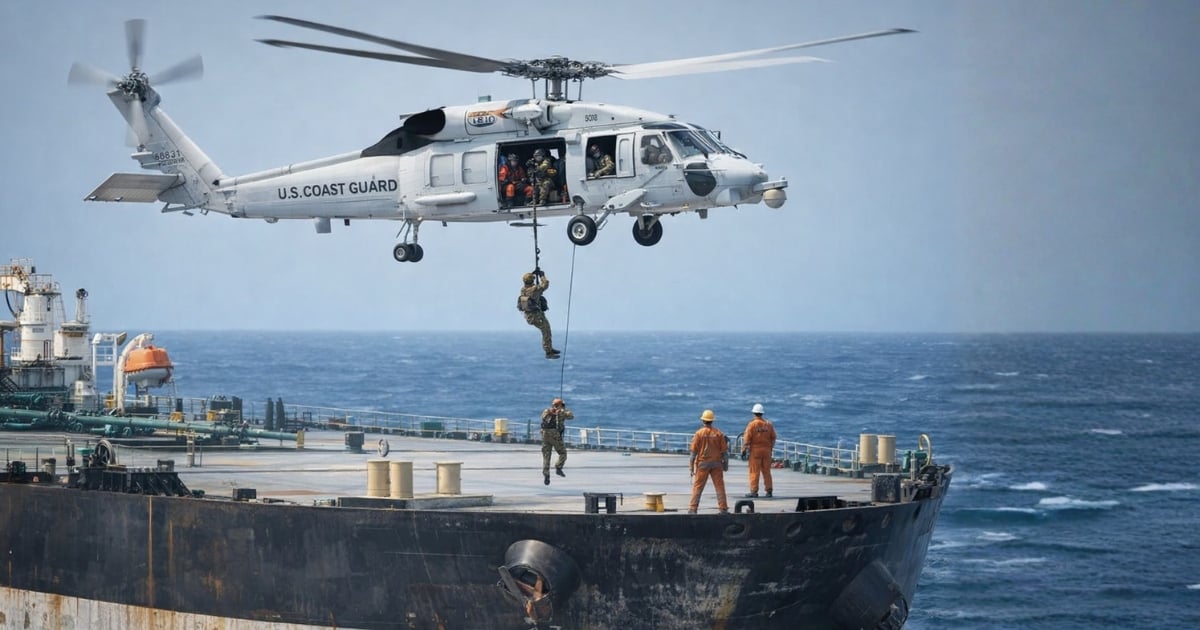
The United States has intercepted the Bella-1 oil tanker, flying under the Panamanian flag, in international waters close to Venezuela. This marks the third such incident in recent days.
A government source confirmed to Bloomberg that the vessel was en route to Venezuela.
The Bella-1 is associated with Louis Marine Shipholding Enterprises, which has connections to Iran's Revolutionary Guard. It has been under sanctions by the U.S. Treasury's Office of Foreign Assets Control (OFAC) since June 2024.
This latest seizure is the third of its kind near Venezuelan waters in recent weeks and coincides with a significant U.S. military presence in the area.
On Saturday, the U.S. government released images of the capture of a second oil tanker near Venezuela's coast.
"In a pre-dawn operation this morning on December 20, the U.S. Coast Guard, supported by the Department of Defense, detained an oil tanker last docked in Venezuela," stated Homeland Security Secretary Kristi Noem on X.
"The United States will continue to pursue the illicit oil trade that finances narco-terrorism in the region. We will find them and stop them," she added.
Regarding crude transportation, Reuters noted that while many ships collecting oil in Venezuela are sanctioned, others, including some carrying oil linked to Iran or Russia, are not. Companies like Chevron use their own "authorized" vessels to transport Venezuelan oil.
The first of the seized tankers last week, capable of carrying over 320,000 tons of crude, was transporting oil destined for Cuba and was part of an illegal network moving sanctioned oil from Venezuela and Iran.
The report also highlights China as the largest buyer of Venezuelan oil, citing analysts' estimates on shipment volumes in December.
In 2019, the U.S. imposed energy sanctions on Venezuela, prompting buyers and refiners to use a "ghost fleet" of tankers that mask their locations. This fleet is considered vulnerable to potential punitive measures from Washington.
The report frames the action as part of former President Trump's pressure campaign on Nicolás Maduro, which included increased military presence and actions against ships near Venezuela. Maduro has claimed that the U.S. deployment aims to overthrow him and seize control of the country's oil resources.
On the previous Tuesday, President Donald Trump announced a total oil blockade against Venezuela and tougher deportation measures in a message on his social media platform, Truth Social, directly accusing Nicolás Maduro's regime of funding criminal activities with energy resources.
Key Questions on U.S. Oil Tanker Seizures Near Venezuela
Why did the U.S. intercept the Bella-1 tanker?
The Bella-1 was seized because it is linked to Iran's Revolutionary Guard and has been under U.S. sanctions, allegedly transporting oil to Venezuela in violation of these sanctions.
What is the significance of the U.S. military presence near Venezuela?
The increased U.S. military presence is part of a broader strategy to apply pressure on Nicolás Maduro's government and prevent illegal activities, such as the unauthorized oil trade that supports narco-terrorism.
How does this impact Venezuela's oil trade?
The interceptions and sanctions complicate Venezuela's ability to sell oil internationally, particularly to countries like China, which is a major buyer, and force the use of covert methods to circumvent restrictions.