Cuban economist Pedro Monreal has expressed concern over the government's deliberate misinformation regarding the severity of the agricultural crisis. He accuses the authorities of systematically delaying the publication of statistics and replacing verifiable data with propaganda.
In a post on his Facebook page, El Estado como tal, Monreal emphasized that the current agricultural crisis is "deeper and more prolonged" than the one experienced during the Special Period. However, he claims the state is concealing the situation by combining a simplified narrative with an intensified statistical blackout.
Monreal explained that as of late 2025, the latest official agricultural statistics available are from 2023. He noted that the 2023 Agricultural Chapter of the Statistical Yearbook was released on January 21, 2025, and, optimistically, data from 2024 might be available by January 2026.
He found this delay "peculiar," especially since the chapter contains just 31 tables of physical indicators, which are easier to compile than other chapters that are published more promptly.
Monreal stressed that the issue extends beyond mere delays; it also involves outdated information. He cited the example of land use data, with the most recent records dating back to 2017, despite their importance in assessing the sector's performance.
The economist described the disappearance of three critical reports—the annual "Overview. Land Use" and the quarterly "Agricultural Sector. Selected Indicators" and "Agricultural Product Sales"—as the "apex of the statistical blackout."
In his opinion, this discontinuation helps in crafting an official narrative that prioritizes propaganda and anecdotal content.
According to Monreal, governmental presentations have replaced information on concrete outcomes—such as quantities and values of food produced and marketed—with data on prepared or planted lands, which do not reflect the actual availability of food.
He added that even these figures are often presented only as annual variations, without providing medium-term series that would help gauge the crisis's depth.
Monreal concluded that official presentations, such as those made during the mini parliamentary session on December 18, rely on sparse and insignificant data, woven into a narrative that substitutes empirical evidence with a "propagandistic pamphlet."
Cuba's agricultural production remains stagnant due to factors including obsolete machinery, a shortage of essential supplies like fertilizers and seeds, a fuel crisis, and challenging climatic and soil conditions.
Moreover, most lands are still under state control, cooperatives lack the freedom to choose what to produce, and the monopoly system restricts the buying and selling process, preventing farmers from planting and marketing autonomously.
These structural deficiencies hinder the revitalization of the agricultural sector and force the country to rely on costly food imports, such as eggs from the United States, the Dominican Republic, and Colombia.
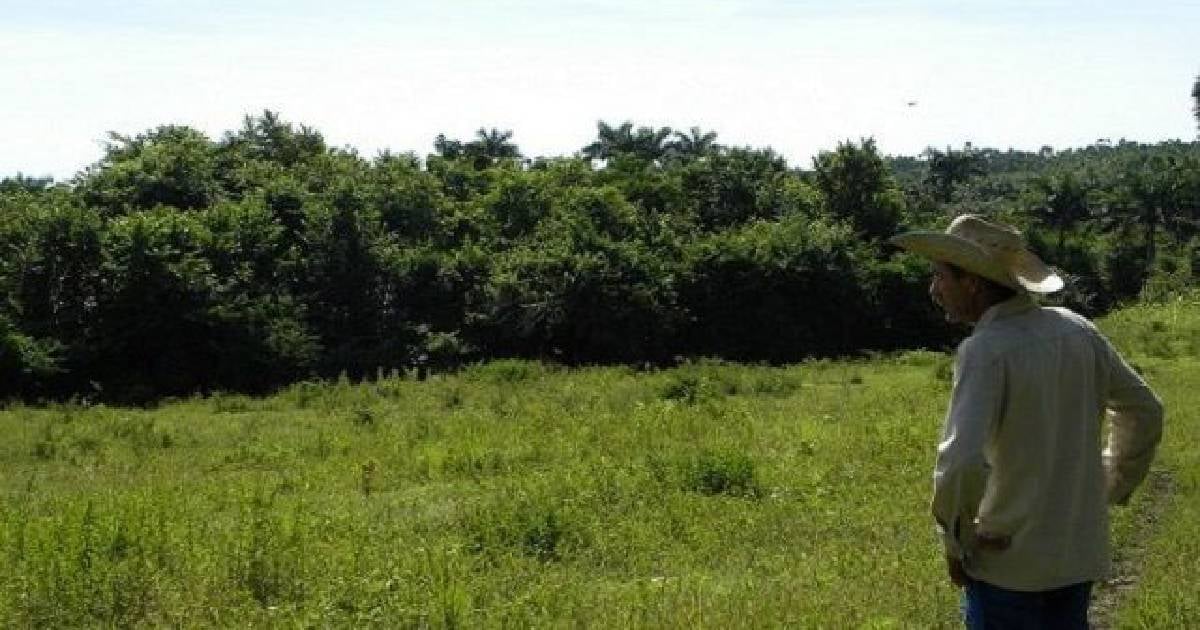
An example of this is a state-run mango plantation in central Cuba lost to weeds, neglect, and governmental apathy, while the Cuban population endures long lines to obtain basic food items.
Recently, Vice President Salvador Valdés Mesa acknowledged that the expansion of rice planting depends on private producers financing machinery and inputs, amidst a crisis that leaves the country producing only a fraction of the rice it consumes.
Key Aspects of Cuba's Agricultural Crisis
What is the current state of Cuba's agricultural statistics?
As of late 2025, the most recent official agricultural statistics available are from 2023, with significant delays in publication.
Why are Cuba's agricultural statistics important?
These statistics are crucial for assessing the performance of the agricultural sector and understanding the depth of the ongoing crisis.
How does the government prioritize agricultural information?
The government often replaces concrete outcome data with figures on prepared or planted lands, which do not accurately reflect food availability.