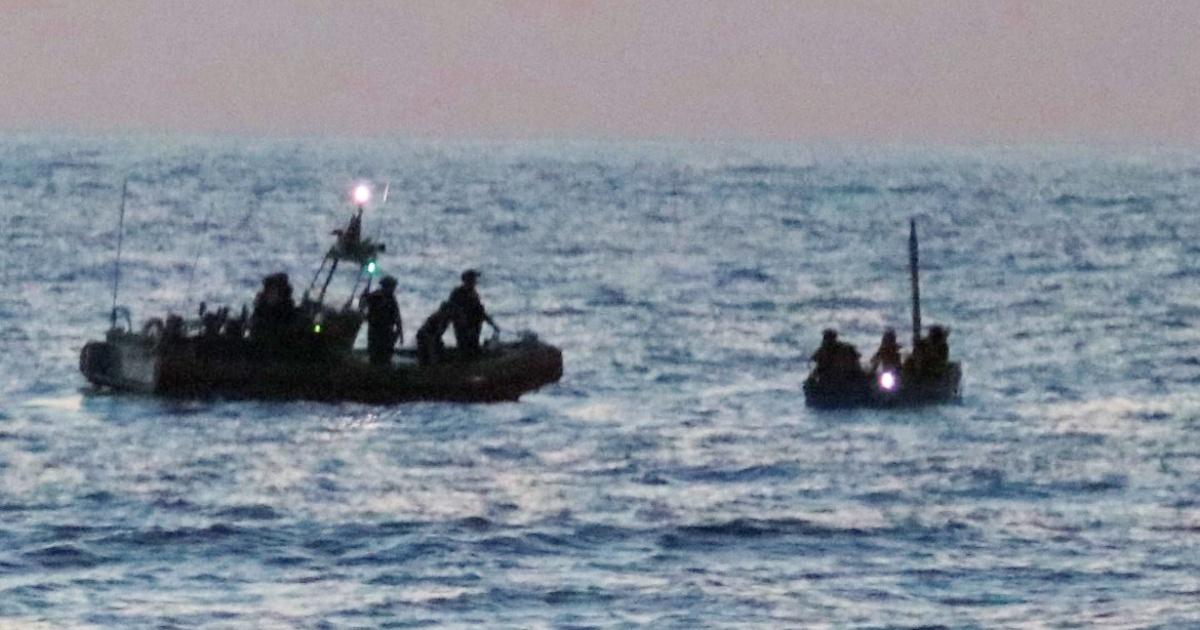
The United States Coast Guard (USCG) announced this Friday the repatriation of six Cuban migrants who were intercepted at sea during a "maritime interdiction" operation.
According to the information shared by the Southeast Coast Guard in the United States on the social network X, these rafters were apprehended "40 miles south of Cuba" as they attempted to leave the country by sea.
The operation was conducted by the crew of the cutter William Trump, one of the vessels typically used for patrolling missions across the Caribbean.
The USCG emphasized the preventive nature of such actions, stating that "partners continue to patrol the Caribbean and beyond, deterring illegal migration and safeguarding the maritime borders of the United States."
The announcement included a direct mention of the Cuban Embassy in the United States, in line with existing coordination protocols between the two nations for these repatriations.
A few hours later, the information was confirmed by Cuba's Ministry of the Interior (MININT), which also utilized the social network X to verify the return of the migrants.
According to the official statement, "by Friday morning, the return of 6 migrants intercepted at sea, after an illegal departure from #Cuba via this route, is scheduled through the port of Orozco, Bahía Honda, Artemisa, bringing the total to 1,669 in 2025."
As of now, neither side has provided additional details regarding the exact date of the interdiction, nor the specific circumstances under which the rafters were detected at sea.
It remains unreported whether the migrants were traveling in a makeshift vessel, a common practice among those attempting to cross the Florida Straits, or their origin within the island.
U.S. authorities have repeatedly stated that individuals intercepted at sea are not eligible to enter or remain in the United States and are, in accordance with current immigration policy, returned to their country of origin or transferred to the authorities of the country where they are found.
Decrease in Rafters Since Trump's Presidency
The number of Cuban rafters repatriated by the U.S. Coast Guard has plummeted to nearly zero since President Donald Trump took office in January 2025, particularly when compared to the peaks seen in previous years.
This decline coincides with the stricter immigration policies implemented by the current administration, which has intensified border controls and sea interdiction operations.
Nevertheless, the underlying causes of Cuban migration remain unchanged.
The economic crisis, characterized by shortages of essential goods, ineffective basic services, sustained inflation, along with repression, lack of freedoms, and increasing social insecurity, continue to drive thousands to seek a way out of the country.
What has changed, analysts and observers of the migration phenomenon warn, is that routes to the United States have become increasingly inaccessible and dangerous, both by sea and land.
In this context, episodes like the repatriation of these six rafters highlight the clash between the desperation of those attempting to flee the island and a progressively restrictive migration environment.
Key Insights on Cuban Migration to the US
Why are Cuban migrants repatriated by the US Coast Guard?
Cuban migrants intercepted at sea are repatriated because they are not eligible to enter or remain in the United States as per current immigration policies. They are returned to their country of origin or transferred to the authorities where they are found.
What are the main reasons driving Cuban migration?
Cuban migration is driven by an economic crisis marked by shortages of essential goods, ineffective services, inflation, repression, lack of freedoms, and increasing social insecurity.
How have US immigration policies changed since 2025?
Since 2025, US immigration policies have become stricter under the Trump administration, with intensified border controls and maritime interdiction operations, reducing the flow of Cuban migrants.