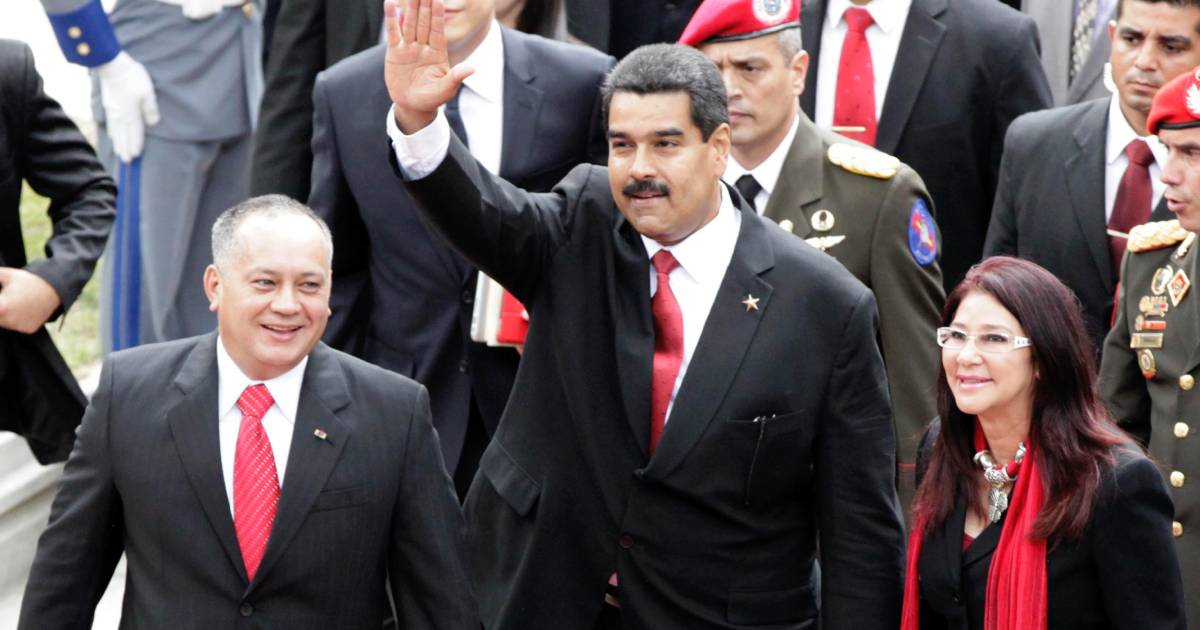
This Friday, the U.S. Treasury Department unveiled a new round of sanctions targeting individuals closely associated with Nicolás Maduro, the Venezuelan leader, and his wife, Cilia Flores. These measures aim to dismantle the corruption and drug trafficking networks that prop up the Caracas regime.
The Office of Foreign Assets Control (OFAC) specified that the sanctions are aimed at those in the immediate circle of Carlos Erik Malpica Flores, Cilia Flores' nephew and former high-ranking official of Petróleos de Venezuela (PDVSA). The measures also extend to relatives of Panamanian businessman Ramón Carretero Napolitano, who is linked to financial activities supporting the Chávez regime.
"Today, we are sanctioning individuals who uphold the narco-state of Nicolás Maduro. We won't allow Venezuela to keep flooding our country with deadly drugs," stated Treasury Secretary Scott Bessent.
Bessent emphasized that "Maduro and his criminal allies pose a threat to the peace and stability of our hemisphere. The Trump Administration will continue to target the networks sustaining his illegitimate dictatorship."
Family Ties Under Scrutiny
The sanctions list includes Eloisa Flores de Malpica, the mother of Malpica and sister of Cilia Flores; his father Carlos Evelio Malpica Torrealba; his sister Iriamni Malpica Flores; his wife Damaris del Carmen Hurtado Pérez; and his daughter Erica Patricia Malpica Hurtado. They have been designated under Executive Order 13850 due to their direct family ties to an individual involved in corrupt practices and fraudulent financial dealings with the Venezuelan government.
Additionally, OFAC has sanctioned Roberto Carretero Napolitano and Vicente Luis Carretero Napolitano, relatives of businessman Ramón Carretero, who was previously added to the blacklist on December 11 for participating in illicit transactions with the Malpica Flores clan and Maduro's economic structure.
Impacts of the Sanctions
These actions by the Trump administration result in the freezing of all assets of the sanctioned individuals located within U.S. territory or under the control of American entities. Furthermore, all financial transactions, commercial deals, or services involving the designated individuals are prohibited unless explicitly authorized by OFAC.
The entity warns that any company or person maintaining ties with the sanctioned individuals could face secondary sanctions. Financial institutions that engage with those on the Specially Designated Nationals (SDN) list risk penalties or fines, even if their dealings are indirect.
The initiative is part of Washington's broader strategy to dismantle the familial and economic networks supporting Maduro's dictatorship, especially those linked to alleged fund diversion from PDVSA and money laundering through shell companies in Panama, the Dominican Republic, and Spain.
Carlos Erik Malpica Flores, a political nephew of Maduro, served as Venezuela's national treasurer and PDVSA's Vice President of Finance. He has been accused by the United States, Europe, and several Latin American countries of orchestrating a multi-billion dollar corruption and drug trafficking scheme funneling resources to the Venezuelan leader's family circle.
According to the Treasury Department, the sanctions aim to "induce a change in behavior" among regime officials and their affiliates, rather than merely punishing them.
Washington currently has over 150 Venezuelan individuals and entities under sanction, including PDVSA, the Central Bank of Venezuela, shipping companies linked to covert oil exports, and international financial operators connected to the Chávez regime.
This announcement coincides with escalating tensions in the Caribbean, following the Trump Administration's decision to bolster the naval blockade against sanctioned Venezuelan "ghost fleet" tankers, a move that also impacts crude supplies to Cuba, Maduro's primary political ally.
Understanding U.S. Sanctions on Venezuela
Who is Carlos Erik Malpica Flores?
Carlos Erik Malpica Flores is the nephew of Cilia Flores and a former high-ranking official in Venezuela's PDVSA. He is accused of being involved in a large-scale corruption and drug trafficking network.
What is the purpose of U.S. sanctions on Venezuela?
The U.S. sanctions are intended to pressure Venezuelan regime officials and their associates to change their behavior, primarily by dismantling networks that support Maduro's dictatorship and curbing drug trafficking and corruption.
How do these sanctions affect financial institutions?
Financial institutions that engage with individuals on the U.S. Specially Designated Nationals list risk facing sanctions or fines, even if their dealings are indirect.