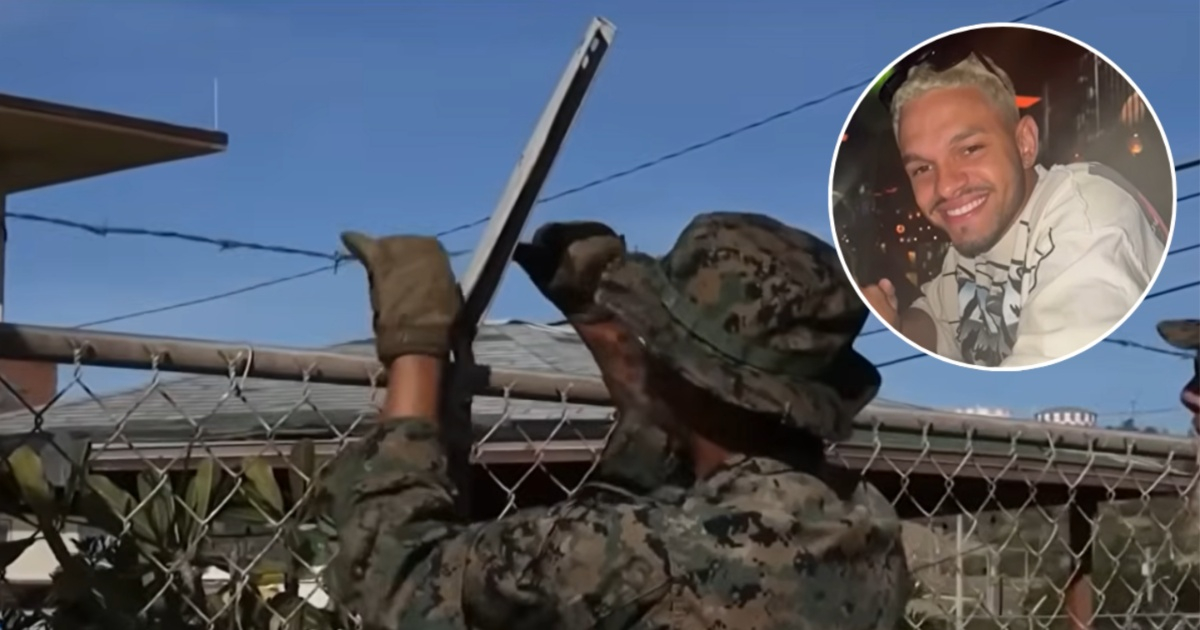
Relatives in both Cuba and Miami have raised alarms about the relocation of detained Cuban migrants from Louisiana to the Guantanamo Bay Naval Base, despite their belief that they had signed voluntary departure agreements to return to the island.
A report by Telemundo 51 highlights the distressing conditions these individuals face at the military base. Family members shared their frustrations, having expected a straightforward deportation back to Cuba.
Among those detained, Marcos Alejandro Ávila Íñiguez described to his family the harsh reception they received, stating they were "pointed at with rifles" and kept in chains. His relatives confirmed that he managed to contact them on Monday from the base, and during the call, he was still shackled.
Telemundo 51 identified Ávila Íñiguez as one of 22 Cubans who were flown to Guantanamo on a charter flight from Louisiana last Sunday. His account is echoed by the families of three other Cubans—Erick Mauri Zamora, Emanuel Valverde Tamayo, and Yesier Abreu Arronde—who also claim to have signed voluntary departure agreements.
One family member revealed that after signing, on December 14, their relative was unexpectedly taken to the naval base. Meanwhile, several relatives expressed their frustration and sorrow after waiting at the airport for a flight that never arrived, leaving them in a state of uncertainty and disappointment.
Seeking clarity, Telemundo 51 reached out to the Department of Homeland Security (DHS). In a statement, the DHS explained that immigrants entering the United States illegally might be sent to Guantanamo or other detention centers, noting that some recent transfers included individuals with serious criminal records. However, the families interviewed insisted that their relatives have no criminal history.
The report referenced a congressional document highlighting that transporting detainees to Guantanamo has cost the federal government $39 million, with the daily cost of detaining one person at the facility reaching $10,000.
The United States has resumed sending Cuban migrants to Guantanamo, a move steeped in symbolism and controversy, after a two-month hiatus. The transfer of 22 men from U.S. soil marks the first such action involving Cuban nationals at this facility since January, rekindling legal questions and memories of past practices.
According to The New York Times, these Cubans arrived at the eastern Cuba base via an ICE-chartered flight from Louisiana. This action revives Guantanamo's role as a migrant detention center, despite ongoing legal challenges, high costs, and consistent criticism throughout the year.
Understanding the Controversy of Cuban Migrants at Guantanamo
Why are Cuban migrants being sent to Guantanamo Bay?
Cuban migrants are sent to Guantanamo Bay as part of U.S. immigration enforcement policies, particularly for those who enter the country illegally. The DHS indicates that some individuals may have serious criminal records, which factors into their relocation.
What are the conditions like for detainees at Guantanamo?
Reports from family members and media indicate that conditions at Guantanamo for detainees are harsh, with accounts of being restrained and closely monitored. These conditions have fueled criticism and concern from families and human rights advocates.
What has been the response from the Department of Homeland Security?
The DHS has stated that illegal entrants could be detained at Guantanamo or other facilities and highlighted that recent transfers included some with significant criminal backgrounds, though families dispute these claims.