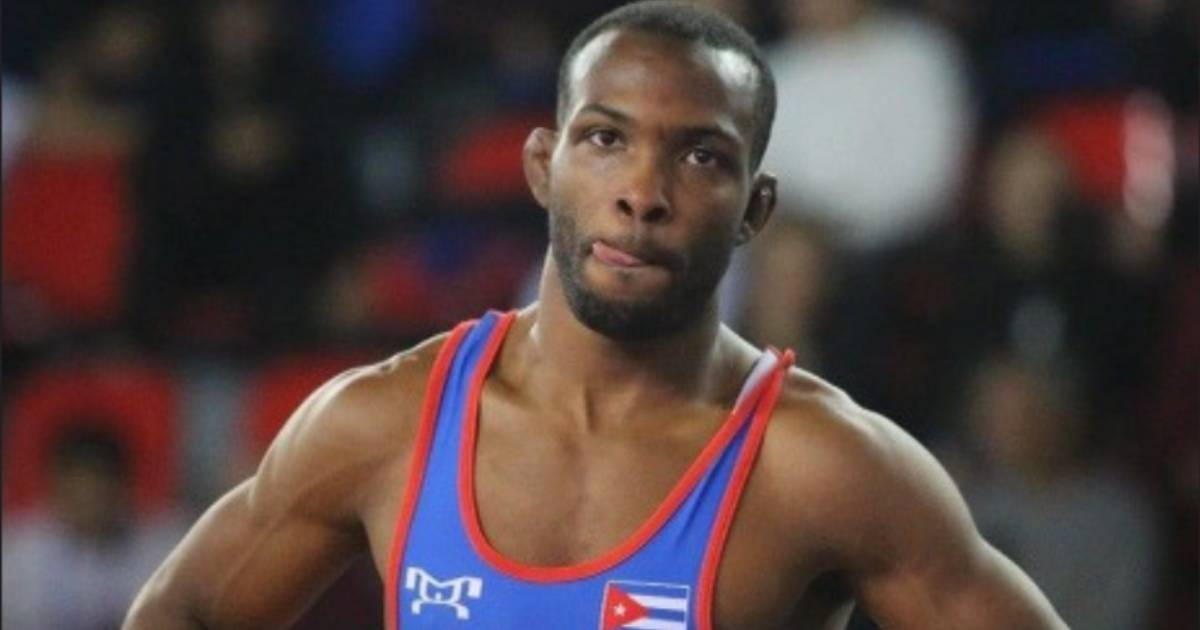
A world-renowned Cuban wrestler who fled the island's stringent sports system and sought refuge in the United States now finds himself grappling off the mat for his right to compete.
Reineri Andreu Ortega, a celebrated figure in Cuban wrestling over the past decade, has filed a lawsuit against the National Collegiate Athletic Association (NCAA) following his exclusion from collegiate wrestling in Iowa. The rule in question, he argues, unfairly penalizes him for his academic history in Cuba.
The story, covered by the Des Moines Register, details Ortega's struggles as a student at Iowa State University (ISU), where he was hindered by the "five-year eligibility clock" rule. This regulation restricts the duration an athlete can compete within the U.S. collegiate system.
Ortega, a two-time U23 world champion, Pan American double gold medalist, and Central American champion in the 57-kilogram category, arrived in the United States in December 2022. He left the Cuban national team, a decision reflective of many elite athletes seeking freedom from a state-controlled career devoid of professional contracts or financial benefits.
According to the Des Moines Register, the NCAA considers that Ortega's eligibility clock started when he attended the University of Manuel Fajardo in Cuba, even though this institution is not part of the U.S. collegiate system and his primary role was representing the Cuban national team rather than competing in collegiate leagues. Under this interpretation, the NCAA claims Ortega has exhausted his eligibility and cannot officially compete for Iowa State.
The lawsuit, filed in a federal court in southern Iowa, argues that the rule's application is arbitrary and violates antitrust laws by blocking his access to economic opportunities now available to other college athletes. Since a Supreme Court ruling in 2021, athletes can earn income from their name, image, and likeness, creating a multimillion-dollar industry.
For Ortega, the impact of exclusion is profound. At 27, standing 1.61 meters tall and competing in a category with limited professional opportunities outside the collegiate sphere, being barred from the NCAA may rob him of the only viable path to monetize years of dedication and achievements. His attorneys assert that without this chance, his career in the U.S. is effectively stifled.
The case highlights a systemic inconsistency. The lawsuit points out that American athletes who spend years in professional leagues can later attend college and compete without facing similar restrictions. An example cited is former baseball player Chris Weinke, who, after six years as a professional, won the Heisman Trophy in college football at the age of 28.
Born in Sancti Spíritus in 1998 and trained at Cerro Pelado in Havana, Ortega's career boasts Pan American titles, world gold medals, and a lifelong dedication to wrestling since his teens. After arriving in Iowa, he joined the Cyclone Regional Training Center and secured a spot on the ISU team, though he remains barred from official competition.
The lawsuit seeks an urgent judicial order to halt the rule's enforcement while the case is resolved, along with a permanent decision allowing athletes in similar situations not to be penalized for education undertaken outside the NCAA's "monopoly."
As of now, the NCAA has not publicly commented on the lawsuit, according to the Des Moines Register.
Meanwhile, Reineri Andreu Ortega's case underscores a harsh truth familiar to many Cubans: even far from the island, escaping a controlling system doesn't always equate to competing on equal terms.
Understanding the Legal Battle of Reineri Andreu Ortega
Why is Reineri Andreu Ortega challenging the NCAA?
Ortega is challenging the NCAA because he believes the "five-year eligibility clock" rule unjustly penalizes him for his academic past in Cuba, preventing him from competing in college wrestling in Iowa.
What does the lawsuit against the NCAA allege?
The lawsuit claims that the rule's application is arbitrary and violates antitrust laws, denying Ortega access to economic opportunities that are available to other college athletes.
How does Ortega's case highlight a systemic inconsistency?
The case points out that American athletes can return to college sports after professional careers, without facing restrictions like Ortega, illustrating an inconsistency in the rules' application.