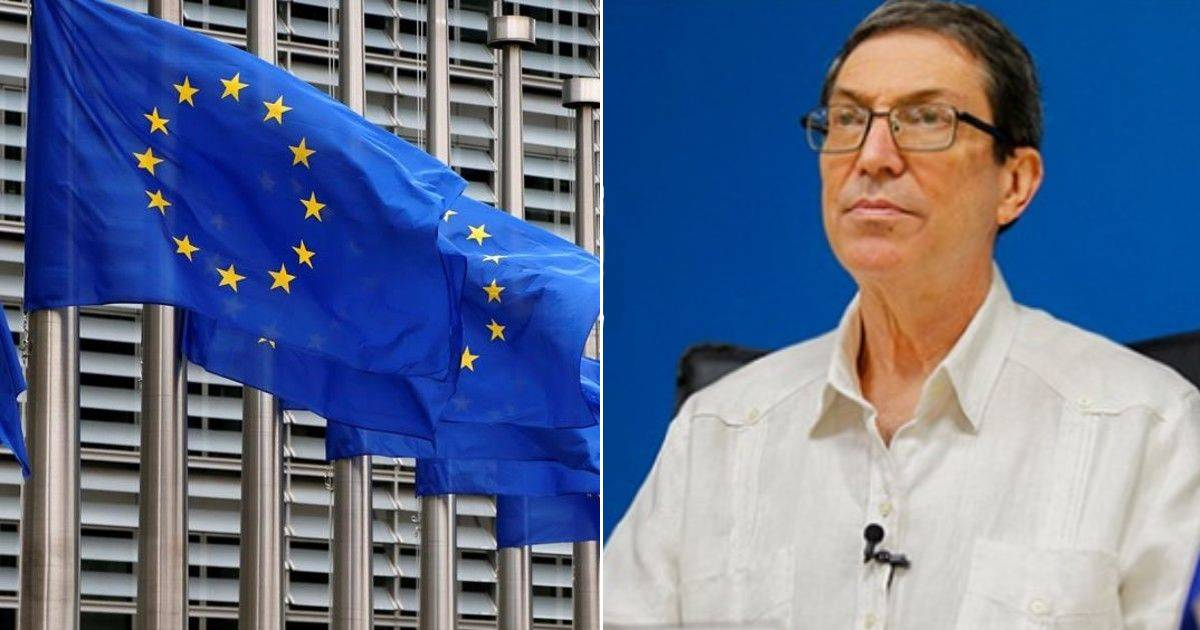
The Cuban regime expressed strong disapproval on Tuesday towards the European Union's decision to prolong for another year the sanctions against 69 officials and allies of Venezuelan leader Nicolás Maduro. These sanctions will remain effective until January 10, 2027.
In a message posted on the social media platform X, Cuban Foreign Minister Bruno Rodríguez Parrilla denounced the extension of sanctions, labeling them as "contrary to International Law and the United Nations Charter."
Rodríguez also accused the EU Council of serving the "aggressive and neocolonialist interests of the United States."
"We oppose the extension of sanctions and unilateral coercive measures by the European Union against Venezuela, which contradict International Law and the UN Charter. These actions aim to increase pressure against the Bolivarian and Chavista Revolution and benefit the aggressive, neocolonialist interests of the U.S.," Rodríguez asserted.
During a meeting in Brussels on December 15, the European Union's Foreign Affairs Council decided to uphold the restrictions on figures within the Chavista regime for "actions that undermine democracy, the rule of law, and human rights in Venezuela."
The sanctions include asset freezes within European territories and travel bans to EU member countries. Additionally, an arms embargo and restrictions on equipment used for internal repression remain in place.
The Council's statement emphasizes that the measures aim to "support a negotiated and democratic solution to the Venezuelan crisis," with the possibility of lifting them contingent on "tangible progress in human rights and the rule of law."
Havana's support for Maduro's regime is not new. Both Cuban leader Miguel Díaz-Canel and Rodríguez Parrilla have publicly declared their backing for the Chavista leader, even amid the total oil blockade imposed by former U.S. President Donald Trump.
In previous statements, Díaz-Canel stated, "We strongly reject the U.S. government's naval blockade on Venezuela. We firmly support President Nicolás Maduro, the Bolivarian and Chavista Revolution, and their Popular-Military Union."
Relying on Venezuelan oil to sustain its crisis-stricken energy system, the Cuban regime has repeatedly condemned U.S. and European sanctions as "illegal coercive measures," despite international organizations and democratic governments viewing them as necessary responses to human rights violations committed by the Chavista regime.
The European Union has imposed sanctions since 2017 on Venezuelan officials involved in repression, corruption, and electoral fraud.
The extension of these sanctions aligns with a period of heightened tension between Caracas and Washington, following increased U.S. efforts to push Maduro out of power.
Meanwhile, Cuba remains a key political and strategic ally of the Chavista regime, benefiting from subsidized oil supplies despite the worsening economic conditions in both countries.
Understanding the Impact of EU Sanctions on Venezuela
What are the main reasons for the EU's sanctions against Venezuela?
The EU imposed sanctions on Venezuela due to actions that undermine democracy, the rule of law, and human rights within the country.
How does the Cuban regime respond to international sanctions?
The Cuban regime criticizes international sanctions, labeling them as illegal and coercive measures that serve the interests of the United States.
What is the significance of Cuba's support for Maduro's regime?
Cuba's support for Maduro is crucial as it benefits from subsidized oil supplies, which are essential for sustaining its energy system amid economic difficulties.