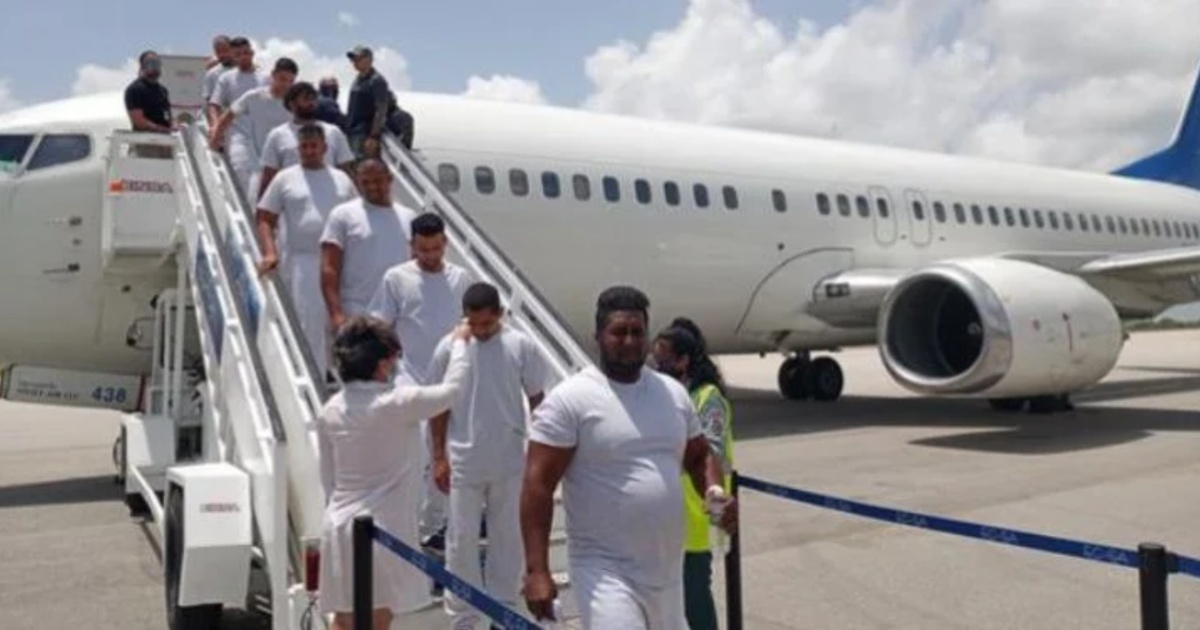
In a recent interview, attorney Liudmila Marcelo warned that the U.S. government is filing motions mere hours or days before immigration hearings to dismiss Cuban asylum cases, suggesting they be moved to third countries, specifically Uganda or Ecuador, for resolution.
Marcelo highlighted that her Cuban clients have recently been affected by this new trend, having received three such motions related to their cases. The purpose of these requests, she explained, is to prevent applicants from reaching a final asylum court in the U.S., instead proposing that they be transferred to Uganda or Ecuador to continue their proceedings there.
The basis for this action, according to Marcelo, is a "cooperative asylum agreement" between the United States and certain other nations, which reportedly applies to individuals who entered the U.S. after 2019. Previously, similar attempts were made with Central American individuals, targeting countries like Honduras or El Salvador, irrespective of the specific country involved.
Marcelo noted that this was not previously happening to Cubans, but now it has begun. She described various court scenarios: "You arrive at court, and the prosecutor requests it. In other cases, it's brought up during the court session, and despite opposition, the judge sides with the prosecutor."
"In some instances, I've received written notifications, and now I have a court date tomorrow, so I'm preparing my motion today to respond beforehand," Marcelo continued. "If individuals are not fearful of staying in Uganda or Ecuador, they are sent there and must defend their asylum case in these countries."
Marcelo characterized this situation as "quite serious," labeling it as the government's "last resort" to deny individuals the right to litigate their asylum cases in the United States. "You are not being given the right to reach your final court," she stated, noting the reliance on the ACA.
This approach, she explained, does not involve restarting the process with a "credible fear" interview but rather dismisses the case, requiring the applicant to prove they also fear for their safety in a country "they have never been to."
Challenges and Legal Strategies
To counter these motions, Marcelo is seeking arguments comparing the political conditions in Uganda and Cuba, as well as Ecuador and Cuba. This is crucial since most of her clients claim asylum based on political opposition.
"I'm looking for similarities between the governments of Uganda and Cuba, and Ecuador and Cuba, in terms of political treatment," Marcelo elaborated. "If they are authoritarian like Cuba, and you have a political opinion against authoritarianism here, it stands to reason you would have it elsewhere too. I'm exploring this avenue, but the situation is incredibly challenging."
Regarding those affected, Marcelo indicated that the individuals are Cubans holding I-220A, who are free while their cases proceed in court. The motion suggests that their asylum case would be awaited in Uganda, potentially under detention, though Marcelo admitted she is not yet certain about this aspect.
To date, Marcelo is unaware of any of her cases where this measure has been executed, noting that it is a "very new" development that began "last week" specifically for Cubans. She emphasized that this marks a shift in the treatment of the Cuban community, which she believes is no longer "untouchable," as they are now being asked to defend their asylum claims in Uganda or Ecuador.
Understanding U.S. Asylum Policy Changes
What is the basis for sending Cuban asylum seekers to Uganda or Ecuador?
The U.S. government cites a "cooperative asylum agreement" with certain countries, applicable to individuals entering the U.S. after 2019, as the basis for transferring Cuban asylum seekers to Uganda or Ecuador.
How are attorneys responding to these motions?
Attorneys like Liudmila Marcelo are developing strategies by comparing political conditions between the involved countries and Cuba, particularly focusing on political opposition, to counter the motions effectively.