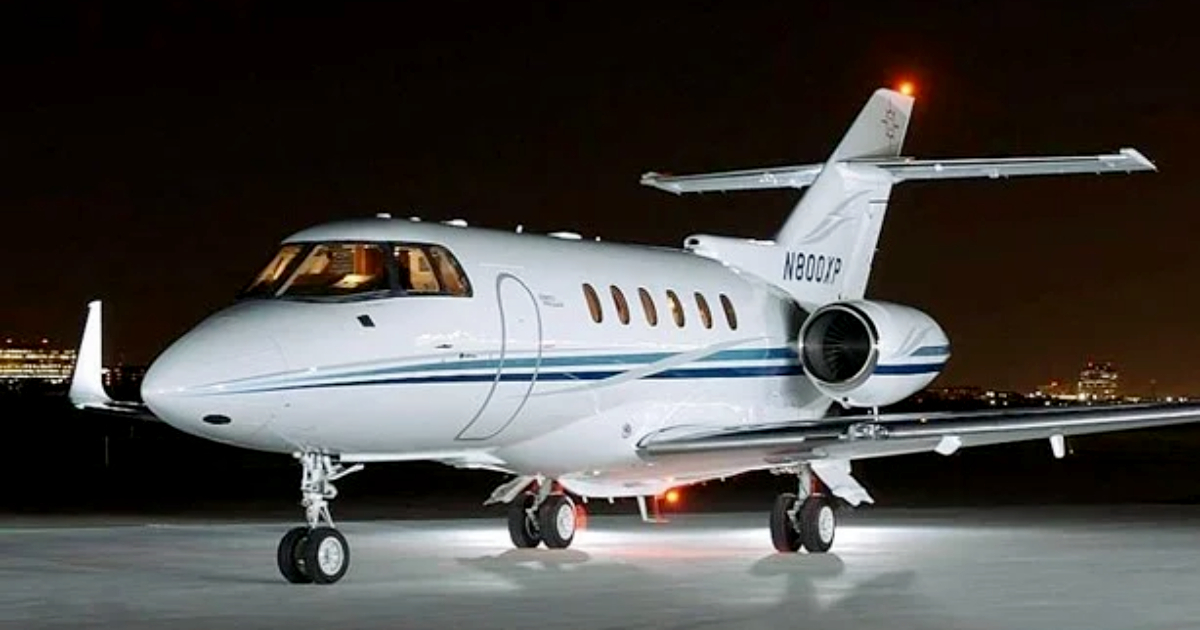
A private jet, registered in Venezuela and linked to the Cuban power elite—particularly to Raúl Guillermo Rodríguez Castro, the grandson of General Raúl Castro, known as "El Cangrejo"—has once again raised eyebrows concerning the ties between Havana and Caracas amid escalating tensions in the Caribbean.
The Hawker 800XP2 executive jet, carrying the registration YV654T, departed from Havana for Caracas this past Tuesday and returned to the Cuban capital by Wednesday morning, according to data from the aviation tracking website Flightradar24.
The aircraft arrived back in Havana shortly after dawn, following an overnight journey that strategically avoided regions with a U.S. military presence in Jamaica, the Bahamas, and the western Caribbean.
Concealed Paths and Intentions
Journalist Mario J. Pentón, who shared the flight path on the social platform X, remarked, "The chosen route is noteworthy, meticulously drawn to sidestep areas with U.S. military presence. Was this a routine visit or an urgent diplomatic mission between Havana and Nicolás Maduro's regime?"
This aircraft's movements are part of a pattern of suspicious flights identified in recent weeks, involving travel between Cuba, Venezuela, Panama, Curacao, and Mexico. These flights have been carried out by jets tied to GAESA, the Cuban military's business conglomerate, and high-ranking officials from both governments.
Secretive Journeys and Cuban Elite
Previous investigations have uncovered that Raúl Guillermo Rodríguez Castro, who heads his grandfather's personal security team and plays a key role in Cuba's military framework, made no fewer than 25 trips to Panama between 2024 and 2025.
The trips were conducted aboard a Dassault Falcon 900EX, associated with GAESA, using alternating registrations from Venezuela and San Marino to complicate tracking efforts.
Traveling under a diplomatic passport, Raúl's movements remain unchecked by standard immigration controls, accompanied by GAESA executives and close family members. The Foundation for Human Rights in Cuba has alleged that these journeys might be linked to financial and business operations in the region, including capital movements and asset acquisitions through offshore structures.
Mexico and Venezuela: Strategic Hubs
Recently, Mexican media outlets like Latinus and El Norte reported the presence of a Falcon 900EX linked to the Cuban elite parked for several days in Nuevo León, managed by a Mexican military consortium.
This detail supports the theory of a discreet air corridor connecting Cuba, Mexico, and Venezuela, utilized by Cuban power figures for political and financial missions.
Geopolitical Tensions and Covert Flights
The resurgence of these flights aligns with a period of heightened geopolitical tension. Operation Southern Lance, initiated by Washington with support from Colombia, Panama, and the Dominican Republic, aims to curb drug trafficking and financial flows from sanctioned regimes.
Experts suggest that the latest aerial movements by top Cuban authorities might be connected to coordinating defense strategies and circumventing sanctions.
Luxury Amidst Chaos
While Cuba's ruling elite travel in luxury jets, the island grapples with daily power outages, chronic food shortages, a collapsing transportation system, and a massive exodus.
The flights of "El Cangrejo" and other leaders starkly contrast with the widespread poverty affecting millions of Cubans.
Neither Havana nor Caracas has issued statements regarding these activities. Yet, in a Caribbean increasingly monitored by Washington and its allies, each flight by the Cuban elite adds another dimension to the geopolitical chessboard, where silence speaks as loudly as the flights themselves.
Understanding the Implications of Cuban-Venezuelan Air Routes
Why are the flights between Cuba and Venezuela significant?
These flights raise concerns due to their potential involvement in political and financial operations between the regimes, which are facing international scrutiny and sanctions.
What role does Raúl Guillermo Rodríguez Castro play in these flights?
Raúl Guillermo Rodríguez Castro, a key military figure in Cuba, uses these flights for undisclosed missions, possibly involving financial transactions and coordination between Cuba and other nations.
How do these flights affect Cuba’s relationship with the U.S.?
The flights, often avoiding U.S. military zones, suggest a clandestine nature, complicating Cuba's already tense relations with the U.S. and raising questions about its activities in the region.