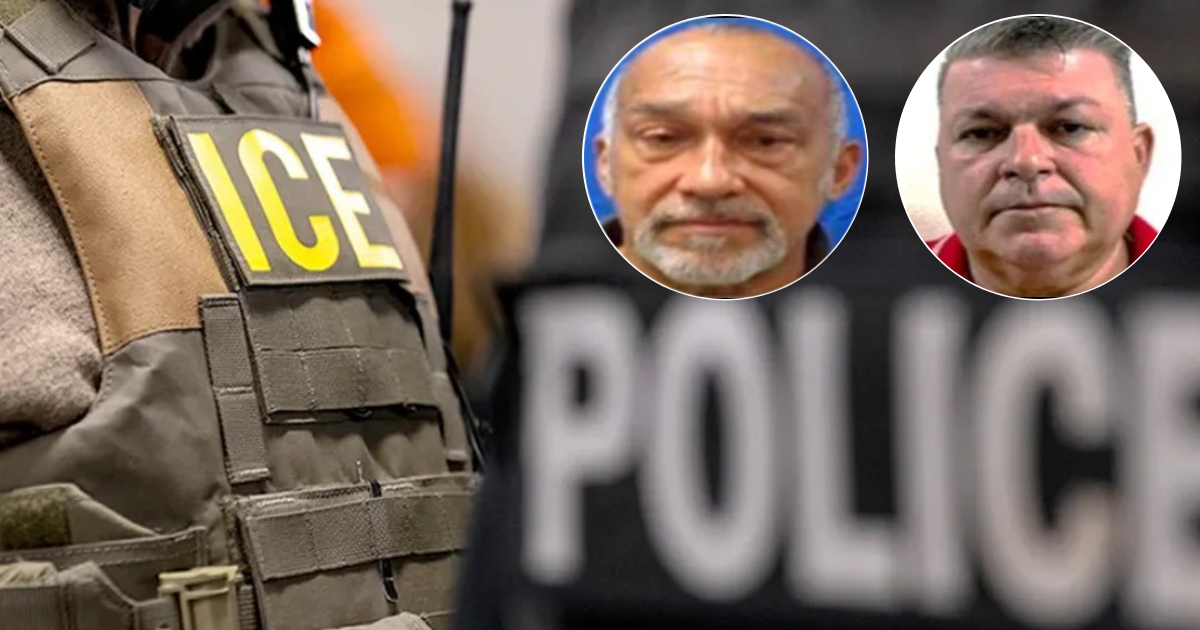
The U.S. Department of Homeland Security (DHS) has announced the capture of two Cuban nationals with serious criminal backgrounds, labeling them among the "worst illegal foreign criminals" in the nation.
Immigration and Customs Enforcement (ICE) agents apprehended these undocumented Cuban immigrants for crimes committed in both Florida and Puerto Rico. This action is part of a broader federal initiative aimed at identifying and removing foreign nationals with criminal histories who pose a threat to national and public safety.
Over the weekend, ICE took custody of Pablo Iván Gómez Torres, a Cuban whose criminal record includes convictions for murder, robbery, kidnapping, and fraud in Miami, Florida, according to a DHS statement on its official website.
On December 11, the agency arrested Mauro Humberto López Alemán, previously convicted of arson in San Juan, Puerto Rico.
The DHS highlighted these Cuban individuals alongside other illegal immigrants who have committed "heinous crimes," such as murder, child sexual assault, child exploitation, possession of child pornography, and drug trafficking.
These cases are being publicized by authorities to illustrate the increased stringency of immigration enforcement actions targeted at foreign nationals with criminal records.
The DHS, through ICE and other federal and state law enforcement agencies, has ramped up efforts to detain and deport illegal immigrants deemed a threat to U.S. safety.
In recent weeks, ICE operations have expanded in both frequency and scope across the country, amidst heightened migratory pressure and stricter enforcement of immigration laws.
The Trump administration has intensified its crackdown on illegal immigration, targeting not only the arrest and removal of violent foreign criminals but also individuals at various stages of their immigration processes, regardless of criminal activity.
Today, The New York Times reported that 22 Cuban migrants were flown to the Guantanamo Naval Base in eastern Cuba this week on an ICE-chartered flight from Louisiana. This marks the reactivation of the military enclave as a detention center after months of inactivity.
According to sources cited by the newspaper, five of the deported Cubans have been designated as "high-risk illegal aliens" and are detained in a facility previously used for alleged Al Qaeda members.
The DHS has not specified the final destination for these Cubans, nor whether they will be handed over to the Cuban regime.
The U.S. faces challenges in deporting certain migrants to Cuba, as the island's government has refused to accept nationals who committed crimes and served sentences in U.S. prisons, particularly those who left Cuba before the 2017 migration agreements.
Recently, there were reports suggesting a potential shift in Washington's immigration strategy, moving away from mass raids to a more selective approach. However, this week, the Trump administration denied any changes to its detention and deportation operations.
Immigration operations have sparked protests, allegations of racial profiling, and growing public disapproval. Recent polls indicate a decline in approval for Trump's immigration policies and increased fear among immigrants.
Key Questions on ICE's Detention of Cuban Nationals
What crimes were committed by the detained Cuban nationals?
Pablo Iván Gómez Torres was convicted of murder, robbery, kidnapping, and fraud in Miami, Florida. Mauro Humberto López Alemán was convicted of arson in San Juan, Puerto Rico.
Why were the Cuban nationals considered high-risk?
They were considered high-risk due to their severe criminal records, which included violent and dangerous offenses, posing a significant threat to public safety.
What challenges does the U.S. face in deporting these individuals to Cuba?
The U.S. faces difficulties as the Cuban government often refuses to accept nationals who committed crimes in the U.S. and left Cuba before the 2017 migration agreements.