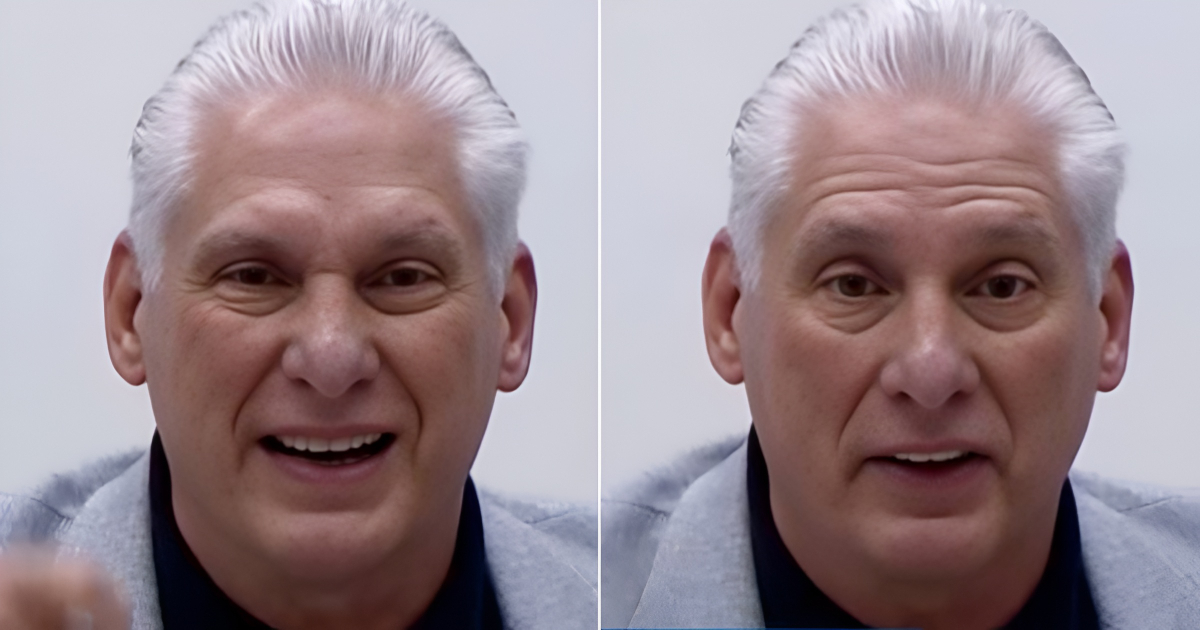
In a speech at the XI Plenary of the Communist Party, Miguel Díaz-Canel accused exiles and regime critics of "dreaming of another Cuba, one that is subjugated and dependent, like another star on the American flag."
This statement, designed to garner applause from indoctrinated minds, reveals something deeper than the worn-out anti-imperialist rhetoric of a dictatorship that has lasted over six decades: the totalitarian regime's fear of others' dreams.
The true aspiration of Cubans—both on the island and abroad—doesn't involve foreign flags or colonial nostalgia. Today's Cubans don't dream of becoming just another star; their wish is to stop being a shadow. They long for the ability to determine their own destiny, to express opinions without fear, to have salaries that mean something, and votes that truly count. They dream of homes without blackouts, food without endless lines, and a future where the airport isn't the only escape route.
The Essence of the Cuban Dream
The Cuban dream isn't some capitalist fantasy but rather a fundamental yearning for freedom, prosperity, and respect.
It's the freedom to speak without the fear of a police summons; the prosperity of living off one's work without being treated as a "usual suspect" for doing so; and the respect from a state that doesn't belittle its citizens with slogans, violate their basic human rights, but instead holds itself accountable and supports them within a framework of pluralistic, just, and democratic coexistence.
The Cuban who wakes up at four in the morning to stand in line isn't thinking of annexation or conspiracies; they are focused on how to feed their family. The young person leaving through Nicaragua or the Darién isn't fleeing the concept of socialism but its implementation by a despotic regime that's been in power for 66 years, turning survival into ideology. And the exile sending remittances isn't dreaming of a "dependent" Cuba but one where their relatives don't rely on them for food.
The regime's caricature of the exile as a horde of sellouts obsessed with Miami doesn't withstand serious analysis. The Cuban diaspora supports the island more than any political ally, and their dream of freedom is more Cuban today than the empty dogma of the Party.
The Regime's Dread
The dream of a free Cuba is simultaneously the nightmare for those who govern. If Cubans were ever allowed to choose, the Party and the heirs of "continuity" in dictatorship would lose their grip on power, privileges, and immunity.
If there were a free press, details about the lives of the elite and the country's wealth distribution would come to light. An independent judiciary would see many of those preaching "revolutionary morals" held accountable for corruption, repression, and abuses.
This is why the regime needs to maintain fear: fear of freedom, criticism, and difference. Under this logic, dreaming becomes dangerous, and dreamers are viewed with suspicion.
Díaz-Canel's speech translates this fear into political language, labeling those who envision an independent Cuba as "enemies" and those dreaming of civil and political rights as "mercenaries."
This isn't a misinterpretation due to non-existent dialogue; it reflects the survival instinct of the ruling class.
After more than six decades, the revolutionary power has produced its own aristocracy: a military, economic, and familial elite disconnected from the real country, shielded by the rhetoric of sacrifice while enjoying privileges unattainable for ordinary citizens.
This elite doesn't fear the embargo; it fears scrutiny. It doesn't fear the "empire"; it fears transparency. Its worst nightmare is a Cuba where the people question them openly and directly.
The End of a Narrative
For years, the regime sold the dream of social justice; today, it sells resignation. Its rhetoric no longer mobilizes or convinces; it merely manages collective indignation and exhaustion.
This is why Díaz-Canel talks about others' dreams with anger: he knows that Cubans no longer dream of the myths of the so-called "revolution," but rather of its end.
Cubans yearn for a nation where the government doesn't dictate what they should dream. When that dream awakens, the regime's nightmare will become a reality.
Key Questions About Cuba's Current Political Climate
What is the Cuban dream according to the article?
The Cuban dream, as described in the article, is a fundamental desire for freedom, prosperity, and respect. It involves the ability to determine one's own future, to express opinions freely, and to live without fear and dependency.
Why does the regime fear the dreams of Cubans?
The regime fears Cuban dreams because they represent a challenge to its power. If Cubans could freely express their desires and choose their leaders, it would jeopardize the privileges and control of the ruling class.