In light of the ongoing crisis shaking the nation, the Cuban government has decided to delay the 9th Congress of the Communist Party (PCC), which was originally scheduled for April 2026.
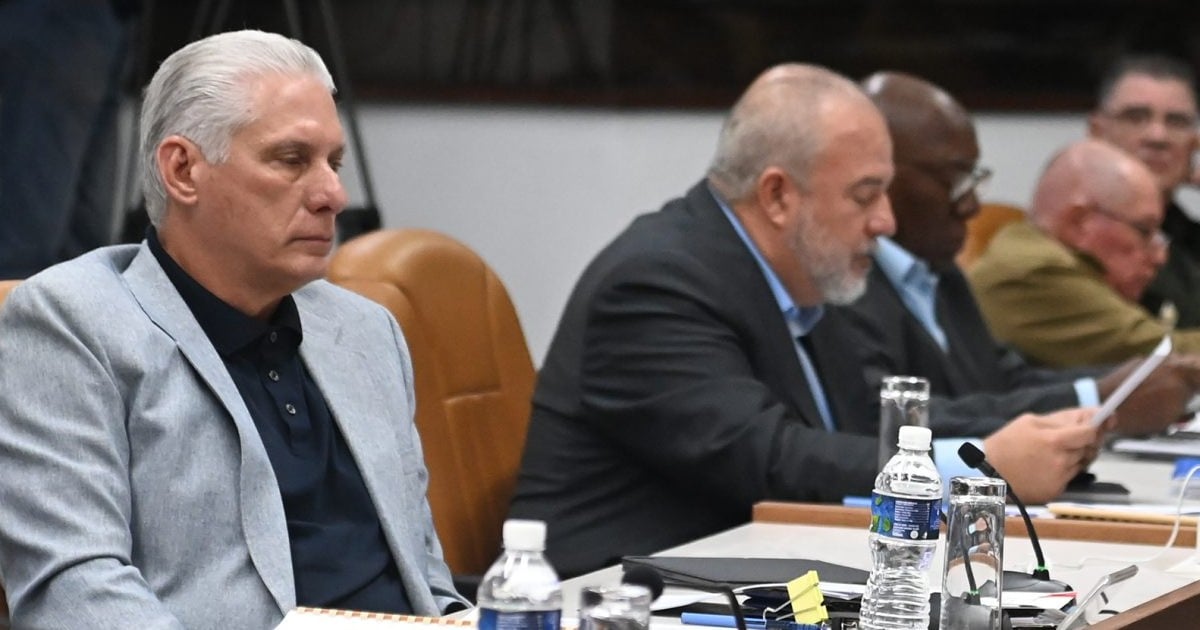
This decision was disclosed by Miguel Díaz-Canel during the 11th Plenary Session of the Central Committee, where he read a letter from General Raúl Castro, underscoring who remains in power on the island.
In the official statement, Raúl asserted that the postponement "should not be perceived as a setback," although he acknowledged that resources and leadership efforts must be focused on addressing the crisis.
"I believe it is advisable to defer the 9th Congress to a later date, dedicating all available resources and the efforts and energy of Party, Government, and State officials to solving current problems," the letter stated.
According to the aging General, postponing the event should not be viewed as a regression but as a necessary and timely decision that will improve conditions for a better Congress in the future.
However, the facts reveal a significant retreat: the country is plagued by constant power outages, chronic shortages, rampant inflation, and an exodus that drains the island, while the leadership uses the crisis as an excuse to cling to power.
Raúl's Rhetoric vs. Cuban RealityRaúl's speech focuses on terms like "consolidating forces" and "strengthening socialism," ignoring the urgent need to address the desperation of millions of Cubans living daily with hunger, healthcare deficiencies, and extreme restrictions.
The official rhetoric conceals the full extent of the economic and social collapse, turning the emergency into propaganda.
A Militarized Regime Clinging to the PastThe deferment of the Congress coincides with a strengthening of military power within the regime's leadership.
The 11th Central Committee Plenary promoted General Roberto Legrá Sotolongo, Chief of the General Staff of the Revolutionary Armed Forces (FAR), to the Political Bureau.
This inclusion enhances the presence of the old military guard loyal to Raúl Castro in the country's decision-making bodies, seemingly to maintain control in the face of potential dissent or calls for change.
Currently, four active Army Corps Generals—Lázaro Alberto Álvarez Casas, Álvaro López Miera, Joaquín Quintas Solá, and Roberto Legrá Sotolongo—constitute the core of military power.
Their presence confirms that, amidst the crisis, the government's structure prioritizes loyalty and control over management capability, reinforcing a leadership that clings to the Castro legacy and the tight grip of the armed forces.
The Persistence of a Dysfunctional ModelMeanwhile, the dictatorship persists with speeches of unity, resistance, and ideological battles, recycling slogans that no longer resonate with the population.
Their leaders' words cannot mask the reality: Cubans' daily lives are marked by blackouts, food shortages, lack of medicines, and mass emigration in search of opportunities beyond the island.
Prime Minister Manuel Marrero Cruz presented a program with hundreds of indicators and objectives, yet the regime's technocracy fails to translate into concrete solutions.
Government planning remains subject to maintaining political control, treating the economy as a power tool rather than a development instrument.
In this context, the postponement of the Congress, which Raúl Castro tries to present as strategic prudence, is merely an implicit acknowledgment of the regime's inability to meet its own deadlines and promises.
The crisis forces the government to concentrate on political survival rather than effective reforms, while the population continues to bear the cost of an administration unable to address their needs.
Cuba faces a clear regression: a Communist Party clinging to power, a strengthened military leadership, and a paralyzed economy, in a country that needs less propaganda and more real actions to ensure the dignity and rights of its people.
Understanding Cuba's Political and Economic Crisis
What led to the postponement of the Communist Party Congress in Cuba?
The postponement was due to the severe economic and social crisis in Cuba, which required the government to focus resources and leadership efforts on addressing immediate challenges rather than organizing the Congress.
How has the military's role in Cuba's government changed recently?
The military's role has been strengthened with the promotion of generals like Roberto Legrá Sotolongo to key decision-making positions, reinforcing the influence of the old guard loyal to Raúl Castro within the regime.
What are the main challenges faced by the Cuban population today?
Cubans are grappling with constant power outages, food and medicine shortages, rampant inflation, and a significant emigration wave, all contributing to widespread desperation and hardship.