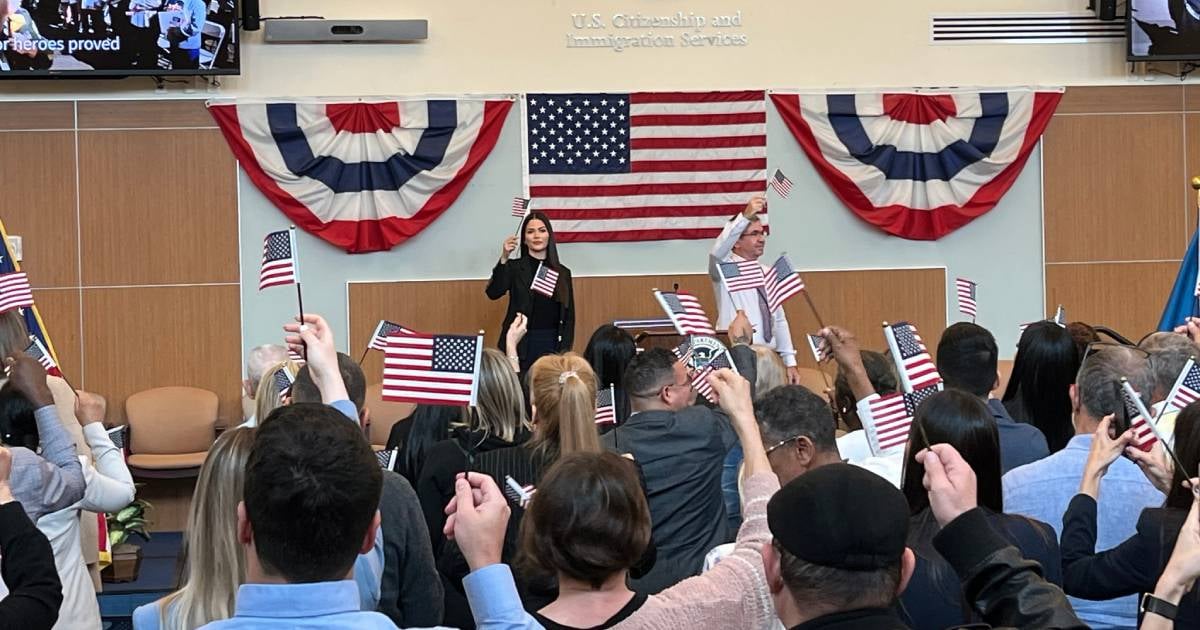
In a sweeping shift of U.S. immigration policy not seen in decades, the Trump administration has started to call off citizenship ceremonies for immigrants hailing from countries newly added to its travel ban list, as confirmed by ABC News.
This action, implemented quietly and without prior notification, has left individuals from Venezuela, Iran, and Afghanistan—who had already met all legal requirements for naturalization—without the final ceremony that annually grants citizenship to thousands of immigrants.
ABC News reported that ceremonies scheduled for later this week have been canceled, with no explanations given to those affected.
These cancellations come shortly after the Trump administration ordered a complete halt to asylum decisions. This decision followed a tragic incident where a National Guard soldier was killed by an Afghan immigrant. The government has since used this event as a rationale to tighten all immigration processes, from asylum to naturalization.
A spokesperson for the Department of Homeland Security (DHS) told ABC News that the administration is reviewing "all immigration benefits granted by the Biden administration to foreigners from countries of interest," emphasizing that citizenship is no longer an automatic right but a privilege subject to political and security standards defined by the White House.
"The Trump Administration is doing everything possible to ensure that those who become citizens are the best of the best," stated the spokesperson.
An immigration lawyer, quoted by ABC News, noted that naturalization interviews for individuals from these countries have also been canceled, again without explanation.
19 Countries on the Ban List: Cuba Included
The refreshed travel ban list includes 19 countries, such as Afghanistan, Iran, Haiti, Somalia, Venezuela, and Cuba. Homeland Security Secretary Kristi Noem mentioned that she advised President Trump to add even more nations, though she did not specify which ones.
In this context, the official message is clear: The United States is determining who will be "welcomed" based on increasingly broad and politicized criteria.
Noem has gone further, labeling immigrants from certain countries as "murderers, leeches, and welfare addicts," while advocating for a total entry ban on nations allegedly "flooding" the U.S. with foreigners.
While there has been no official word on whether Cubans have been directly impacted, Cuba's inclusion in the travel ban list puts thousands of Cubans in the U.S. in a position of heightened scrutiny, potential delays, and a legitimate fear that their immigration processes might be halted or re-evaluated.
Implications of the U.S. Travel Ban Policy
What countries are affected by the new U.S. travel ban?
The new travel ban affects 19 countries, including Afghanistan, Iran, Haiti, Somalia, Venezuela, and Cuba.
How has the travel ban impacted naturalization ceremonies?
Naturalization ceremonies for immigrants from the banned countries have been quietly canceled, leaving many without the final step to citizenship.
What is the rationale behind the cancellation of citizenship ceremonies?
The cancellations are part of a broader effort to reassess immigration benefits, citing political and security concerns as the main reasons.
Are Cubans directly affected by the travel ban?
While there's no direct confirmation, the inclusion of Cuba in the travel ban list means Cuban immigrants face increased scrutiny and potential delays.