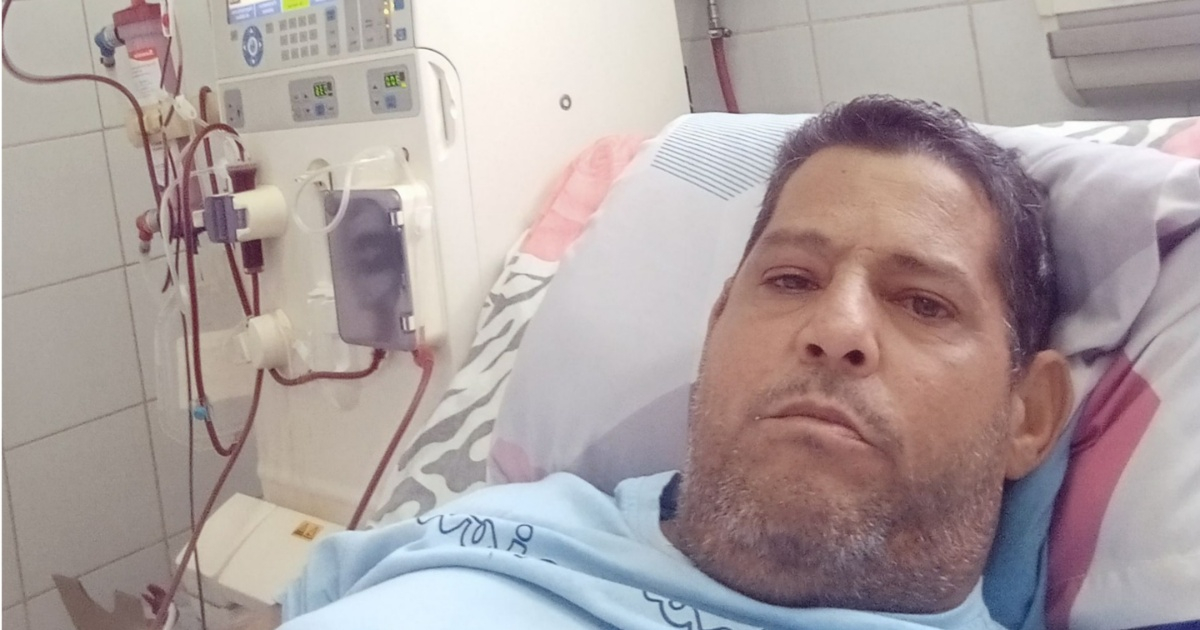
A patient undergoing hemodialysis in Remedios, Villa Clara, has urgently called for "medical intervention from other countries" to uphold his right to live.
In a Facebook post, Nelson Ledesma Martínez urged all hemodialysis patients in Villa Clara to unite and demand international medical assistance. "We deserve to live; we can no longer connect three times a week due to the lack of supplies. The State doesn't have these resources, yet they’re available on the street at exorbitant prices we cannot afford," he lamented.
Ledesma Martínez encouraged patients in similar situations to organize and assert their "right to continue living."
Institutional Neglect and Patient Struggles
Last August, a Cuban doctor and mother of a hemodialysis patient at Hospital Celia Sánchez Manduley in Manzanillo, Granma, voiced her frustration over the government's neglect. She harshly criticized the frequent disruptions in treatment and the authorities' apparent indifference, which endanger patient lives.
Her outrage led her to break her usual silence on social media, highlighting a dire situation that personally affects her. She revealed that treatments were suspended due to a lack of bicarbonate, noting the critical impact of missing treatments over the weekend, with the next session not until Tuesday.
"I'm left wondering how long we'll endure arriving for treatment only to find there's no water, no concentrate, no bicarbonate, or no dialyzers, or that sessions start late due to a lack of cleaning staff," she questioned.
She condemned the situation as a lack of "human sensitivity," calling it a disrespect to both patients and their families.
Cuba's Healthcare System in Crisis
These reports underscore the severe deterioration of Cuba's healthcare system, characterized by medication shortages, delays in surgeries and other treatments, poor infrastructure, and institutional neglect.
In July, José Ángel Portal Miranda, the Minister of Public Health, acknowledged before the National Assembly of People's Power that the healthcare system is experiencing an "unprecedented structural crisis." He reported that only 30% of essential medications are available, and hospitals suffer from significant organizational and material deficiencies.
The minister painted a grim picture of public health in Cuba, citing issues such as a shortage of medical supplies, professional exodus, rising maternal and infant mortality rates, and corruption within hospitals. However, adhering to the regime's official narrative, he attributed the situation to the U.S. embargo, without addressing the internal systemic failures.
Understanding the Cuban Healthcare Crisis
What are the main causes of Cuba's healthcare crisis?
The crisis is fueled by a severe shortage of medical supplies, organizational and material deficiencies in hospitals, professional exodus, and systemic issues within the healthcare system, compounded by the U.S. embargo.
How are patients affected by the healthcare system's deterioration?
Patients face frequent treatment disruptions, lack of essential supplies, and increasingly severe health risks due to the systemic failures and neglect by authorities.
What has been the response of Cuban authorities to the healthcare crisis?
While acknowledging the crisis, authorities have primarily blamed the U.S. embargo, without addressing the internal systemic issues contributing to the healthcare system's collapse.