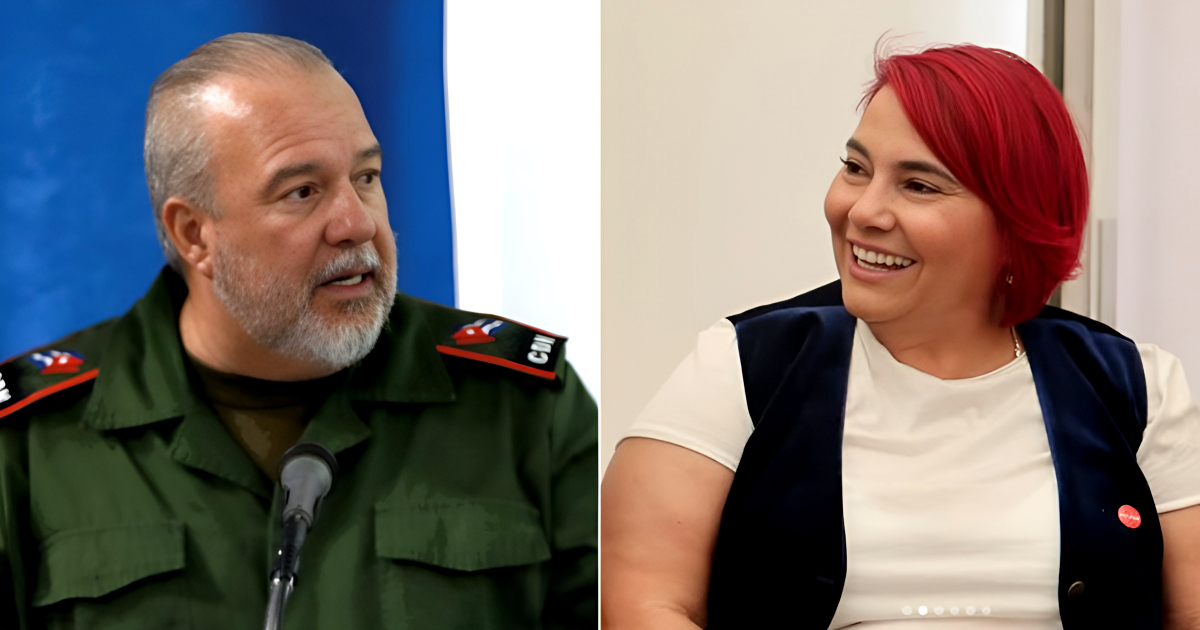
As Venezuela grapples with one of its most tense periods in recent years—marked by U.S. military presence in the Caribbean, economic turmoil, and growing social unrest—the country's Minister of Tourism, Leticia Cecilia Gómez Hernández, strives to project an image of normalcy, progress, and stability.
Through her Instagram account and public appearances, Gómez is seen smiling and leading the International Tourism Fair of Venezuela (FITVen 2025) in Puerto Cabello. The event even included a "5K walk" with hundreds of participants, appearing more as a propaganda effort than a civic activity.
While the nation struggles, the minister—originally from Cuba but now a Venezuelan citizen—adheres closely to the script of her mentor, Cuba's Prime Minister Manuel Marrero Cruz: using tourism as a facade of prosperity amidst collapse.
Political Strategy Exported: From Castroism to Caracas
Leticia Gómez is not a novice figure. She arrived in Venezuela in 2001, "hand-in-hand" with Marrero Cruz, who was then a leader of the hotel group Gaviota S.A., owned by GAESA, the military conglomerate at the heart of Cuba's economic regime.
Under Marrero Cruz's guidance, Gómez climbed from managing expropriated hotels to presiding over the state-owned Venetur, eventually becoming the Tourism Minister under Nicolás Maduro's government.
Her career mirrors the exportation of the Cuban model of economic and political control: disciplined technocrats serving the military state, with tourism acting as a channel to attract foreign currency and maintain power structures.
The Role of Tourism and Propaganda Amid Crisis
FITVen 2025, which Gómez promotes as "the great showcase of Venezuelan tourism," is meant to send a political message rather than an economic one: "The country stands strong, tourism grows, Venezuela moves forward." However, the context contradicts this narrative.
The Venezuelan Finance Observatory estimates annual inflation exceeds 230%, the average salary barely reaches $40 a month, and over 70% of the population lives below the poverty line.
Incoming tourism accounts for only 2% of GDP, with international arrivals down 60% since 2018. Power outages, insecurity, and transportation collapse make talk of "tourism reactivation" nearly impossible.
Despite these challenges, Gómez insists on promoting fairs, tours, and international campaigns. In her speeches, tourism is portrayed as the engine of national recovery, echoing Marrero Cruz's narrative in Cuba: tourism as the "locomotive of the socialist economy."
Hard Data: The Reality Behind the Tourism Rhetoric
Venezuela faces a 230% inflation rate, over 70% poverty, tourism contributing a mere 2% to GDP, and a 60% decline in international visitors.
In Cuba, tourist numbers have dropped 35% since 2019, inflation is estimated at 500%, widespread blackouts occur, and 40% of state investment is focused on hotels as agriculture and energy sectors falter.
Both regimes allocate more resources to tourism than to health or housing. In Cuba, for every dollar spent on hospitals, $1.70 is invested in hotels. In Venezuela, the Tourism Ministry's budget for 2025 surpasses that of Science and Technology.
The statistics are clear: neither Cuba nor Venezuela is experiencing genuine recovery. Tourism serves more to sustain power structures and secure foreign exchange that citizens never see.
A Network of Control and Privilege
In these regimes, tourism is not a conventional economic activity; it's a political control network.
In Cuba, GAESA— the military empire managing everything from hotels to banks—runs the main hotel chains, airports, and free zones. In Venezuela, Gómez replicates this model, involving military personnel, friendly businessmen, and structures tied to the Chavista power base.
Under the guise of "tourism cooperation," both countries have created opaque mechanisms for money laundering and evading international sanctions, often through joint ventures or phantom investments. Thus, tourism becomes a means of economic and political survival rather than an open or transparent industry.
In this context, Minister Gómez is more than just an official; she's a bridge between Havana and Caracas, a key player in exporting Cuba's economic-military model.
The Paradox of Normalcy
Hosting a tourism fair in Caracas while the country faces blackouts, shortages, and the threat of war reveals a strategy of manipulation.
It's about using the appearance of normalcy as a propaganda tool. The same script Marrero Cruz applies in Cuba: pictures of gleaming hotels, empty beaches, and investment promises amidst national collapse.
FITVen is not a commercial fair; it's an image operation. It serves to project a stable Venezuela open to the world when reality tells a different story. Most importantly, it reinforces the Chavista regime's narrative of resistance: "We remain standing, even under foreign threat."
In Cuba, Marrero Cruz has perfected this method. He has stated that "Cuba is experiencing a favorable moment for foreign investment," even while the island faces its worst economic crisis since the 1990s.
The figures contradict this: tourism has plummeted, the population endures up to 12-hour daily blackouts, and the Cuban peso devalues at a historic rate.
This contrast between rhetoric and reality—between the official's smile and the people's hardship—is the hallmark of Marrero Cruz's style: a cynicism that denies the crisis, redefines ruin as opportunity, and turns propaganda into state policy.
Final Reflection
Leticia Gómez Hernández embodies the continuation of the Marreroist model: tourism without tourists, prosperity without people, and propaganda without shame.
Her smiles in Puerto Cabello, her fairs, and walks are part of a script she's memorized: projecting joy amidst disaster, showing order in chaos, pretending stability as everything falls apart.
In both Cuba and Venezuela, tourism today is a pretext: a facade to capture foreign exchange, a stage for official photos, and an excuse to maintain political control.
But reality, stubborn as it is, always seeps through. While the minister celebrates her fair, Venezuelans continue to emigrate, international flights are suspended due to military tension, and inflation devours salaries. While Marrero proclaims "new opportunities," Cubans endure endless lines for bread or fuel.
Both mentor and protégé speak of prosperity in countries falling apart. Perhaps the greatest lesson Leticia Gómez learned from Marrero Cruz is that in the socialist Caribbean regimes, the appearance of normalcy is more valuable than the truth.
Understanding Tourism as Political Propaganda in Venezuela and Cuba
What is the primary goal of tourism in Venezuela and Cuba according to the article?
The primary goal of tourism in these countries is to project an image of prosperity and stability, serving as a facade to maintain power structures and secure foreign exchange, despite underlying economic and social issues.
How has Leticia Gómez's career been influenced by Manuel Marrero Cruz?
Leticia Gómez's career has been shaped by Marrero Cruz's guidance, following a model of using tourism as a political tool to portray economic growth and stability, despite the reality of crisis within the country.
Why does the article describe the tourism fairs in Venezuela as propaganda?
The article describes these fairs as propaganda because they are used to project an image of economic vitality and resilience, while the actual economic conditions reveal significant hardships faced by the population.
What similarities exist between the tourism strategies of Venezuela and Cuba?
Both countries use tourism as a political tool to create an illusion of economic growth, focusing on propaganda and control, rather than reflecting the true economic situation marked by poverty and inflation.