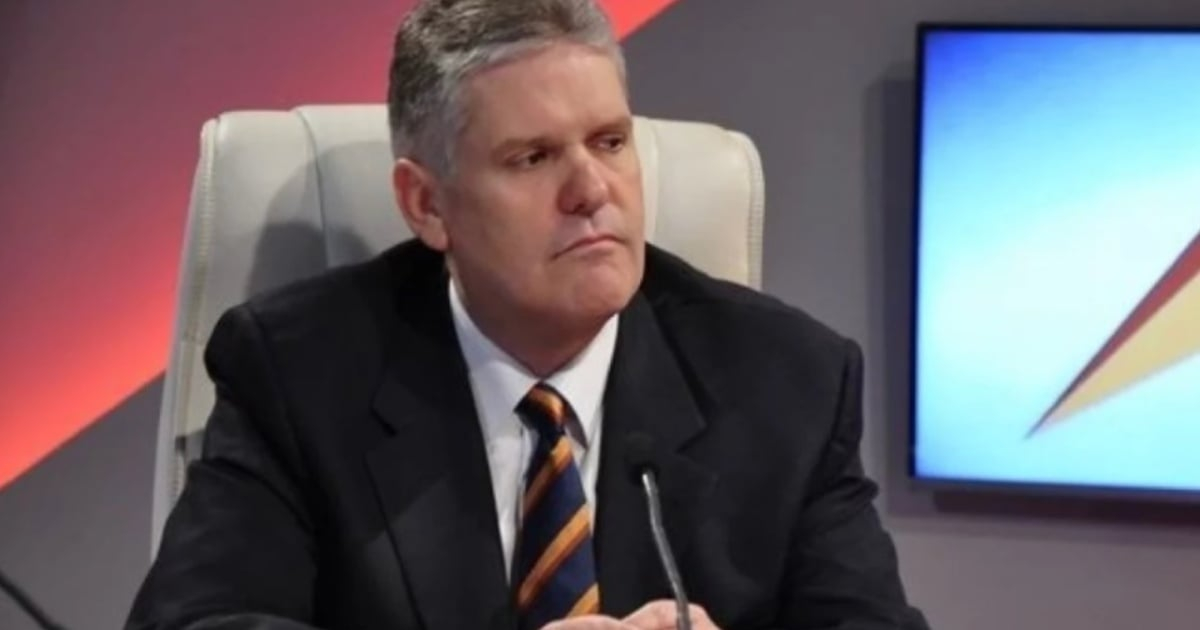
The second trial of the ousted former Economy Minister, Alejandro Gil Fernández, wrapped up on Saturday at the Marianao Courthouse in Havana, as reported by journalist Mario J. Pentón.
Charges against him included economic crimes such as embezzlement, tax evasion, influence peddling, and money laundering, according to Martí Noticias.
Gil's children were allowed to attend the trial after signing a confidentiality agreement.
In an interview with Pentón on Saturday, María Victoria Gil, the accused's sister, stated that the former minister confessed to some economic offenses, claiming he is being scapegoated for the regime's crisis.
“The true culprits have been removed from the process. Alejandro is the scapegoat,” she remarked.
Díaz-Canel’s Role as a Witness
María Victoria further revealed that Cuban leader Miguel Díaz-Canel appeared as a prosecution witness in the economic crimes trial against her brother, whom he had long presented as a trusted confidant, academically mentored, and publicly praised even after his removal from office.
The proceedings, shrouded in secrecy and conducted behind closed doors, mark the second trial for the ex-minister; the first was for espionage, during which the prosecutor sought a life sentence, as announced on Cuban National Television.
This time, however, not a single official report has informed the public about the trial for corruption, money laundering, influence peddling, and other economic offenses, causing outrage among the accused's family.
María Victoria, who lives in Spain, claimed to have direct sources within the process and confirmed that the trial lasted four days and concluded with a verdict pending, albeit under “absolute secrecy.”
“The population hasn't even received information through the national television news... It's a disrespect towards the Cuban people,” she criticized, noting that in Spain, even trials against high-profile state figures are made public.
One of the most controversial points revealed by María Victoria was Díaz-Canel's presence as a prosecution witness.
“The President of the Republic of Cuba, Miguel Mario Díaz-Canel, has appeared at the trial against my brother as a prosecution witness. A prosecution witness is a witness for the accusation,” she emphasized.
The lawyer recalled the close relationship between the two: Díaz-Canel was the mentor for Alejandro Gil's Economics thesis.
On February 2, 2024, a day after his dismissal, he publicly congratulated him for his “excellent work.” On February 6, on his birthday, he congratulated him again and even invited him to continue working for the revolution.
“They were one, they were one. My sister-in-law would tell me ‘they adore each other, they can't live without each other.’ And now, just to clean his tarnished image nationally and internationally, he is capable of testifying against my brother as a prosecution witness in a corruption trial. It's disgraceful,” María Victoria told Pentón, calling Díaz-Canel's actions a personal and political betrayal.
Family Silence and Public Outcry
The ex-minister's sister also denounced direct pressures on the family to maintain silence.
“My niece begged me, ‘aunt, please don't speak anymore, it doesn't help my father,’” she recounted.
Despite this request, María Victoria chose to speak publicly, arguing that “the Cuban people have the right” to know the details of a high-level corruption case.
“I speak because I have the truth in my hands and because it's incredible that the people are being denied the right to know what happened with one of the country's most important ministers,” she asserted.
The lawyer acknowledged that her brother has admitted to several economic crimes. “I know my brother committed economic crimes... Power corrupts, and when you're in a corrupt circle, the environment draws you in without you realizing it,” she said, emphasizing that no minister leaves “clean” from a system she described as inherently corrupt.
A Scapegoat for a Corrupt System
María Victoria reiterated that Gil is being used as a “scapegoat.”
“It's impossible for all this corruption to have occurred and only Gil falls... The key figures have disappeared along the way, leaving only the lower levels. Here, the only one paying the price is Alejandro Miguel Gil Fernández,” she denounced.
She announced plans to take the case “to the last consequences,” even to the International Court of Justice, asserting her goal is that if economic crimes are proven, “all involved must fall with him,” including other high-ranking officials who participated or turned a blind eye.
María Victoria also questioned the abandonment by the elite that surrounded the ex-minister during his time in power.
She mentioned names of public figures who frequented his home and benefited from his proximity to power, and who, she claims, have now disappeared.
“During these difficult years, when have they visited my brother in prison, or asked my family if he is okay?” she questioned, stating that “those who once honored him and requested favors are now absent.”
As the regime keeps the trial shrouded in opacity, the only news comes from independent media and María Victoria herself, who has chosen to confront the imposed silence and denounce what she sees as a political maneuver to salvage the leadership's image, with Díaz-Canel at the forefront, at the expense of one of his closest allies.
Key Questions About Alejandro Gil's Trial
What were the charges against Alejandro Gil Fernández?
Alejandro Gil Fernández faced charges for economic crimes, including embezzlement, tax evasion, influence peddling, and money laundering.
Why is Díaz-Canel's testimony significant in the trial?
Díaz-Canel's testimony is significant because he was once a close confidant of Alejandro Gil and his appearance as a prosecution witness suggests a political maneuver to distance himself from the accused amid a corruption scandal.
How has María Victoria Gil responded to the trial's secrecy?
María Victoria Gil has publicly criticized the lack of transparency in the trial, asserting that the Cuban people have the right to know the details of the case and has vowed to take the matter to international courts if necessary.