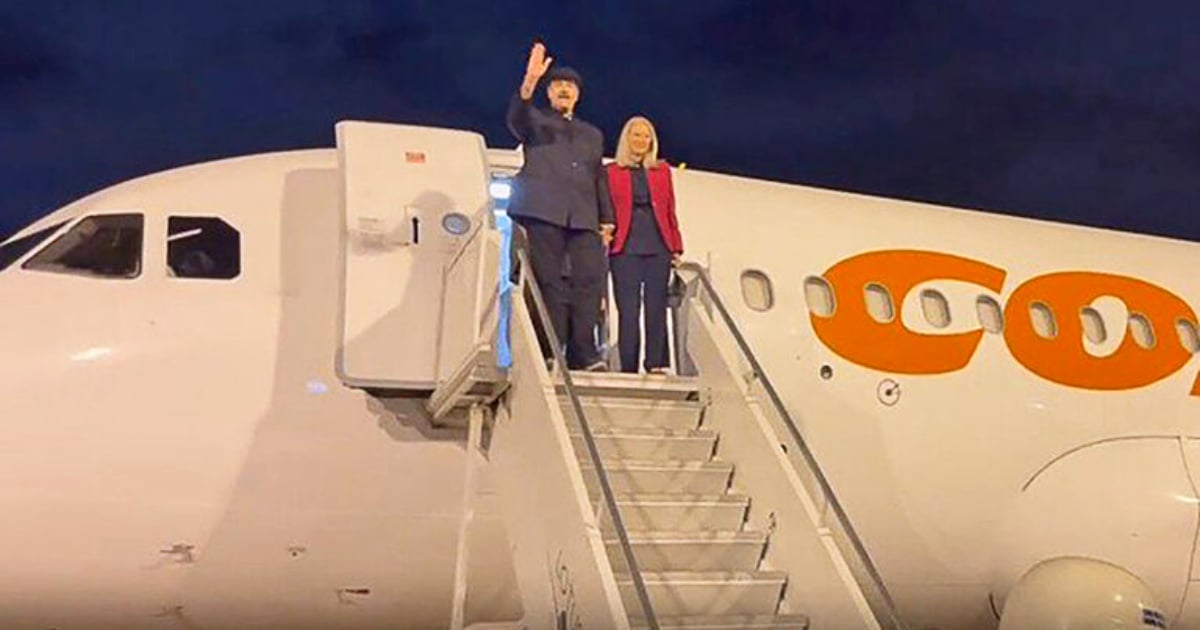
A plane operated by the Venezuelan regime, previously used for transporting dictator Nicolás Maduro, flew near the Venezuelan-Brazilian border on Saturday. This maneuver occurs amidst escalating regional tensions due to the increased U.S. military presence in the Caribbean, as reported by CNN Brazil.
The aircraft, an Airbus A-319 with registration YV2984, is managed by the state airline Conviasa and is designated as a "government VIP" plane. It departed from Caracas, headed to the Santa Elena de Uairén airport—close to Paracaima in Brazil's Roraima state—before returning to the Venezuelan capital.
Although the plane's history suggests it is often used by Maduro for official trips, sources from CNN Brazil indicate there is no evidence he was on board during this flight. Additionally, the Brazilian army command at the border confirmed they have no information regarding a potential escape by the Venezuelan president.
Brazil's Reaction to U.S. Military Expansion
This flight coincides with President Trump's recent order to completely close the airspace over Venezuela—a move Washington claims is to strengthen its anti-drug operations in the region.
The presence of the plane near the Venezuelan border raised further concerns in Brazil, which has publicly expressed its disapproval of the U.S. military buildup in Caribbean waters in recent days.
Brazilian President Luiz Inácio Lula da Silva expressed significant concern over the consequences of this mobilization and announced his intention to speak with Trump to avert any conflict.
Meanwhile, Brazilian Defense Minister José Múcio stated that the country's Armed Forces are maintaining constant surveillance at the Venezuelan border to prevent their territory from becoming a "trench" in any potential confrontation. However, he confirmed that Brazil will remain neutral, urging respect for Venezuelan sovereignty.
Call for Regional Dialogue
Brazil's foreign minister also called for regional dialogue. In recent statements, he emphasized the importance of addressing the airspace closure and increased U.S. naval and air forces with diplomacy rather than threats. Ambassador Mauro Vieira noted that Brazil's proposal is to maintain Caribbean stability and prevent the crisis from deepening.
Implications of the Flight for Venezuela's Strategy
The Venezuelan state plane's flight towards the Brazilian border occurs under mounting pressure. Following the designation of the so-called Cartel of the Suns as a terrorist organization and the airspace closure order, the Trump administration intensified its Caribbean operations, including naval patrols, airline warnings, and potential land actions against drug trafficking networks.
For Caracas, any movement of a government aircraft near the borders could be seen as part of its survival strategy amidst the encirclement.
The aircraft's return without visible signs of escape can be interpreted as an ambiguous message: keeping official operations active while securing escape or supply lines amid sanctions.
For Brazil, the situation underscores the urgency to prevent its border from becoming ground zero for any potential conflict. Its call for dialogue and neutrality aims to mitigate the impact of the Venezuelan crisis on Brazilian soil.
The overflight of the Venezuelan A-319 towards the Brazilian frontier happens at a pivotal moment in the Venezuela-U.S. crisis. While there is no confirmation of Maduro's escape, the act carries symbolic weight in a scenario of heightened military tension, sanctions, and warnings.
The coming hours will be crucial to observe if governmental plane mobilizations recur and how neighboring countries respond to Washington's pressure.
Key Questions About the Venezuela-Brazil Border Tensions
Why did the Venezuelan plane fly near the Brazilian border?
The flight occurred during a period of heightened regional tensions due to increased U.S. military activity in the Caribbean. It could be seen as part of Venezuela's strategy to maintain operations and possibly secure supply lines amidst U.S. sanctions.
How has Brazil reacted to the U.S. military buildup in the Caribbean?
Brazil has expressed concerns over the U.S. military expansion and maintains a position of neutrality, urging respect for Venezuelan sovereignty. It has called for regional dialogue to address the situation diplomatically.
What are the implications of the plane's flight for Venezuela?
The flight is seen as an ambiguous move, possibly signaling Venezuela's intent to keep official operations running while safeguarding escape or supply routes. It reflects the country's strategy to navigate the increasing pressure from the U.S.