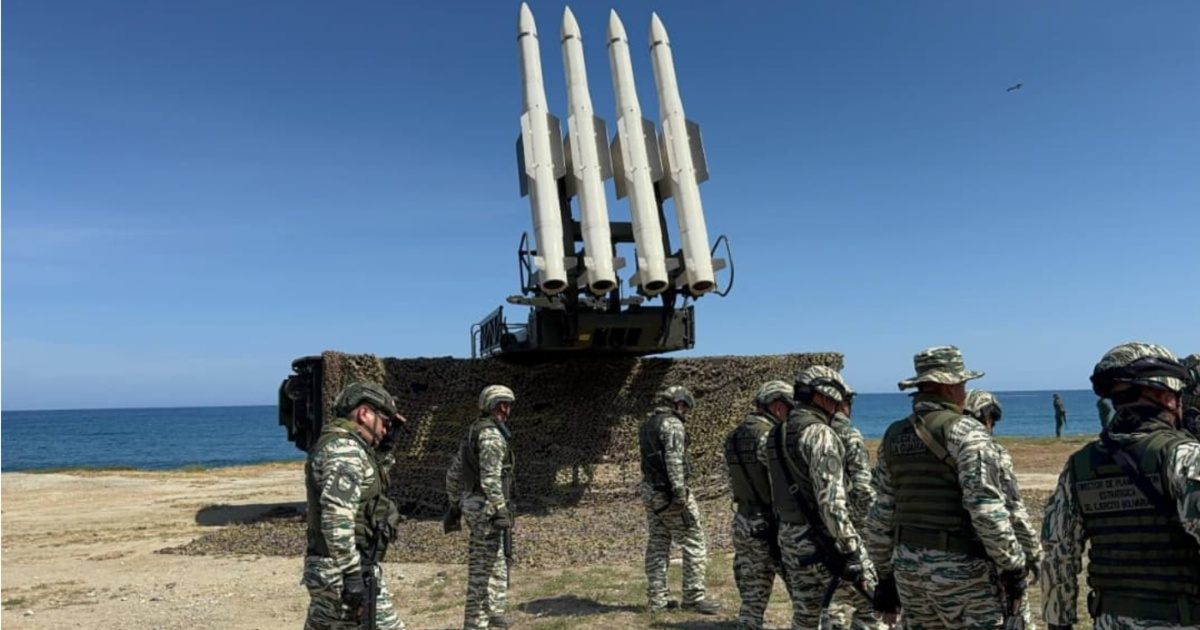
Nicolás Maduro, the Venezuelan leader, insists that his nation is poised to withstand any external aggression. However, the actual capacity of Venezuela's military significantly lags behind the formidable U.S. armed forces.
As per military insiders and planning documents reviewed by Reuters, Venezuela, crippled by economic turmoil, is grappling with a weakened, inadequately trained military equipped with outdated gear.
As a result, in the face of a prospective U.S. offensive, Venezuela’s strategy would likely shift away from direct military confrontation, leaning instead towards guerrilla-style resistance and internal destabilization efforts.
Rising Tensions and Military Readiness
Tensions escalated after former U.S. President Donald Trump declared Venezuelan airspace and its surrounding areas completely closed. This proclamation was accompanied by warnings that operations against suspected drug ships in the Caribbean and Pacific, which resulted in over 80 fatalities, could evolve into ground actions on Venezuelan soil.
Despite Trump’s discussions with Maduro about a potential visit to the U.S., Washington's general stance has been one of mounting political and military pressure.
Six informed sources agree that U.S. military strength vastly overshadows that of Venezuela, which is plagued by serious issues such as insufficient training, low wages, and deteriorated military equipment.
Challenges of an Underfunded Military
Under Maduro's leadership since 2013, military leaders have enjoyed privileges and government positions, ensuring their loyalty. However, the situation is starkly different for rank-and-file soldiers, who earn approximately $100 a month in local currency—about one-fifth of what an average family needs for basic necessities. This disparity has fueled discontent within the ranks.
Reports indicate desertions are already occurring in numerous units, and in the event of a U.S. military assault, this trend could accelerate, further eroding the regular army's response capabilities.
Venezuelan troops' recent experiences have not been in conventional warfare but in confronting unarmed civilians during street protests, highlighting their lack of preparation for high-intensity conflict.
Obsolete Equipment and Guerrilla Tactics
Military hardware remains a critical vulnerability. Much of the arsenal, including Russian-made equipment, is decades old. Venezuela acquired about 20 Sukhoi fighter jets in the 2000s but these are markedly inferior to platforms like the U.S. B-2 bombers.
The same outdated status applies to helicopters, tanks, and Igla portable missiles, which are technologically outmatched by U.S. air and tech capabilities.
Maduro claims that eight million civilians are training in militias to defend the country from external threats. However, a source drastically reduces this operational figure, estimating that only a few thousand intelligence agents, armed party loyalists, and militia members would actively engage in defensive actions if needed.
Internal planning documents and sources suggest that rather than waging a conventional war, Venezuela would prepare for a "prolonged resistance" guerrilla-style in the event of aerial or ground attacks.
This plan involves small military units executing sabotage, ambushes, and attrition tactics from over 280 locations across the country, avoiding direct confrontation with a militarily superior enemy.
Central to this strategy is deploying approximately 5,000 Igla missiles, which Maduro claims are already positioned. Orders dictate these units scatter and conceal at the onset of any offensive, complicating enemy air and helicopter operations.
Internal Chaos and Potential Anarchy
Additionally, there is an internal response strategy referred to as "anarquización," not publicly acknowledged by authorities. According to sources, this plan would employ intelligence services and armed party supporters to create disorder in Caracas, making the country ungovernable if a foreign intervention occurs.
This strategy aims to blend military sabotage with political violence and urban chaos, increasing the costs of any occupation or regime change operation.
Key actors in this scheme include "colectivos," government supporters often seen mobilizing in motorcycle caravans to counter opposition protests, occasionally armed. These groups, along with Colombian guerrillas in western Venezuela's border regions, areas also significant for coca cultivation—the base ingredient for cocaine—play a role in this strategy.
Drug Trafficking Allegations and U.S. Interests
Opposition groups, NGOs, the U.S. government, and several Latin American countries have frequently accused Maduro and the Venezuelan military of ties to drug trafficking networks, which are also blamed for substantial violence.
The Venezuelan government refutes these allegations, arguing that Washington seeks regime change to seize control of the country's vast oil reserves.
In the official narrative, any escalation of military pressure or sanctions is portrayed as part of an "economic and political war" driven by the United States.
Given the contrasted military capabilities and the real state of Venezuela's armed forces, the government seems to place less confidence in a successful conventional defense and more in its ability to prolong conflict, amplify internal violence, and raise the political and human costs of any foreign intervention.
Understanding the Dynamics of a Potential U.S.-Venezuela Conflict
What is the primary strategy of Venezuela against a U.S. attack?
Venezuela's primary strategy would be to employ guerrilla-style resistance and internal destabilization rather than direct military confrontation.
How does the state of Venezuela's military compare to that of the U.S.?
Venezuela's military is significantly weaker, with insufficient training, low wages, and outdated equipment, compared to the technologically advanced and well-funded U.S. armed forces.
What role do "colectivos" play in Venezuela's defense strategy?
"Colectivos" are government supporters who could be mobilized to create urban chaos and counter opposition protests, contributing to a strategy of internal disruption.