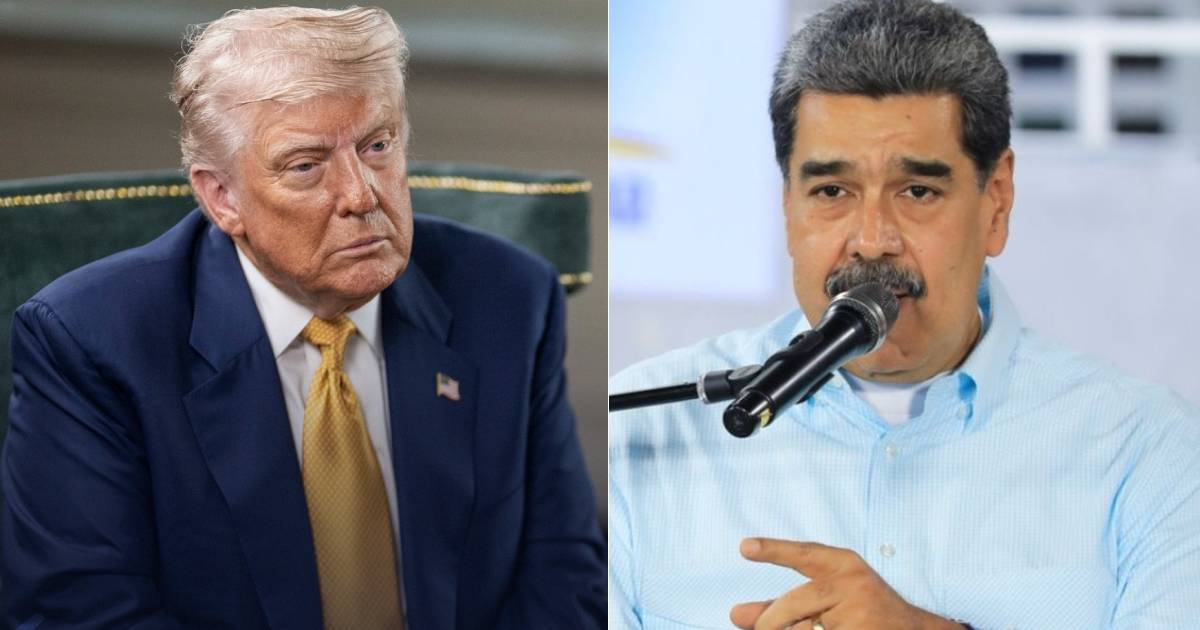
A confidential phone call between Donald Trump and Nicolás Maduro has come to light, first reported by The New York Times and further detailed by Infobae. The call revealed a high-stakes scenario between Washington and Caracas, where military threats and unprecedented pressure overshadowed diplomatic language.
According to Infobae's report, Trump was explicit, warning that the United States would step up its military actions if Maduro failed to leave Caracas soon, along with the main figures of the Venezuelan regime.
This conversation took place last weekend, with the crucial involvement of Secretary of State Marco Rubio, a key figure in the hardline stance against the Venezuelan government.
The call extended beyond initial reports suggesting that the two leaders discussed a possible meeting on U.S. soil. However, Infobae noted that the White House firmly denied any intention of a Trump-Maduro summit. A spokesperson for the Argentine outlet called it "an invention."
Direct Demand: "Leave Caracas Immediately"
Infobae states that Trump didn't suggest negotiations or a transition plan. Instead, he demanded Maduro and his close associates vacate Caracas immediately. This implies figures like Diosdado Cabello, Vladimir Padrino, and siblings Delcy and Jorge Rodríguez—linked by Washington to illegal dealings in drugs, arms, and oil—should also depart.
Following the call, the State Department labeled the Cartel of the Suns as a Foreign Terrorist Organization (FTO), empowering the U.S. to expand military and financial actions against the Venezuelan leadership. Washington considers Maduro the head of this network, an accusation he denies.
U.S. Military Tactics and Diplomatic Pressure
Meanwhile, the Pentagon maintains a military presence off Venezuela's coast, with top officials indicating operations will intensify between December and January.
During a Thanksgiving address to U.S. troops, Trump emphasized a focus on intercepting shipments "by land," asserting that "nothing is off the table."
This escalation aligns with a dual-track strategy where the U.S. combines military interventions, including Caribbean bombings, with diplomatic pressure and covert operations. Reuters reported increased CIA activities aimed at preparing "political transition options."
After the initial leak about the call, Maduro led a military parade in Caracas, accusing Washington of plotting an invasion. He reiterated, "We do not want war, but if attacked, we will respond with the full force of the nation."
Neighboring countries like Colombia have expressed concerns about the legality of U.S. operations and their potential humanitarian impact, especially after reports from The Washington Post about alleged "double tap" attacks in the Caribbean, repeated bombings to eliminate survivors, which the Pentagon has denied.
Key Questions about U.S.-Venezuela Relations
What was the main topic of discussion between Trump and Maduro?
The primary focus was Trump's demand for Maduro and his regime to leave Caracas, under the threat of increased U.S. military actions.
How did the U.S. respond after the phone call?
The U.S. designated the Cartel of the Suns as a Foreign Terrorist Organization and maintained military presence around Venezuela, with plans to intensify operations.
What has been Maduro's reaction to the U.S. actions?
Maduro has accused the U.S. of planning an invasion and has stated that Venezuela is prepared to defend itself if attacked.