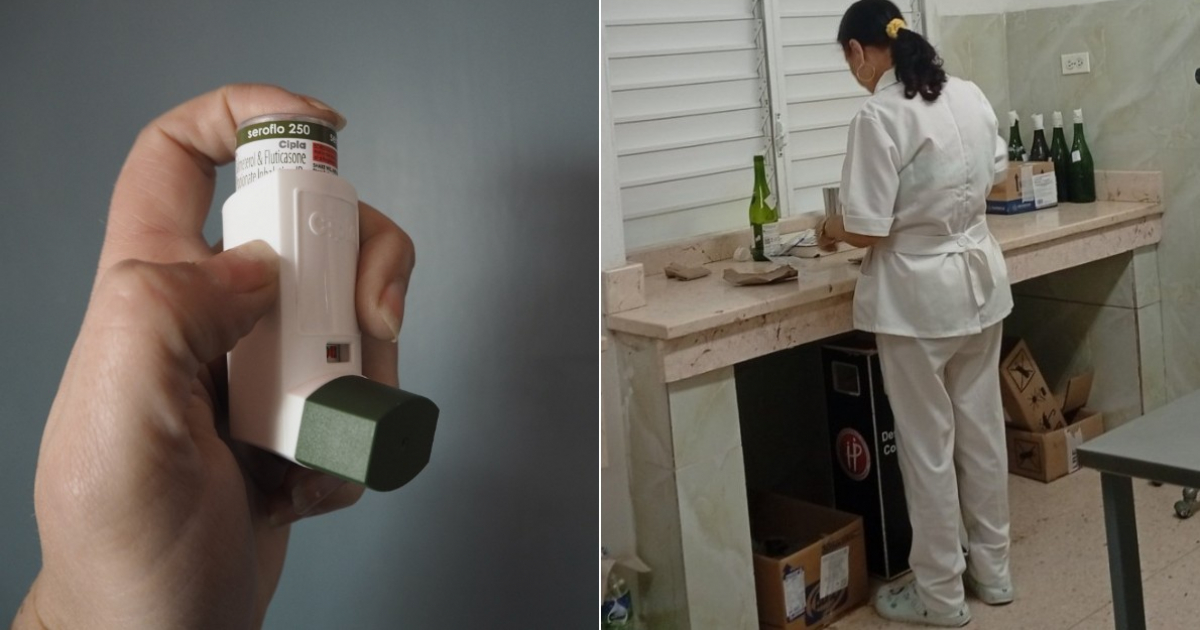
A recent announcement from the Matanzas Health Directorate has sparked significant outrage among medical professionals, journalists, and citizens alike. The message attempts to downplay the shortage of aerosol nozzles in emergency rooms—a critical tool for addressing respiratory crises like asthma attacks.
Shared on Facebook under the title "The Science Behind Your Breathing: Aerosol Nozzles in Emergencies," the official statement claims that while the nozzle is "a useful tool," its absence "does not pose a vital risk" nor does it prevent patients from receiving appropriate care.
The post elaborates that medical staff are equipped to deliver medication "through various methods and devices," which are also "effective" in treating respiratory conditions, ensuring medication efficacy.
Rather than soothing concerns, the statement has provoked a flood of criticism from healthcare professionals who challenge its accuracy and highlight the dire state of both the provincial and national healthcare systems.
Healthcare Workers Call Out Health Authorities
Doctors have openly refuted the health department's claims, with one physician leading the charge by posting a pointed comment:
"Who wrote this? Certainly not a doctor! Which updated protocol states that aerosol is not the first line of treatment for asthma attacks? Let me see it, so I can study it."
The doctor further emphasized the almost total lack of supplies in emergency rooms, ranging from basic medications to proper lighting necessary for safely administering injections.
She noted that medical staff often have to bring their own supplies to ensure patients don't die due to systemic shortages and criticized the attempt to portray a false sense of normalcy. "This publication is an embarrassment," she declared.
Another doctor from the Milanés area also criticized the institutional message, questioning the absence of essential equipment like sphygmomanometers in emergency rooms. "Is that unnecessary too? I'm sure this nonsense wasn't written by a doctor who actually faces the public during shifts," she stated.
Respiratory Crisis Amidst Rising Infections
The shortage comes at a time of year particularly challenging for those with respiratory illnesses. Official journalist Yuni Moliner highlighted the widespread nature of the shortage, noting that "Milanés has no nozzles, the Pediatric Hospital has five, and Playa has only six. This season is terrible for people with respiratory diseases," she detailed.
These shortages are not isolated incidents but rather indicative of a collapsed healthcare system characterized by dilapidated hospitals, lack of essential supplies, and understaffed medical facilities.
This is occurring as the government has recently acknowledged the severity of increasing respiratory illnesses and the scale of infections within the population, with over 100 people, mostly children and adolescents, currently in intensive care.
The Public Responds to Official Denial
Public indignation has grown, with citizens demanding accountability. "Explain how an aerosol is administered without a nebulizer," one local resident challenged, noting there is no alternative to a nebulizer or nozzle.
"Stop trying to cover up the reality," she urged, criticizing medical professionals who publicly claim all resources are available when they themselves know otherwise.
Another commenter emphasized that without these tools, healthcare providers cannot ensure medication reaches patients' respiratory systems. "Health administrators should find nozzles or oxygen masks," she insisted, adding that "creative resistance" does not apply in these cases.
A Tired Population Facing Empty Promises
Comments on the post have become increasingly harsh. Phrases like "They need to find their lost shame on a large scale," "I want to see a video of aerosol being administered without a nozzle," "The science behind the stupidity of such publications," and "This is madness, and dangerous madness at that," reflect the public sentiment.
One user summarized the general feeling: "Emergency rooms operate 24 hours with just two nozzles, and the pediatric respiratory ward with five. Stop with these disgusting publications. The healthcare system in Cuba is failing."
This official attempt to downplay the critical shortage of aerosol nozzles—an essential and widely used resource—has further exposed the harsh reality faced by both healthcare professionals and patients. Amidst the rise in respiratory illnesses on the Island, the population feels abandoned, lacking medications, essential equipment, and the basic infrastructure needed for decent care.
The reaction from doctors illustrates the accumulated exhaustion from years of improvisation, official silence, and a progressive decline that now even affects the ability to respond to common emergencies. As the healthcare crisis continues to deepen, indignation grows—not just due to shortages, but because of the gap between the harsh reality and the official narrative attempting to deny it.
Key Questions on Cuba's Healthcare Crisis
Why is the shortage of aerosol nozzles in Matanzas significant?
Aerosol nozzles are crucial for treating respiratory crises such as asthma attacks. Their shortage compromises the ability to deliver effective care, highlighting broader issues within the healthcare system.
How have healthcare professionals in Matanzas responded to the official statement?
Healthcare professionals have criticized the statement, challenging its accuracy and pointing out the severe lack of supplies and equipment necessary for providing adequate care.
What impact does the shortage have during the current season?
The shortage is particularly impactful during this season, which is tough for individuals with respiratory conditions, exacerbating the challenges faced by patients and healthcare providers.