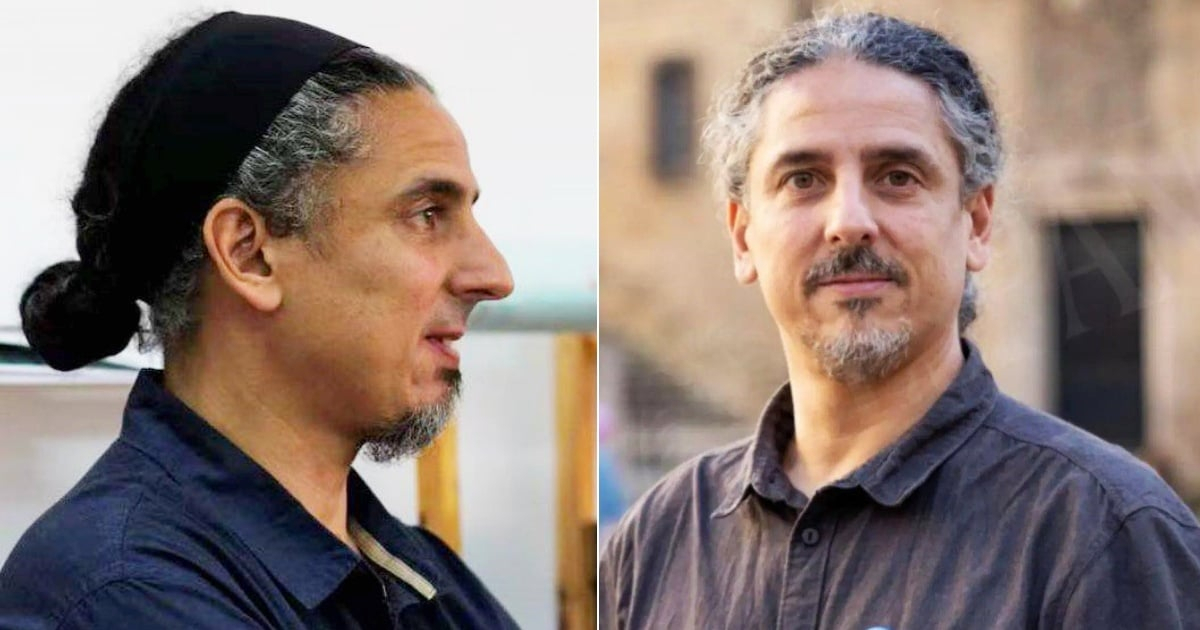
The Spanish fugitive, Martiño Ramos Soto, sentenced to 13 and a half years in prison in Spain for sexually assaulting a minor, was apprehended in Havana due to a series of oversights that exposed his fabricated identity as "Martín Soto."
According to reports by El Mundo, the former Galician politician led a seemingly normal life in Cuba's capital for months, attending cultural events and posing as a photographer. However, a familiar face, a social media tip-off, and a sudden farewell unraveled his disguise.
Ramos had crafted a new existence in Cuba, living a conspicuously lavish lifestyle. He wore expensive clothes, owned state-of-the-art cameras, and frequently invited young people — especially women — to concerts, exhibitions, and art shows. Yet, his behavior raised eyebrows. "Something seemed off," agreed those who briefly encountered him in Havana.
The first slip-up occurred at a birthday party when a Cuban woman living in Spain thought she recognized him among the guests. This suspicion grew stronger when a member of the Madres Protectoras de Madrid contacted a friend of the fugitive on social media, claiming to have seen his real name in some documents. The alarm began to spread.
EFE noted that the pivotal moment came when a young Cuban woman posted a photo on Instagram tagging the man she knew as “Martín Soto.” The post was flooded with comments from Spain, warning: “That man is not a photographer nor is his name that; he is Martiño Ramos Soto, a convicted fugitive.” The young woman was shocked. “How can you know someone without realizing they’re capable of such things?” she later reflected.
Cuban Police Surveillance
Although the alerts on social media triggered public denunciation, the Cuban Revolutionary National Police had already been monitoring the fugitive for months. Ramos had escaped Spain via Portugal, Brazil, and Peru before arriving in Cuba, and authorities were aware of his entry onto the island.
Despite his firm conviction, he was not immediately arrested but was kept under surveillance, according to cited sources. The arrest finally took place on November 24, after Ramos began planning another escape, likely realizing his identity was under scrutiny. His abrupt farewell was another red flag for those who knew him in Havana.
Since arriving in Cuba, Ramos integrated himself into the artistic circles of Vedado, offering free photographs to musicians, poets, models, and young artists, which facilitated his entry into social groups. “His introduction was always the same,” recalled a young poet: “he’d take your photo, ask for your email or Instagram, and send the material later. But he never talked about his life or why he was in Cuba.” Another woman described him as having a “childlike” demeanor, desperate to be accepted.
A restaurant worker who frequently saw him also remembered him well: “He was always alone, but eager to strike up conversations and join groups.”
One of Spain's Most Wanted
Ramos was among the ten most wanted fugitives by the Spanish National Police. His conviction — for abuses and sadistic practices against a student between the ages of 12 and 16 — made his capture a high priority. Following his arrest, both Cuba and Spain expressed readiness to expedite his transfer so he could serve his sentence in Spain.
Ramos has not requested consular assistance but has asked for a list of attorneys in Cuba. His downfall illustrates how a slip on social media, a recognized face, and public cooperation can dismantle a carefully constructed false identity.
In Havana, his story has left a mix of relief and unease among those who unknowingly lived close to a man convicted of such grave crimes.
Uncovering the Truth: Key Questions About Martiño Ramos Soto's Arrest
How was Martiño Ramos Soto discovered in Havana?
Ramos was discovered after a series of events, including being recognized at a party, a social media post by a Cuban woman, and a tip-off that revealed his true identity.
What was the role of social media in Ramos's capture?
Social media played a critical role when a photo of Ramos was posted on Instagram, leading to a flood of comments from Spain that identified him as a fugitive, prompting further investigation.
What actions did the Cuban police take before Ramos's arrest?
The Cuban police had been monitoring Ramos for months and were aware of his presence in the country, but waited to arrest him until he attempted to plan another escape.
Why was Martiño Ramos Soto a priority for capture?
Ramos was a priority for capture due to his conviction for serious crimes, including sexual assault and sadistic practices against a minor, making him one of Spain's most wanted fugitives.