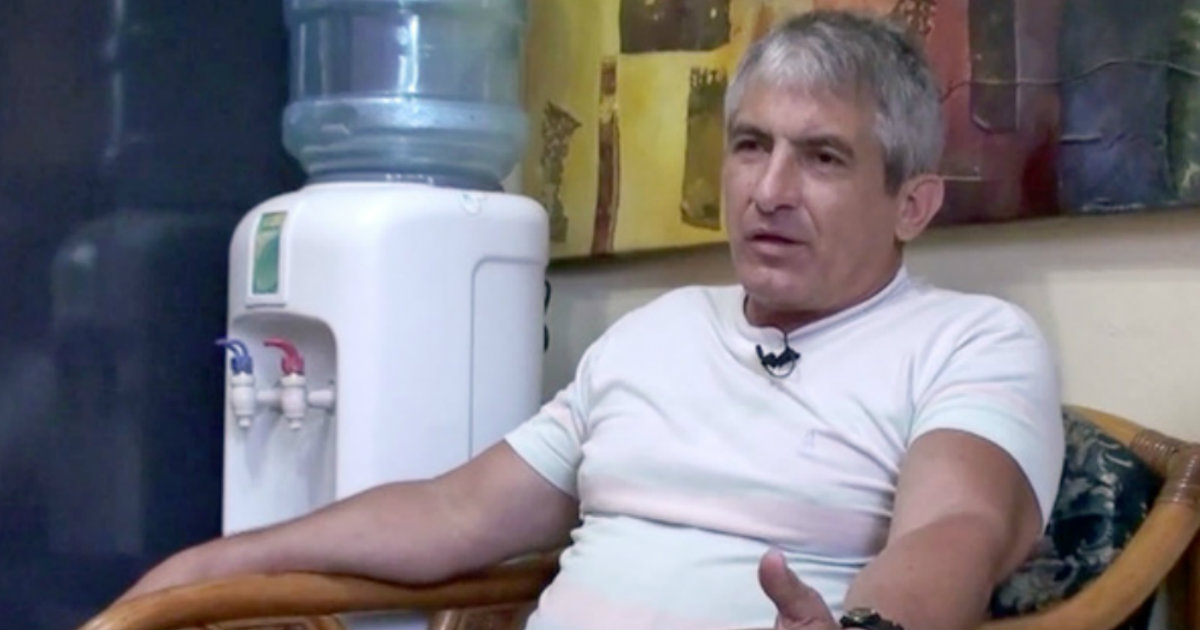
Juan Pablo Roque, a former Cuban Air Force pilot and infamous undercover agent of the Wasp Network, passed away on November 25, 2025, in Havana at the age of 70. The news was confirmed by sources from the Cuban exile community and close associates.
The confirmation came from Mario Vallejo and Ana Margarita Martínez, Roque's ex-wife, who stated that he had undergone open-heart surgery and was in critical condition, which worsened due to one of the viruses circulating in Cuba.
Luis Domínguez, an activist with the Foundation for Human Rights in Cuba, corroborated the information through three separate sources, including two pilots.
Born on October 11, 1955, Roque served as a military pilot until his alleged defection in 1992 when he appeared at the Guantanamo Bay Naval Base claiming to have swum away from Cuba.
Upon arriving in Miami, he integrated into the Cuban exile community and infiltrated Brothers to the Rescue, an organization focused on rescuing rafters in the Florida Straits.
His double life unraveled when he returned to Cuba in February 1996, just one day before Cuban MiG fighters shot down two planes from Brothers to the Rescue, resulting in the deaths of four civilians.
The incident was internationally condemned and further strained U.S.-Cuba relations.
Roque was involved in one of the most significant identity fraud cases in Cuban espionage history by marrying Ana Margarita Martínez, a Cuban-American, under a false identity.
His sudden disappearance and reappearance in Cuba exposed the deceit, leading to legal battles and significant media attention.
"Can you imagine finding out the last four years of your life were a lie? That you were married to a spy," Martínez told The Guardian in 1999. "I felt used, violated, and humiliated."
Martínez informed Vallejo that her ex-husband died without facing justice for his crimes.
Roque was part of the Wasp Network, a Cuban intelligence operation in the 1990s tasked with spying on the Cuban exile community and gathering U.S. military information.
Five of its members were convicted in 1998 in the case known as The Cuban Five.
According to the Cuban Repressors database, Roque was a "violent oppressor" associated with the 1996 plane shoot-down. His role involved warning Cuba about Brothers to the Rescue flights through the network's leader, Gerardo Hernández.
Roque's story was depicted in the film Wasp Network (2019), directed by Olivier Assayas and based on Fernando Morais's book. The movie faced criticism from the exile community for downplaying the severity of events and ignoring the human cost of espionage.
Journalist Carlos Cabrera noted that Roque's primary mission, to kidnap General Rafael del Pino, failed, yet his infiltration caused substantial moral and political damage to the Cuban exile community.
With his passing, Juan Pablo Roque leaves behind a legacy of betrayal, manipulation, and propaganda that defined Cuban espionage in the 1990s. His name remains linked to the Brothers to the Rescue shoot-down, a crime for which justice has yet to be served nearly three decades later.
Questions About Juan Pablo Roque and the Wasp Network
Who was Juan Pablo Roque?
Juan Pablo Roque was a former Cuban Air Force pilot and a notorious undercover agent for the Wasp Network, a Cuban intelligence operation that targeted the Cuban exile community in the 1990s.
What was the Wasp Network?
The Wasp Network was a Cuban spy operation aimed at infiltrating and gathering intelligence on the Cuban exile community and U.S. military operations during the 1990s.
Why was the Brothers to the Rescue shoot-down significant?
The shoot-down of Brothers to the Rescue planes by Cuban MiG fighters in 1996 resulted in the deaths of four civilians and was widely condemned internationally, significantly straining relations between the United States and Cuba.