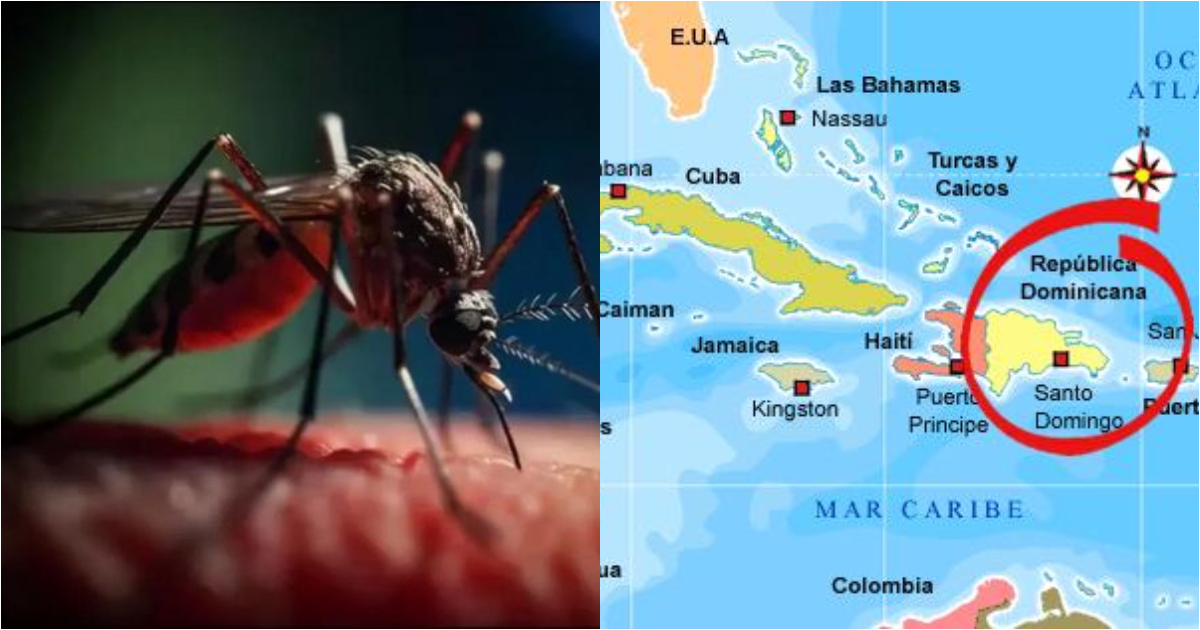
The Dominican Republic's Ministry of Public Health announced on Thursday that the country has identified three chikungunya cases imported from Cuba. The ministry clarified that, as of now, there is no community transmission occurring within the national borders.
This announcement coincides with a challenging epidemiological situation in the largest Caribbean archipelago, where multiple municipalities are grappling with an epidemic phase of this arboviral disease.
According to the institution, these cases were detected through the national epidemiological surveillance system and confirmed via tests conducted at the Dr. Defilló National Reference Laboratory. These steps are part of the routine protocol for early detection of arboviral diseases, as reported by Diario Libre.
Health Minister Víctor Atallah emphasized the effectiveness of the surveillance system, assuring the public that "there is no cause for alarm; these are imported cases identified in a timely manner."
In response to the consistent rise in cases throughout the Caribbean, particularly in Cuba, the Public Health Ministry has enhanced epidemiological surveillance actions. These include active fever checks in communities and intensified vector control efforts, such as fumigation, elimination of breeding sites, and community education.
Additionally, health supervision measures have been reinforced at airports, ports, and border crossings. The Ministry has strengthened preparedness and response protocols in health centers to ensure diagnostic capability, proper clinical management, and prompt care when necessary.
These actions align with the recommendations from the Pan American Health Organization and the World Health Organization to mitigate the risk of chikungunya reintroduction in countries without active transmission.
The ministry reiterated its call for the public to maintain preventive measures at home, such as removing objects that collect water, covering tanks, using repellents, and participating in community programs organized by Provincial and Health Area Directorates.
"The public can remain calm. We are monitoring the situation daily and have teams on the ground. The key is to double down on prevention," stated Minister Atallah.
The detection of imported cases from Cuba highlights the severe epidemiological situation in the island nation, where health authorities acknowledge failures in preventing the spread of the mosquito vector and a significant underreporting of non-specific febrile cases and recovering individuals.
The Dominican Ministry of Public Health indicated it will continue to provide updated information through official channels and stressed the importance of maintaining preventive measures to prevent local transmission of imported cases.
Cuba is facing a serious epidemiological crisis marked by high incidences of arboviral diseases like chikungunya and dengue, among others. The rapid spread in Cuba is attributed to the high density of Aedes aegypti mosquitoes, population movement, and deficiencies in national health management.
The Cuban Ministry of Public Health (Minsap) reported over 4,400 febrile cases on Wednesday, without specifying diagnoses. Currently, 45,617 Cubans are hospitalized with undiagnosed fever, while 101 are in intensive care, 64 of whom are children.
Minsap also confirmed 242 new dengue cases, 176 more than the previous day, with a positivity rate of 16.6%. The most affected provinces are Pinar del Río, Holguín, Granma, Matanzas, and Mayabeque. Regarding Oropouche fever, no new infections have been reported.
As for chikungunya, 628 new cases have been reported, but only 47 were confirmed by PCR. In total, 35,452 individuals have been affected across 15 provinces, according to the source.
The anti-vector situation is also critical, with 333 new Aedes aegypti mosquito breeding sites detected and a national infestation index of 0.71%. The most affected areas are Camagüey, Pinar del Río, and Sancti Spíritus.
Frequently Asked Questions about Chikungunya in the Caribbean
What is chikungunya and how is it spread?
Chikungunya is a viral disease transmitted to humans by infected mosquitoes, primarily the Aedes aegypti and Aedes albopictus species. The name comes from a word in the Kimakonde language, meaning "to become contorted," referring to the stooped appearance of sufferers with joint pain.
Why is the Dominican Republic concerned about chikungunya cases from Cuba?
The Dominican Republic is concerned because imported cases of chikungunya pose a risk of local transmission, especially given the current epidemiological situation in Cuba. Preventing local outbreaks is crucial to protect public health.
What preventive measures can individuals take against chikungunya?
Individuals can prevent chikungunya by eliminating standing water around their homes, using mosquito repellents, installing screens on windows and doors, and wearing long sleeves and pants to minimize skin exposure to mosquito bites.