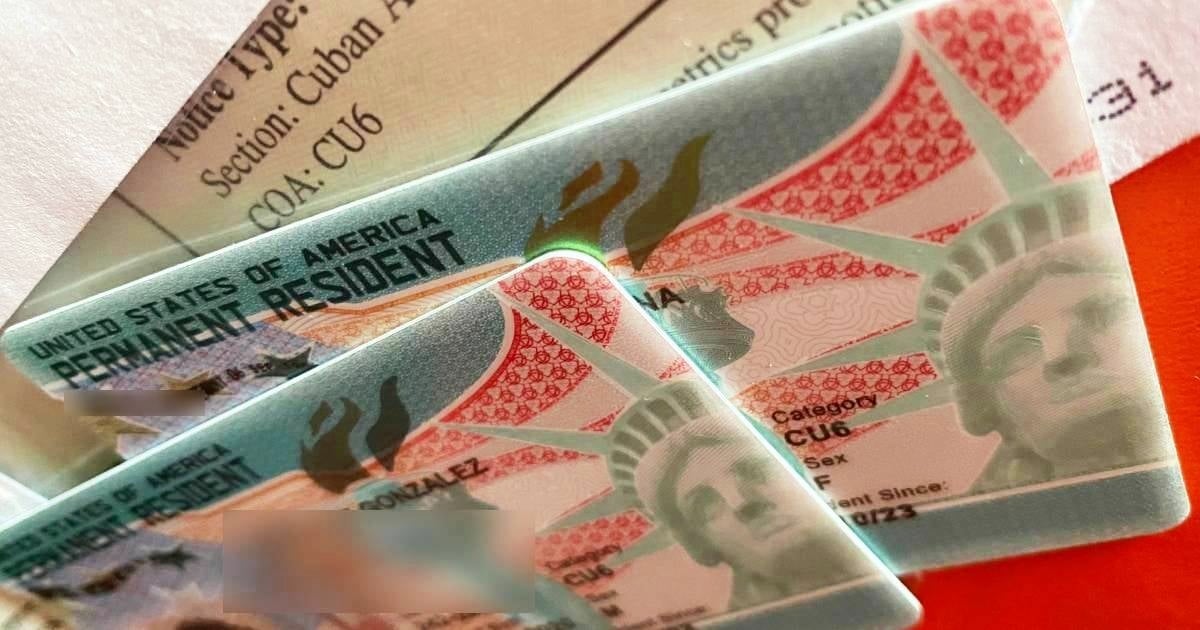
Citizens from a total of 19 nations, including Cuba and Venezuela, will have their permanent resident status in the United States scrutinized under a directive issued by President Donald Trump.
The U.S. Citizenship and Immigration Services (USCIS) has confirmed that this decision is part of an extensive, thorough reassessment of Green Cards issued to migrants from countries deemed a national security concern, as reported by EFE.
Alongside Cuba and Venezuela, the list encompasses Afghanistan, Haiti, Iran, Yemen, Sudan, Libya, Somalia, Eritrea, Chad, Equatorial Guinea, the Republic of Congo, Myanmar, Laos, Togo, Sierra Leone, Turkmenistan, and Burundi.
In response to CNN's inquiry about which nations are included in the “countries of concern” list, USCIS identified the 19 countries specified in a presidential proclamation signed by Trump in June. This proclamation restricts travel and enforces background checks for national security reasons.
Furthermore, the Department of Homeland Security (DHS) informed the U.S. media that the review also encompasses asylum cases approved during Joe Biden's administration, as part of a parallel immigration verification process.
Potential Impact on Cuban and Venezuelan Communities
This review could significantly affect thousands of Cubans and Venezuelans residing in the United States under family reunification programs, political asylum, or humanitarian parole.
According to sources within the USCIS, cases under review may face delays, requests for additional documentation, or even revocation of residency if any discrepancies are discovered.
"At the president’s directive, I have mandated a thorough, sweeping review of every Green Card from each country of concern," stated USCIS Director Joseph B. Edlow on his official X account.
Reinforcing Immigration Restrictions
The order is based on an executive decision signed by Trump in June, which restricts and bans travel for citizens from these countries. The government now extends these checks to those already legally residing in the U.S.
This action underscores Trump’s stringent immigration policy, focused on national security and internal control.
The president has persistently expressed his goal to terminate Temporary Protected Status (TPS) and humanitarian parole benefiting citizens from Cuba, Venezuela, Haiti, and Nicaragua.
The announcement follows the suspension of all immigration requests from Afghans after a shooting incident in Washington injured two National Guard members.
Although that event triggered the new review, Trump's directive encompasses all 19 identified risk countries, including Cuba and Venezuela, according to USCIS.
Consequences of the Presidential Proclamation
The presidential proclamation, signed in June, is widely recognized as the “travel ban.” Specifically, the order temporarily halted several visa categories for Cubans, impacting both immigrants and non-immigrants.
This measure prohibited issuing tourist, business, and study visas, restricting the entry of Cuban nationals to the United States with B-1 (business), B-2 (tourism), B-1/B-2 (tourism and business), F (academic studies), M (vocational training), and J (student or professional exchange) visas.
Understanding the Green Card Review Process
Why is the Trump administration reviewing Green Cards from specific countries?
The review is part of a broader initiative to ensure national security by scrutinizing permanent residency status for individuals from countries considered potential threats.
Which countries are included in the Green Card review?
The review targets 19 countries, including Cuba, Venezuela, Afghanistan, Haiti, Iran, Yemen, and several others identified as national security concerns by the U.S. government.
How might this review affect Cuban and Venezuelan residents in the U.S.?
Residents from these countries could face delays, requests for more documentation, or even revocation of their residency if issues are found during the review.