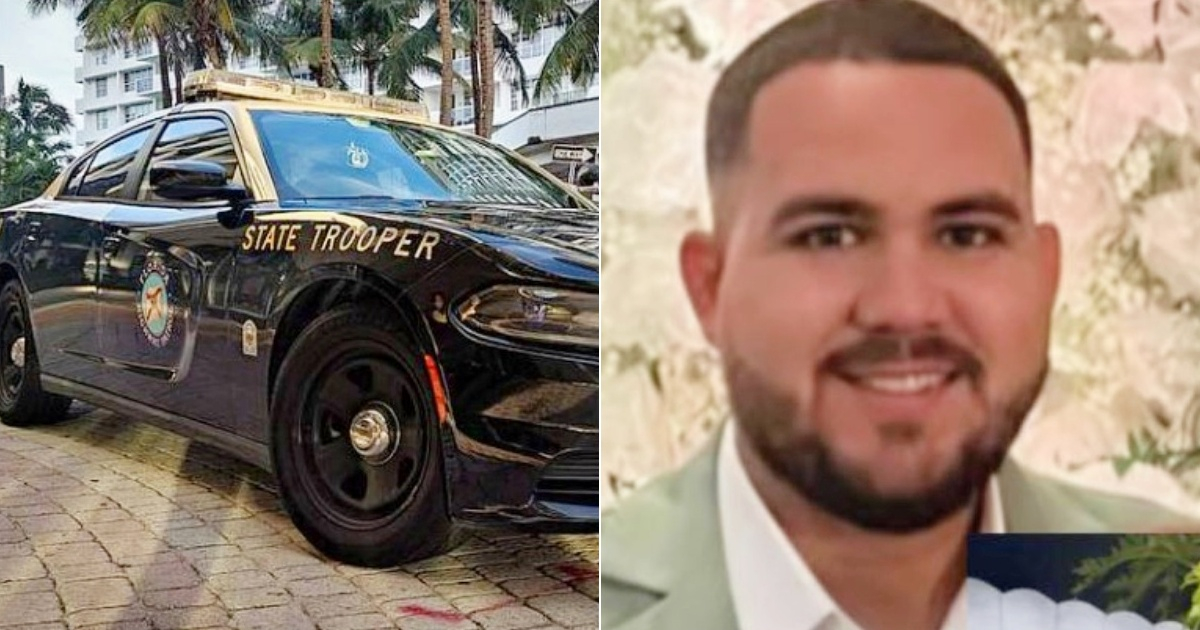
Daniel Reyes Acosta, a 29-year-old Cuban residing in the United States under an I-220A status, was apprehended at 11:00 a.m. this Tuesday by a Florida Highway Patrol officer in West Palm Beach.
According to family accounts, Reyes had not committed any traffic violation. He possesses a valid work permit, a Real ID driver’s license valid until 2029, and has no criminal record. Furthermore, he had no scheduled court date regarding his immigration process.
Controversial Detention Raises Concerns
The officer's explanation, as relayed by Reyes’ family, was unsettling: “I stopped him because my computer indicated that the vehicle’s owner was neither a citizen nor a resident of the country and had a pending immigration case. I’m taking him in for processing to address his case.”
This incident has sparked outrage across social media and among Cuban immigrant communities, who view the detainment as an arbitrary action against individuals with no criminal offenses and ongoing legal processes.
As reported by Univision journalist Javier Díaz, Reyes was arrested in Cuba after participating in the July 11, 2021, protests. Since arriving in the U.S., he has been trying to rebuild his life; he is a father to an American child, operates his own window installation business, and, according to his family, is fully integrated into the community.
A Community in Turmoil
The story of Reyes has ignited a fervent emotional response within the Cuban community in the U.S. Social media messages express frustration over the legal uncertainties surrounding the I-220A status and widespread fear of potential future raids.
Some are incredulous that authorities can access immigration status simply through a license plate check. “It’s unjust to detain someone without any infraction. He’s a hardworking man, law-abiding with his own business,” commented one user.
Another user reflected, “The saddest part is that nearly everyone is decent, from good families, adapted to the American system.”
Debate Over Immigration Policies
The incident has also reignited political debates. Many blame the current Florida state administration, linking these actions to policies endorsed by Governor Ron DeSantis and the push of an anti-immigrant agenda. “Police now have roles akin to ICE agents. This never happened before, it’s part of the new laws signed.”
Others accuse Republicans of misleading the Cuban community: “They sold us a lie. The decent are jailed while criminals roam free.” Criticism also extends to Cuban-American congress members for not advocating for political exiles.
The Legal Limbo of I-220A Holders
The I-220A is a conditional release document issued by ICE (Immigration and Customs Enforcement) to individuals in the process of asylum or deportation. While it allows legal residence in the U.S. during the process, it doesn’t provide automatic court dates or protection from detainment.
There’s widespread confusion among those holding this status, as indicated in various comments. Some mistakenly believe that not having a court date offers protection; others point out that many have been misled by unauthorized notaries or unlicensed attorneys.
“Ignorance is no excuse under the law. Don’t blame the government, but rather the scammers and lack of information,” stated a commenter, noting she’s not a lawyer but familiar with the process.
Daniel Reyes Acosta remains in custody. His family, friends, and a broader community of Cubans with I-220A live in fear, uncertain who might be detained next.
Calls to action have surged, urging contact with congress members, foundations, and media outlets. Yet, a sense of community and solidarity has emerged, a collective cry against what many perceive as an injustice.
Understanding the I-220A and Its Implications
What is the I-220A document?
The I-220A is a document issued by ICE that grants conditional release to individuals undergoing asylum or deportation processes. It allows them to stay legally in the U.S. while their case is being resolved but does not provide a court date or protect against detainment.
Why was Daniel Reyes Acosta detained by the Florida Highway Patrol?
Daniel Reyes Acosta was detained because a computer check of his car's license plate indicated he was neither a citizen nor a resident and had a pending immigration case. The officer decided to take him in for processing to resolve his immigration status.
What has been the community's reaction to Reyes' detention?
The detention has sparked widespread outrage in the Cuban immigrant community, who see it as an arbitrary action against someone with no criminal record. There is also fear of further detentions and frustration with the legal ambiguities surrounding the I-220A status.