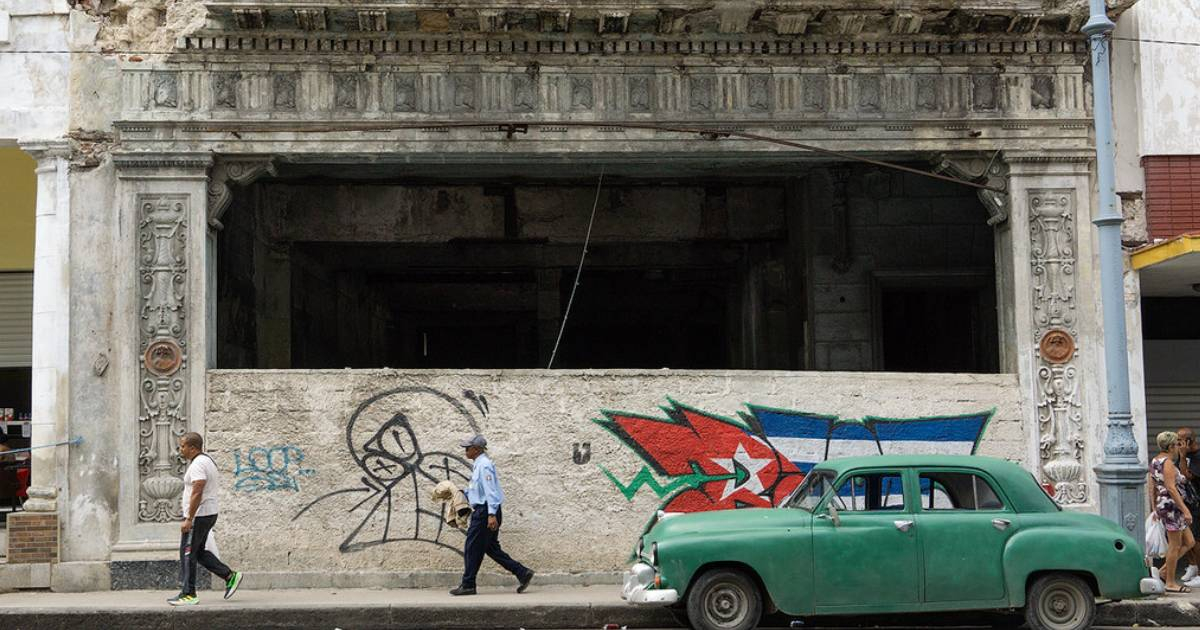
The Cuba that once inspired social movements, young idealists, and leftist parties across Latin America no longer ignites the same passion, not even among those who once fervently defended it.
Today, the island generates more discomfort than admiration, raising more questions than slogans. According to Chilean academic Iván Witker, a researcher at the National Academy of Political and Strategic Studies (ANEPE) and a professor at the Central University of Chile, this emotional disconnection stems from deep-seated issues.
In a column published in El Líbero, Witker describes the phenomenon as "the inevitable laxity" of an adoration that can no longer be sustained against the harsh reality of a poverty-stricken, ailing Cuba, engulfed in a social decline he refers to as the "favelization of the entire country." For many of its former sympathizers, confronting this image is simply untenable.
Witker argues that the Cuban revolution has become "an anachronistic ideal" unable to capture hearts in the 21st century.
What was once portrayed as a model of social justice has morphed into a nation plagued by 15-hour power outages, near-total shortages of potable water, missing essential foodstuffs, and epidemics threatening millions: "48,000 hospitalized due to dengue and 700 daily chikungunya infections," the academic notes.
In Witker's view, the island today resembles "a new Haiti," with cities transformed into vast slums and a system incapable of providing basic solutions.
"To defend, explain, and justify this new Haiti, in democratic environments, is impossible," he asserts.
The Dilemma for the New Left
Cuba's collapse also poses a political challenge for segments of the Latin American left that seek to renew themselves and distance from outdated doctrines.
Witker claims the island has become "an uncomfortable alliance," a symbolic burden difficult to bear, a regime characterized by gerontocracy, lacking elite renewal, civil society, and intermediate layers to invigorate the community.
The new leftists, he writes, "have been forced to nuance, to craft subtle arguments, to downplay. But that is exhausting."
Another point where Witker is unequivocal is the worn-out argument of the blockade. The academic emphasizes that the embargo "does not explain Cuba's shipwreck," noting that the law allows purchases and does not impede trade with other nations. The issue, he contends, is that Cuba produces nothing exportable and has run out of real sources of foreign currency.
The sugar harvest "achieves barely a tenth" of what was promised in 1970; no one hires Cuban medical services anymore; tourism has plummeted; and remittances are insufficient.
A Fractured Elite and a Lack of Symbolic Support
This crisis is compounded by mystery and internal tension among the leaders themselves. Witker highlights the case of Alejandro Gil Fernández, the former Minister of Economy accused of corruption and blamed for the economic collapse.
For Witker, the process does not aim for justice but rather a grim fate: "Facing a firing squad."
This image, he argues, is incompatible with current Latin American public opinion, even among those most inclined to sympathize with the island.
The result of this entire scenario—economic collapse, epidemics, structural poverty, internal fractures, and a loss of international relevance—is that Cuba has ceased to be the symbol it once was.
According to Witker, the island "stopped capturing hearts long ago." Today, even its former defenders prefer to look the other way, soften their positions, or remain silent to avoid an ideological or moral strain that no one is willing to endure.
The Cuban revolution, he concludes, has become a myth eroded by its own reality.
Frequently Asked Questions About Cuba's Decline
Why has Cuba lost its appeal to former supporters?
Cuba's appeal has diminished due to its current economic struggles, social decline, and inability to fulfill the promises of its revolutionary ideals. The realities of poverty, infrastructure failures, and a lack of civil liberties have led former supporters to distance themselves.
What impact has the Cuban embargo had on the island's economy?
The embargo is often cited as a cause of Cuba's economic difficulties, but according to experts like Iván Witker, it does not fully explain the situation. While the embargo limits certain trade, it permits purchases and does not prevent commerce with other countries. The more significant issue is Cuba's lack of exportable products and sources of foreign currency.
How has Cuba's political landscape changed?
Cuba's political landscape has stagnated, with a gerontocratic regime that has not renewed its leadership or engaged with civil society. This static political environment has made it difficult for the country to adapt to modern challenges and has alienated potential allies.