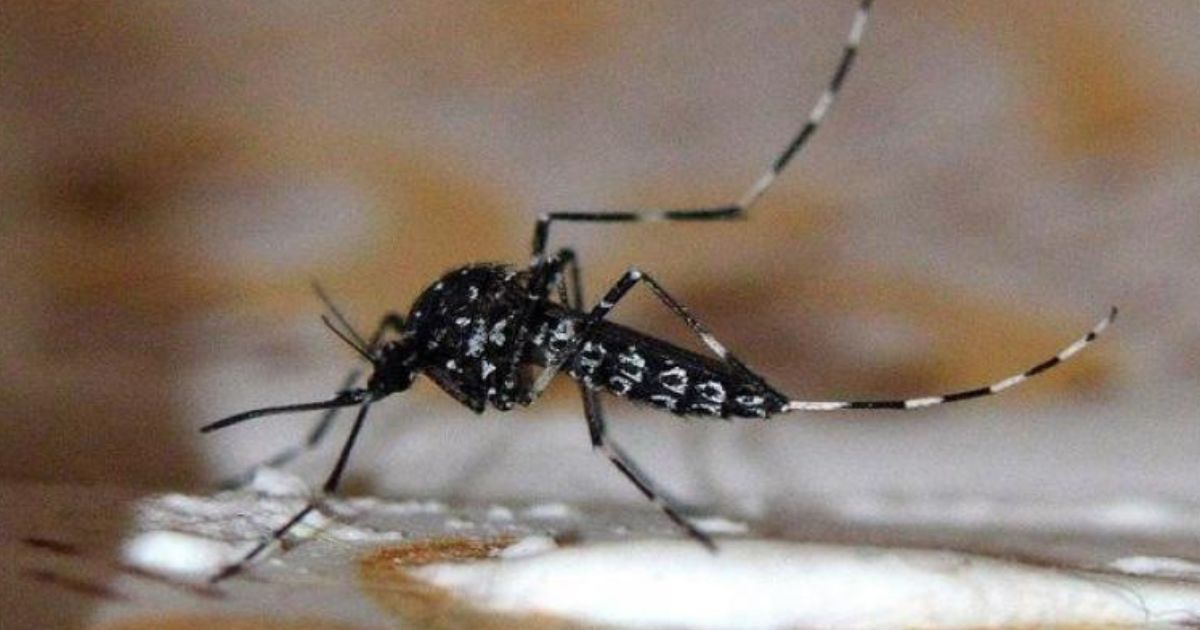
Amidst the ongoing chikungunya outbreak affecting Cuba, a significant scientific discovery published in 2022 by MEDISAN magazine highlights the presence of the mosquito Aedes vittatus in Cuba. This invasive species is notorious for spreading dengue, zika, chikungunya, and yellow fever.
Conducted by experts from the Provincial Center of Hygiene, Epidemiology, and Microbiology in Santiago de Cuba, the study documents that this mosquito was first identified in January 2020 in Ramón de las Yaguas, the capital municipality.
Since its initial discovery, the presence of Aedes vittatus has been confirmed in at least four municipalities in the province and over 30 localities across eastern Cuba.
The Invasive Nature of Aedes Vittatus
The Aedes vittatus is deemed an invasive species with a remarkable ability to adapt, raising health concerns as it shares breeding sites with the Aedes aegypti and Aedes albopictus, the primary carriers of viral diseases on the island.
Its proficiency in reproducing in rural, urban, and even forested areas makes it a stealthy and challenging adversary to eliminate.
Adaptability and Resistance
Unlike the Aedes aegypti, which primarily feeds on human blood and breeds in domestic settings, Aedes vittatus can feed on both humans and other mammals. It lays eggs in diverse locations such as puddles, tanks, pots, bamboo, barrels, or tree hollows.
The eggs of Aedes vittatus show greater resilience against desiccation and sunlight, while its larvae can endure high salinity and temperatures reaching up to 46 degrees Celsius, allowing it to thrive under extreme conditions.
Health Implications and National Response
The scientific article warns that if this species manages to establish itself permanently, it could become a significant vector for arboviruses in Cuba.
This discovery prompted a national entomological alert and a recommendation to intensify vector surveillance and control efforts in the eastern provinces.
Led by Mirtha Gladys Pérez Menzies, the study's authors noted that this finding increases the total number of mosquito species recorded in the country to 71, signaling the expansion of Cuba's culicid fauna.
They also emphasized the importance of enhancing research and epidemiological control to prevent this species from spreading to central and western parts of the island.
A New Challenge for Public Health
The presence of Aedes vittatus coincides with a critical epidemiological scenario, characterized by a resurgence of dengue and the spread of chikungunya.
Experts warn that any new vector capable of transmitting these viruses poses an additional public health risk, especially in areas plagued by sanitation issues and a lack of potable water, compelling residents to store water in domestic containers.
In a country where mosquitoes have become a symbol of health alerts, Aedes vittatus presents a new challenge for Cuba's health system, already stretched thin due to resource shortages, lack of reagents, and insufficient specialized personnel.
Frequently Asked Questions About Aedes Vittatus in Cuba
What diseases can Aedes vittatus transmit?
Aedes vittatus is capable of transmitting dengue, zika, chikungunya, and yellow fever.
When was Aedes vittatus first detected in Cuba?
The mosquito was first detected in January 2020 in the locality of Ramón de las Yaguas, Santiago de Cuba.
How does Aedes vittatus differ from Aedes aegypti?
While Aedes aegypti primarily feeds on human blood and breeds in domestic environments, Aedes vittatus can feed on both humans and other mammals, and it can lay eggs in a wider variety of environments.