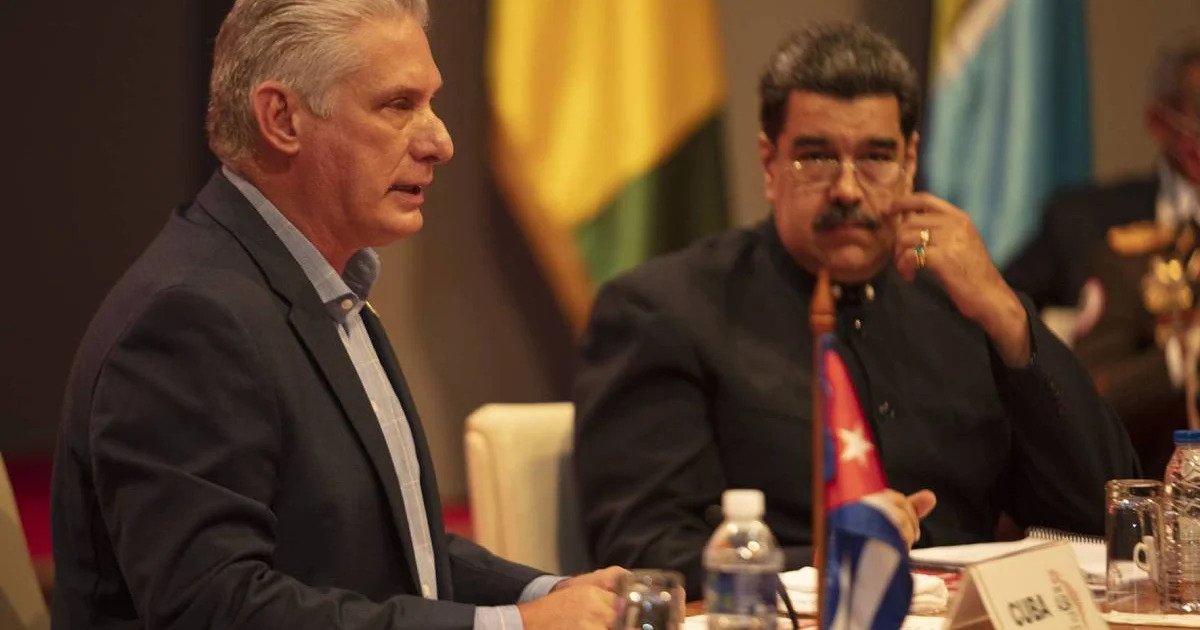
The Cuban government has once again resorted to the rhetoric of an "external enemy" to support Nicolás Maduro's regime. However, this attempt seems to have backfired significantly.
Cuban Deputy Foreign Minister Carlos Fernández de Cossío expressed on social media platform X that there is an increasing threat of military and terrorist aggression against Venezuela, aimed at violently toppling the government of that allied nation.
He described such a scenario as "barbaric" and labeled it as a "U.S. blow against Our America and its long journey towards independence."
This statement, consistent with Havana's typical portrayal as an anti-imperialist shield and regional sovereignty defender, sparked a flood of responses from both Venezuela and Cuba. The feedback highlighted a growing sense of disapproval towards officials of the Cuban regime and their historical alliance with Chavismo.
Venezuelans Criticize: "You're Worried About Losing Your Perks"
Among the harshest reactions were those from Venezuelans who, instead of feeling defended, accused Havana of being concerned solely with the survival of its own system at the expense of Venezuelan oil.
A woman challenged the Cuban official, saying, "Do you live in Venezuela? If not, you have no idea about the everyday needs of Venezuelans. There are two realities in Venezuela... which I assume you observe from afar."
Other responses were even more blunt and political.
A lawyer commented, "These Cuban leeches are worried because the so-called revolution and the perks that have sustained this bunch of freeloaders for years might end."
An IT professional summed it up: "What's at risk is the oil that Venezuela gifts to Cuba, and that's what concerns them."
Many users pointed out that Havana's support is not altruistic but rather an alliance that has benefited the Cuban political apparatus while the Andean country plunged into crisis.
Another Venezuelan added, "You're worried about losing your perks... they've been siphoning Venezuela's wealth for 27 years."
Cubans Mock: "Pack Your Bags"
The response from within Cuba was equally harsh. Dozens of Cuban users joined the wave of criticism, highlighting internal frustration with the regime's foreign policy and its economic dependence on Chavismo.
Some messages were openly sarcastic: "Start packing your bags," "You're next," or "Save your tears."
Others, more severe, directly addressed the Cuban government's fear of losing its economic lifeline: "Prepare yourselves because after Maduro, it's you, and neither Russia nor China will save you."
There were even jokes about what would happen if Chavismo falls: "Run through the streets, Cossío, there's no Pepto-Bismol for that mess in Cuba."
The overall tone reveals an environment of distrust towards the Cuban leadership and a clear perception that the threat to Havana is both political and economic.
An Outdated Narrative for a Country in Crisis
Fernández de Cossío's message follows the Cuban government's official script: denouncing external threats to justify its alignment with allied governments, without acknowledging the internal decline in both Venezuela and Cuba.
However, the massive response from Venezuelans and Cubans indicates that this rhetoric, once effective, now generates rejection and ridicule.
By pointing to a supposed foreign aggression plan, the official attempts to bolster the narrative of continental resistance. But the reactions suggest another interpretation: it's not Latin American peace that concerns Havana but the possibility that political change in Venezuela could also mean the collapse of one of the economic pillars of the Cuban regime.
This time, the tale of the "external enemy" failed to convince anyone, neither on the Island nor beyond it.
Cuban and Venezuelan Relations Amid Political Tensions
Why is the Cuban government concerned about U.S. actions against Venezuela?
The Cuban government fears that U.S. actions against Venezuela could lead to the fall of the Maduro regime, which would threaten Cuba's economic and political interests due to their alliance.
How have Venezuelans reacted to Cuba's support of Maduro?
Many Venezuelans have criticized Cuba's support, accusing Havana of being more concerned with its own benefits from Venezuelan resources than with the welfare of the Venezuelan people.
What is the perception of the Cuban regime among its citizens?
There is a growing distrust and frustration among Cuban citizens towards the regime, particularly regarding its foreign policy and economic dependency on Venezuela.