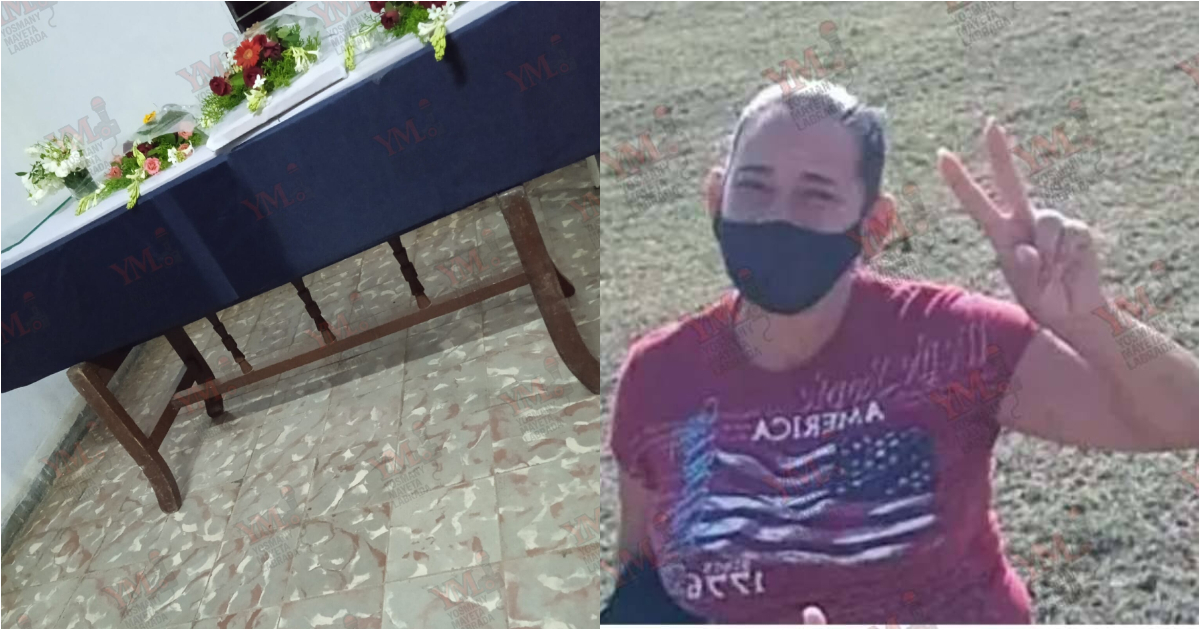
The community of Boniato in Santiago de Cuba was left in shock on November 23rd following the unexpected death of 47-year-old Lixandra Mengana Carcassés. It is believed she was suffering from one of the arboviral infections currently spreading throughout the country, commonly referred to by locals as the "virus."
According to accounts from neighbors, shared by independent journalist Yosmany Mayeta Labrada on Facebook, Mengana experienced severe pain and took medication to alleviate it, after which she suffered a sudden heart attack.
Despite immediate aid and an urgent rush to the Cuabita clinic, she tragically did not survive the journey. Reports claim that the clinic lacked the essential resources needed to handle such a medical emergency.
As per these sources, Mengana is survived by two children: an 11-year-old girl and a young man around 19 or 20 years old. The incident has sparked outrage among locals who are questioning why a clinic, intended as the first point of emergency care, is unequipped to preserve a life in crisis.
"It wasn't the illness that defeated her... it was the lack of resources to save her," they lamented.
On social media, residents voiced their fears over the spread of the "virus," the increasing number of cases, and the deaths of young individuals in the area, while calling for answers and proper conditions to prevent further loss of life.
Recently, Claudia Mesa Rodríguez, a 15-year-old girl, also passed away in Santiago de Cuba after being admitted to the North Pediatric Hospital in critical condition. Her family reported delays in medical attention and a lack of necessary resources. Mesa suffered from respiratory difficulties and was diagnosed with diabetes in conjunction with a virus affecting her family. Despite medical efforts, her kidneys failed to respond, leading to multiple critical episodes before her passing.
Cuba is currently grappling with a severe epidemiological crisis, characterized by a high incidence of arboviral diseases like chikungunya and dengue, alongside other illnesses. The rapid spread is blamed on the high density of Aedes Aegypti mosquitoes, population movement, and national healthcare management shortcomings.
The Pan American Health Organization (PAHO) reported on Tuesday that between October 11th and November 1st, Cuba identified 15,590 chikungunya cases, with a total of 20,062 infections recorded in 2025 so far. This results in a cumulative incidence of 183.43 cases per 100,000 inhabitants, the highest in the Americas this year.
Additionally, residents of the 12 Plantas de Trocha building in central Santiago de Cuba reported a viral outbreak that resulted in the death of a doctor, left another resident in serious condition, and caused many others to exhibit similar symptoms.
In a related incident, the grandson of Olaida del Castillo, a member of the opposition group Ladies in White, died in Havana on November 15th from one of the mosquito-borne viruses.
Understanding the "Virus" Outbreak in Cuba
What diseases are contributing to the current crisis in Cuba?
Cuba is facing a significant outbreak of arboviral diseases, including chikungunya and dengue, which are largely responsible for the current health crisis.
How is the virus spreading so rapidly in Cuba?
The rapid spread of the virus is attributed to the high density of Aedes Aegypti mosquitoes, movement of the population, and inadequate healthcare management at the national level.
What actions are being demanded by the community?
Residents are calling for better healthcare resources and conditions to prevent further deaths and manage the increasing number of cases effectively.