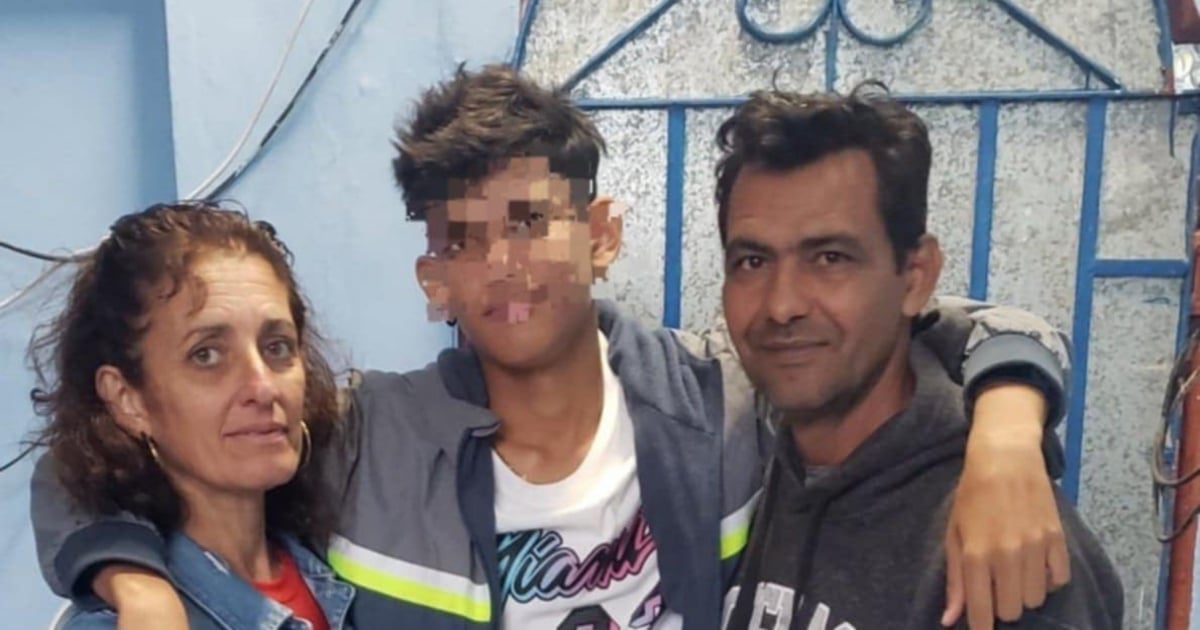
Samuel Pupo Martínez, a participant in the July 11th protests, has left Cuba and is now in Costa Rica. Seeking protection after enduring relentless harassment even after his release from prison, he has applied for asylum in the Central American nation.
After serving his sentence for involvement in the demonstrations, Pupo, aged 51, is attempting to rebuild his life away from the oppressive reach of the Castro regime. He is also preparing for the eventual reunion with his family, who remain in Cuba.
A Life of Freedom Denied
Though officially released, Pupo's freedom was merely a façade. The Cuban government kept him under constant surveillance, subjecting him to intimidating summonses, persistent threats, and pressure tactics designed to silence him. These methods are commonly used to force dissenters into exile.
In an interview with Click-Cuba, Pupo explained that his freedom was conditional, contingent upon his silence. The harassment escalated to a point where remaining in Cuba was no longer viable without risking further imprisonment—or worse.
An Unexpected Path to Safety
Pupo's escape route included an unusual stop in Nicaragua, a nation closely allied with Havana and typically unwelcoming to Cuban dissidents. Nonetheless, this stop proved crucial, as it allowed him to avoid deportation back to Cuba and continue his journey to Costa Rica, where he is now working to regularize his immigration status.
In Costa Rica, known for its willingness to accept political refugees, Pupo hopes to adapt and stabilize his life to eventually bring his family over. Here, he finally experiences something he never had in Cuba: the ability to live without fear of state security.
A System of Sustained Oppression
Pupo's story is a familiar one, illustrating a common tactic: the government imprisons dissenters, monitors them upon release, and eventually drives them out through systematic harassment. Exile becomes a tool for silencing criticism without the political cost of new incarcerations. Thus, repression outside prison continues, effectively becoming a life sentence.
Who Is Samuel Pupo Martínez?
Samuel Pupo, with a degree in Mathematics and Computing, was arrested on July 11, 2021. During the protests, he climbed atop an overturned car near the municipal Party headquarters, shouting, "Down with communism! Homeland and Life!" For this act, he was charged with "leading the protests" and sentenced to three years for contempt and public disorder.
At the time of his arrest, Pupo worked as a self-employed individual. Despite having no criminal record, he was imprisoned in the maximum-security facility of Agüica, despite severe health issues. His son, Hugh Dieter Pupo Santana, now 16, sent heartfelt letters expressing his anguish and longing for his father's release, especially missing him on Father's Day.
His wife, Yuneisy Santana González, with a degree in Humanities and over two decades of teaching experience, tirelessly advocated for Pupo's conditional release. Her efforts attracted the attention of state security, leading to threats of her imprisonment and the removal of her son.
Exile for the Sake of Freedom
Now, Samuel Pupo embarks on a new chapter away from his homeland, forced to flee for asserting his right to free expression. His case exemplifies that serving a prison sentence in Cuba does not equate to true freedom; repression persists beyond the prison walls, affecting every aspect of life for those demanding change.
His departure marks not the end but the beginning of a new struggle, now free and away from the state that imprisoned, surveilled, and ultimately expelled him.
Understanding Cuba's Political Climate and Exile
What led to Samuel Pupo Martínez's exile from Cuba?
Samuel Pupo Martínez was forced into exile due to relentless harassment and threats from the Cuban government following his participation in the July 11th protests, making it impossible for him to remain in Cuba without risking further imprisonment.
Why did Pupo choose Costa Rica as his destination?
Pupo chose Costa Rica because it is recognized for providing refuge to political dissidents and offers him the chance to live without fear of persecution from the Cuban state.
What challenges does Pupo face in Costa Rica?
In Costa Rica, Pupo faces the challenge of adapting to a new environment, stabilizing his life, and working towards reuniting with his family while regularizing his immigration status.