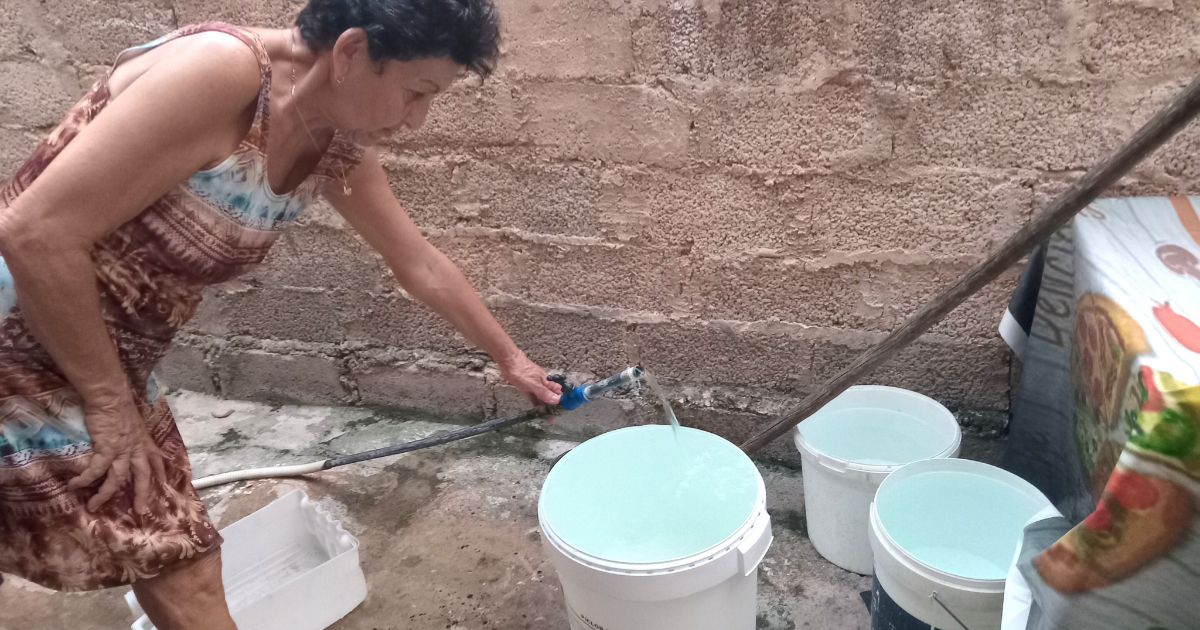
Residents of the Modelo neighborhood in Camagüey have voiced their frustration over a prolonged water crisis, despite a multimillion-dollar aqueduct project being completed in their area. They report having endured more than six years without a reliable water supply.
According to independent journalist José Luis Tan Estrada, residents are speaking out about their dire water situation which has persisted since 2019. That year, an aqueduct funded by a donation from Saudi Arabia was installed, yet it has failed to deliver consistent service.
The aqueduct was operational for only a brief period, leaving residents with sporadic water access — approximately ten times, for merely three or four days each — before returning to a state of complete deprivation, Estrada reported from their testimonies.
The situation worsened in 2024, as public grievances were raised through formal complaints to the Meridiano program of Cadena Agramonte and the Provincial Water Company. In response, officials visited the area and dispatched a water truck on three occasions, which proved insufficient for the community’s needs, including essential services like the bakery, medical clinic, pharmacy, Joven Club, and hundreds of homes, Estrada explained.
Some households possess wells, but these are contaminated, the journalist noted.
"Meanwhile, the neighborhood remains without an official explanation as to why the aqueduct investment has failed to provide a stable solution, or when a critical basic service will be restored," Estrada's report concluded.
In September, authorities acknowledged that Cuba's water crisis has reached alarming levels. Official data broadcasted by national television indicated that over three million people are currently experiencing total or partial water shortages across the country.
This persistent water shortage, unresolved by the Cuban government, affects more than 3,100,000 island residents. This figure represents roughly 30 percent of Cuba's population, which totals 9,740,000 people according to the latest statistics from the National Office of Statistics and Information (ONEI).
Authorities attribute the inability to ensure water supply to three main factors: drought, energy contingencies, and malfunctioning pumping equipment.
Understanding Camagüey's Water Crisis
What caused the water crisis in Camagüey's Modelo neighborhood?
The crisis is primarily due to the failure of a Saudi-funded aqueduct installed in 2019, which only functioned briefly before residents experienced a return to severe water shortages.
How have the residents responded to the water shortage?
Residents have filed formal complaints to local media and the Provincial Water Company, prompting limited responses like water truck deliveries, which have been inadequate.
What are the broader implications of Cuba's water crisis?
The water crisis affects over 3,100,000 people across Cuba, representing a significant portion of the population, and is linked to factors such as drought, energy issues, and equipment failures.