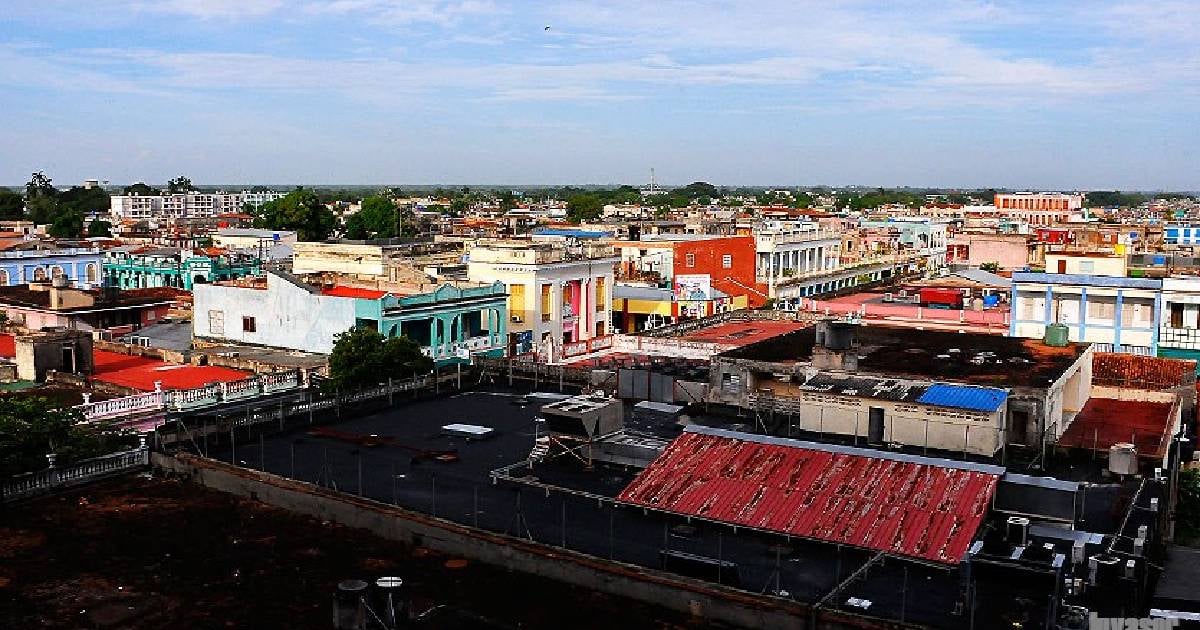
The province of Ciego de Ávila is enduring an intense energy crisis, with power outages lasting up to 20 hours a day. The only relief comes from solar parks, providing a weak daytime reprieve.
Currently, the area operates under what is termed the "maximum blackout," a period that, according to Lester Arencibia Bacallao, the Provincial Load Dispatch Director, can last nearly the entire day.
Official strategies prioritize circuits linked to essential services, such as hospitals and dairy plants. These circuits rotate between three and a half hours with power and three and a half without, as reported by the state-run newspaper Invasor.
Struggling Infrastructure and Limited Solutions
The main town prioritizes circuits 2 and 3, supplying the provincial hospital, while in Morón, the focus is on Micro North, Nereida, and the local hospital circuit. Arencibia explained that the outdated physical configuration of these circuits makes it economically unfeasible to fragment them and distribute energy more evenly, as it would require costly investments in 33 kV lines and substations.
Some improvements, such as installing a generator at the San Lorenzo aqueduct, have allowed circuit 5 and the university circuit to be removed from the priority list. Nonetheless, for non-prioritized circuits, the rule of not exceeding 12 hours without power is currently unattainable.
Solar Power's Limited Role
With a deficit of 70 to 90 MW, some areas experience blackouts of up to 19 or even 20 consecutive hours, the local media reported. To ease this situation, prioritized circuits, except those serving hospitals, are occasionally disconnected for one and a half to two hours to provide temporary relief to the most affected residential areas.
The province relies on three solar parks generating 21.4 MW, along with four smaller ones totaling over 76 MW. An additional 20 MW park is under construction in Morón, expected to be operational by December. Despite this, solar power is inconsistent, primarily available between 10:30 a.m. and 2:30 p.m. Cloud cover can drastically reduce generation from 20 MW to just 3 or 5 MW, and after 4:30 p.m., the contribution dwindles to almost zero.
Ongoing Challenges and Future Prospects
Without energy storage systems, utilizing solar power at night is impossible. Although a national project aims to install batteries in some parks like Majagua, their primary purpose is to stabilize daily generation, not to meet nighttime demand.
Arencibia concluded that until the structural issues of thermal generation are addressed, Ciego de Ávila will continue to depend on the sun for limited and fragile relief, with power outages remaining a defining aspect of daily life.
In June, a report from the state-run Canal Caribe highlighted Ciego de Ávila as a leading province in renewable energy usage, suggesting it could be among the first to meet midday peak demand thanks to its photovoltaic parks.
The National Electric System (SEN) faces significant challenges, with the main causes of the electricity deficit being fuel shortages and the outdated condition of the country's thermoelectric plants. Scheduled maintenance and breakdowns at several power plants have exacerbated this critical situation.
Prolonged blackouts severely disrupt daily life in Cuba, preventing food refrigeration, appliance use, and basic activities like cooking and cooling homes, especially in the hot climate. This contributes to growing social discontent over the government's lack of effective solutions.
Understanding Ciego de Ávila's Energy Crisis
Why are blackouts lasting up to 20 hours in Ciego de Ávila?
The blackouts result from a significant energy deficit, with a lack of sufficient generation capacity to meet demand. The province relies heavily on solar power, which is inconsistent and unable to support nighttime demand.
What measures are being taken to alleviate the energy crisis?
Some prioritized circuits are temporarily disconnected to provide relief to residential areas. Additionally, efforts are underway to build more solar parks and install batteries, though these offer limited solutions due to their intermittent nature.
How do power outages affect daily life in Cuba?
Extended blackouts disrupt essential activities, such as food preservation, appliance use, cooking, and home ventilation. This leads to increased social dissatisfaction due to the lack of effective governmental responses.