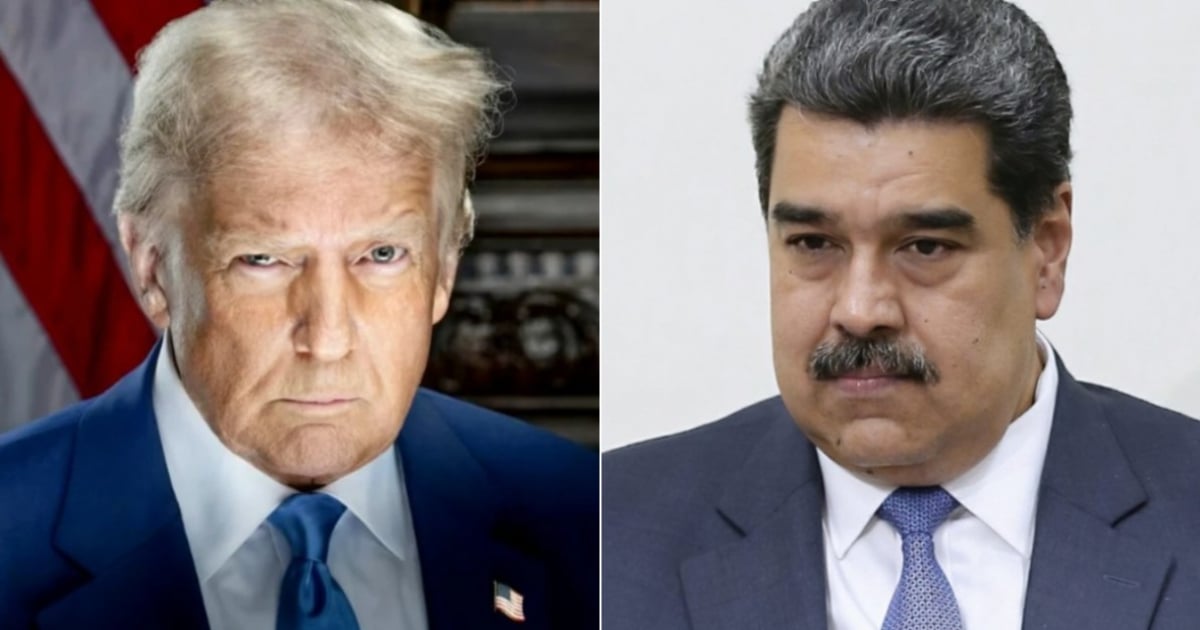
On Friday, President Donald Trump announced his intention to engage in a conversation soon with Venezuelan leader Nicolás Maduro, though he withheld specifics regarding the discussion's content.
"I'll be speaking with him in the not-too-distant future. I can't tell you what, but I have something very specific to say," Trump remarked during an interview with Brian Kilmeade on Fox News.
The President emphasized that the United States intends to be "deeply involved" in the situation, yet offered no further details.
Trump indicated that he has received briefings on potential military operations within Venezuela, but his words seemed to leave room for diplomatic engagement, hoping that U.S. pressure might compel Maduro to step down without the need for direct military intervention.
This is not the first time the White House Chief has hinted at a potential dialogue with Maduro. Last Sunday, he suggested that he would "probably" communicate with him "at some point."
"It's possible we'll be talking, having conversations with Maduro. We'll see how it turns out. They would like to talk," he stated from West Palm Beach Airport in Florida.
In response, Maduro indicated his openness to dialogue with Trump. "Anyone who wants to talk to Venezuela will do so face to face," the dictator asserted on state television.
"Only through diplomacy should free countries and governments understand each other, and only through dialogue should they seek common ground on matters of mutual interest," he emphasized.
Tensions in the region have been escalating since the United States initiated attacks on vessels allegedly involved in drug trafficking, both in the Caribbean and the Pacific, resulting in the sinking of 22 boats and 83 deaths.
This situation is compounded by the deployment of more than a dozen warships and 15,000 U.S. troops in the region, as part of the Pentagon's operation dubbed "Southern Spear."
On Monday, November 24, the designation of the so-called Cartel of the Suns as a Foreign Terrorist Organization (FTO) will take effect.
This designation allows for the imposition of financial and diplomatic sanctions, such as asset freezes, and has been used as a precursor to justify military actions against vessels in the Caribbean and the Pacific.
Uncertainty looms over whether the Trump administration will order direct military operations on Venezuelan soil and when a concrete decision might be made.
In the meantime, the rising tension and heightened U.S. pressure are creating a climate of anticipation and concern about regional stability.
Key Questions About U.S. and Venezuela Relations
What is Trump's stance on military intervention in Venezuela?
President Trump has been briefed on military options but seems to leave the door open for diplomatic solutions, expressing hope that pressure might lead to Maduro's resignation without direct military action.
How has the U.S. increased pressure on Venezuela recently?
The U.S. has escalated pressure through attacks on drug trafficking vessels and by deploying military assets in the region. Additionally, the Cartel of the Suns has been designated as a Foreign Terrorist Organization, leading to financial and diplomatic sanctions.