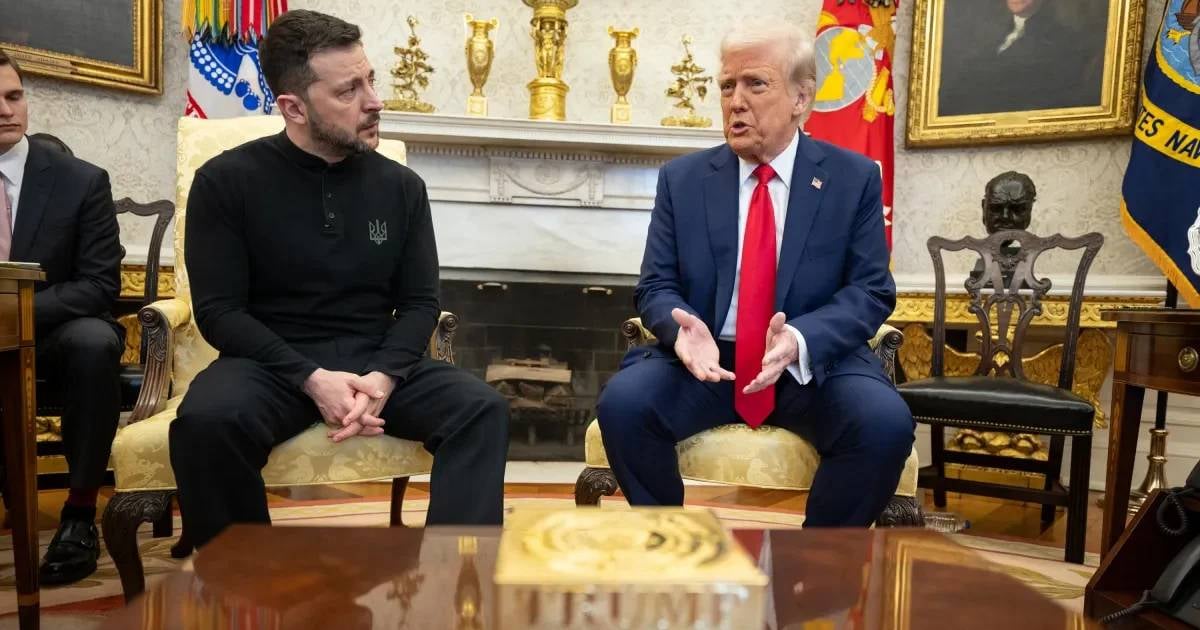
In a bold move, President Donald Trump has given Ukraine less than a week to accept his peace plan, perceived by many as favoring Moscow. Both Ukrainian President Volodymyr Zelensky and Russian President Vladimir Putin responded on Friday with starkly opposing views.
During an interview with Fox News, Trump announced that Ukraine has until Thursday, November 27, to agree to his peace proposal. According to CNN, the plan includes demands for territorial concessions, military restrictions, and a pledge to remain outside the North Atlantic Treaty Organization (NATO).
While Trump hinted at the possibility of extending the deadline “if things go well,” he emphasized that Thursday remains the cutoff. The White House did not immediately comment on the matter, as reported by the network.
Zelensky's Defiant Stance
In a video address to the nation, Zelensky described the current situation as “one of the most challenging times” in Ukraine's history. He indicated that the American plan would mean sacrificing either dignity or a strategic ally.
Zelensky assured the public that his administration would work swiftly and calmly with the United States and other partners but ruled out accepting terms that compromise national interests. “I didn’t betray Ukraine in February 2022, and I won’t do it now,” he declared on social media platform X.
Details of Trump's Controversial Plan
The 28-point plan from the Trump administration requires Kyiv to relinquish territories occupied by Russia, including Crimea, Luhansk, and Donetsk. It also demands that Ukraine limit its armed forces to 600,000 troops, hold elections within 100 days, and recognize a demilitarized buffer zone as part of the Russian Federation.
Moreover, the proposal suggests reintegrating Moscow into the global economy and bringing it back into the former G8, a group of the world's most industrialized nations.
International Reactions and European Concerns
European leaders have voiced strong opposition to any agreement that marginalizes Ukraine’s role in deciding its future. António Costa, President of the European Council, mentioned that the European Union (EU) has not received any official documentation of the plan.
In a call with Zelensky, leaders from Germany, France, and the United Kingdom reaffirmed their commitment to protecting both European and Ukrainian interests, emphasizing that the existing contact line should be the basis for any negotiations.
Putin's Response and Russian Perspective
From Moscow, Putin confirmed receipt of the plan through established channels with Washington and stated that it could serve as a foundation for a “final settlement,” according to EFE news agency.
Putin noted previous discussions with Trump on an earlier version of the plan during their August meeting in Alaska, expressing Russia's willingness to show “flexibility.” However, he accused Ukraine of effectively rejecting the proposal and warned that continued resistance might lead to further territorial gains by Russia, similar to recent events in Kúpiansk.
Kremlin spokesperson Dmitri Peskov cautioned that prolonging the conflict is “dangerous” for Ukraine and suggested reaching an agreement sooner rather than later. Peskov also mentioned that Washington has not officially communicated the new plan and refrained from public comments, stating Russia would not engage in negotiations “through a megaphone.”
European Union's Stance and Future Discussions
Meanwhile, European Commission President Ursula von der Leyen announced that EU leaders would deliberate on the plan during the upcoming G20 summit in South Africa. She reiterated that any initiative must include Ukraine’s direct involvement.
The Norwegian foreign minister deemed it “unjust” to demand that Kyiv cede territory, and British Prime Minister Keir Starmer emphasized that Ukraine should have the autonomy to decide its future.
As international diplomacy scrambles to determine whether Trump’s plan is a negotiable proposal or a territorial ultimatum, pressure mounts on Kyiv. Zelensky made his position clear on X: “We choose dignity.”
Key Questions on Trump's Ukraine Peace Plan
What are the main elements of Trump's peace plan for Ukraine?
The plan involves territorial concessions, military limitations, and a commitment for Ukraine to stay out of NATO. It also includes a demilitarized buffer zone recognized as part of Russia.
How has Zelensky responded to the proposed peace plan?
Zelensky has rejected any conditions that compromise Ukraine's dignity or strategic interests, stating he will not betray the country.
What is the international community's reaction to the plan?
European leaders have largely opposed the plan, insisting Ukraine must be involved in any decision-making regarding its future.