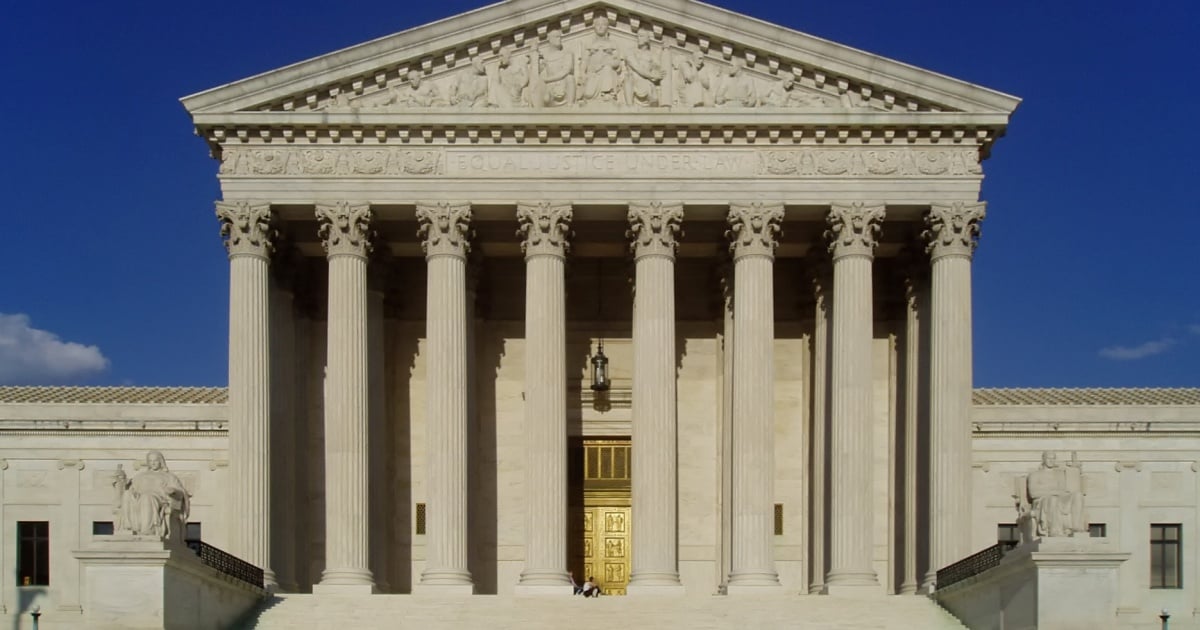
The United States Supreme Court convened this Friday to examine President Donald Trump's appeal regarding his executive order aimed at restricting birthright citizenship for children of undocumented immigrants or individuals temporarily residing in the country.
As reported by the Associated Press (AP), the court may announce on Monday whether it will agree to hear the case, following decisions by several lower courts that deemed the measure unconstitutional and halted its nationwide implementation.
Trump signed the order on the first day of his second term as part of his broader immigration policy to reinterpret the 14th Amendment of the Constitution. This amendment has, for over a century, guaranteed automatic citizenship to anyone born on U.S. soil, except for the children of foreign diplomats or occupying forces.
If the Supreme Court decides to review the case, oral arguments would take place in the spring, with a definitive ruling expected by early summer, according to the agency.
Federal courts, including the Ninth Circuit Court of Appeals in San Francisco and another in New Hampshire, have ruled that the order violates, or is likely to violate, the 14th Amendment. The amendment was designed to include all individuals born under U.S. jurisdiction, regardless of their parents' immigration status.
The Trump administration, however, argues that children of non-citizens are not "subject to the jurisdiction" of the country and, therefore, should not be granted automatic citizenship.
In a statement, Solicitor General D. John Sauer contended that prior judicial decisions "invalidated a policy of significant importance to the president and his administration, to the detriment of border security," as reported by AP.
The American Civil Liberties Union (ACLU), leading the lawsuit on behalf of those affected, urged the court to dismiss the appeal, describing the government's arguments as "weak and lacking legal foundation."
Should the Supreme Court decide to review it, this would mark the first immigration policy from Trump's second term to reach the highest court for a final decision.
President Donald Trump's attempt to abolish birthright citizenship in the United States has sparked a fierce legal battle since the beginning of his second term.
The Supreme Court had previously allowed his administration to proceed with the plan despite legal challenges and concerns over its constitutionality.
Following that initial step, public debate intensified regarding the future of automatic citizenship for children of immigrants, particularly those born in the U.S. to parents in irregular or temporary immigration status.
In subsequent weeks, Trump directly submitted a formal request to the Supreme Court to abolish this right, basing his argument on a restrictive interpretation of the 14th Amendment, which has been critical in ensuring the principle of jus soli in the country.
The legal battle continued to escalate with new court actions and responses from civil organizations that view this initiative as a direct threat to fundamental rights and an exclusionary move that disproportionately affects immigrant communities.
Key Questions About Birthright Citizenship and Legal Challenges
What is the 14th Amendment's role in birthright citizenship?
The 14th Amendment has historically guaranteed automatic citizenship to anyone born on U.S. soil, except for children of foreign diplomats or occupying forces.
Why is President Trump's order considered controversial?
The order challenges a long-standing constitutional guarantee and has been deemed unconstitutional by several lower courts as it seeks to exclude children of undocumented or temporary immigrants from automatic citizenship.
What could be the implications if the Supreme Court rules in favor of Trump's order?
A ruling in favor of the order could lead to significant changes in immigration policy, potentially affecting millions of individuals born in the U.S. to immigrant parents.