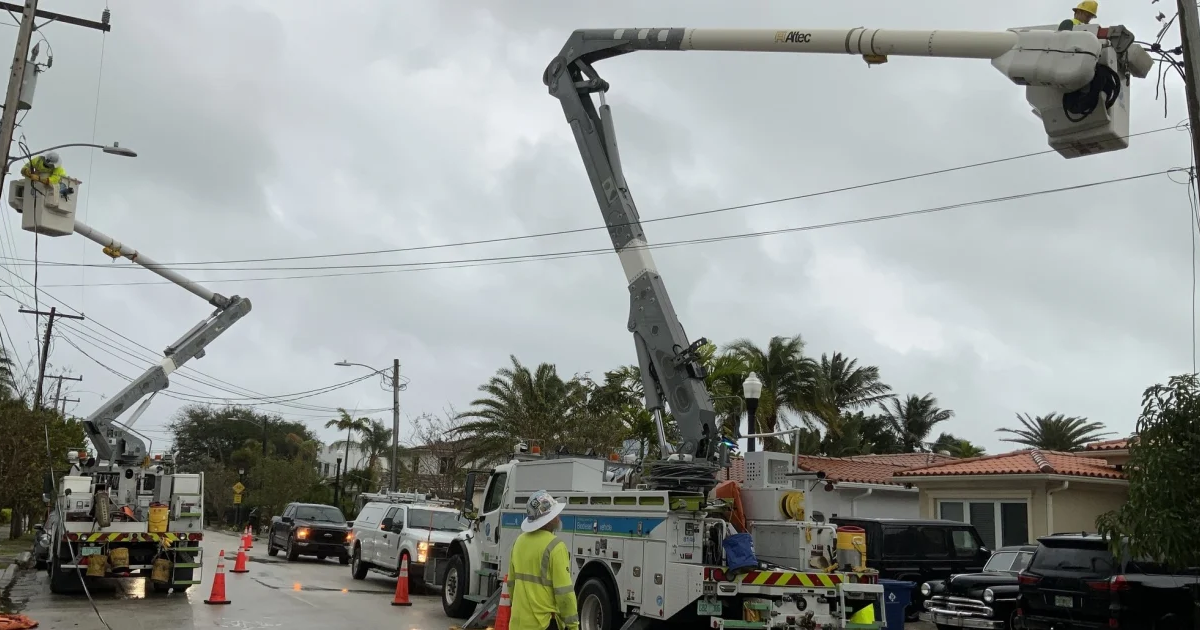
Residents of Florida are set to experience a record-breaking rise in electricity costs starting in 2026. The state's Public Service Commission (PSC) has approved a deal that allows Florida Power & Light (FPL), the largest utility company, to charge billions more over the next four years.
FPL argues that the increase is necessary for infrastructure and renewable energy investments. However, consumer advocacy groups have swiftly opposed the plan, foreshadowing a legal battle that may escalate to the Florida Supreme Court.
Projected Financial Impact on Floridians
The approved plan involves a $945 million rate increase in 2026 followed by an additional $705 million in 2027. Further charges are anticipated for solar projects and battery systems between 2028 and 2029. In total, the cumulative bill increase is expected to exceed $6.9 billion, as highlighted by opposition groups such as Florida Rising, LULAC Florida, and the Environmental Confederation of Southwest Florida.
By 2029, it is estimated that residential bills will go up by about $8 per month on average, with yearly incremental rises.
Regulatory Approval Amidst Public Dissent
Despite some discomfort expressed by commissioners over the agreement's scale, the majority deemed it a "balanced" decision. Commissioner Gary Clark defended the move, labeling the new rates as "fair and reasonable." Meanwhile, FPL's President and CEO, Armando Pimentel, lauded the measure as a "victory for our customers and the entire state."
FPL maintains that even with the hikes, its bills will remain below the national average.
Legal Challenges Ahead
The primary opposition comes from the Office of Public Counsel, a state entity tasked with protecting consumer interests, alongside other groups that view the increase as a blow to residents, particularly low-income households. Attorneys Bradley Marshall and Robert Scheffel Wright argued that the process has failed to adequately represent consumer interests, indicating that legal action is forthcoming. "I believe this case will reach the Florida Supreme Court," Marshall stated following the vote.
Critics frequently point out that while homeowners will bear higher costs, large corporations could benefit from reduced burdens, fueling backlash against the approval. Reports suggest that politically appointed commissioners backed the agreement, intensifying public scrutiny over the evaluation process's legitimacy.
Regional Bill Variations
Rate increases will differ based on the areas served by FPL:
Traditional FPL Service Area
Current bill for 1,000 kWh: $134.14
Estimated bill in 2026: $136.64
Annual increases continuing through 2029.
Northwest Florida (Former Gulf Power Territory)
Current bill: $143.60
Estimated bill in 2026: $141.36
Subsequent increases anticipated.
Additionally, consumers are already facing an extra charge of about $12 monthly in 2024 to cover hurricane-related costs. This fee is separate from the new rate hike, raising concerns over the cumulative impact.
Initial Request and Public Reaction
Back in March, FPL initially sought to raise rates to generate up to $9 billion. They cited reasons such as population growth, infrastructure expansion, and increased investment in solar energy and smart grids. At that time, the company contended that the adjustment was essential for maintaining reliable service in a state with rapidly growing energy consumption.
During the proposal's review, citizens voiced that the current rates are already burdensome, particularly for seniors and low-income families. Although public hearings were anticipated to discuss the issue, the new agreement's approval preempted the outcome that consumers feared: the sanctioning of the largest rate increase in FPL's history.
An Expensive Future for Florida's Energy Users
With the decision now finalized, over 12 million customers in Florida will face higher bills starting in 2026, with increases continuing annually until 2029. While FPL claims that the rate hike will enable network modernization, expand renewable energy use, and keep costs competitive, consumer groups argue that the burden falls mainly on families, whereas the company and large corporations benefit.
The discussion is now set to shift from regulatory arenas to the courts, potentially becoming one of Florida's most contentious public utility cases in recent history.
Key Questions About Florida's Electricity Rate Increase
What is the projected increase in FPL electricity bills by 2029?
By 2029, residential electricity bills are expected to rise by approximately $8 per month on average, with annual incremental increases.
Why is FPL increasing electricity rates?
FPL argues that the rate increase is necessary to fund infrastructure improvements and investments in renewable energy, ensuring service reliability amidst growing energy demand in Florida.
Who opposes the FPL rate hike, and why?
Consumer advocacy groups and the Office of Public Counsel oppose the rate hike, viewing it as detrimental to residents, especially low-income households, while large corporations might benefit.
Will the rate hike impact all FPL customers equally?
No, the rate increases will vary based on geographic location, with different estimates for FPL's traditional service area and the former Gulf Power territory in Northwest Florida.