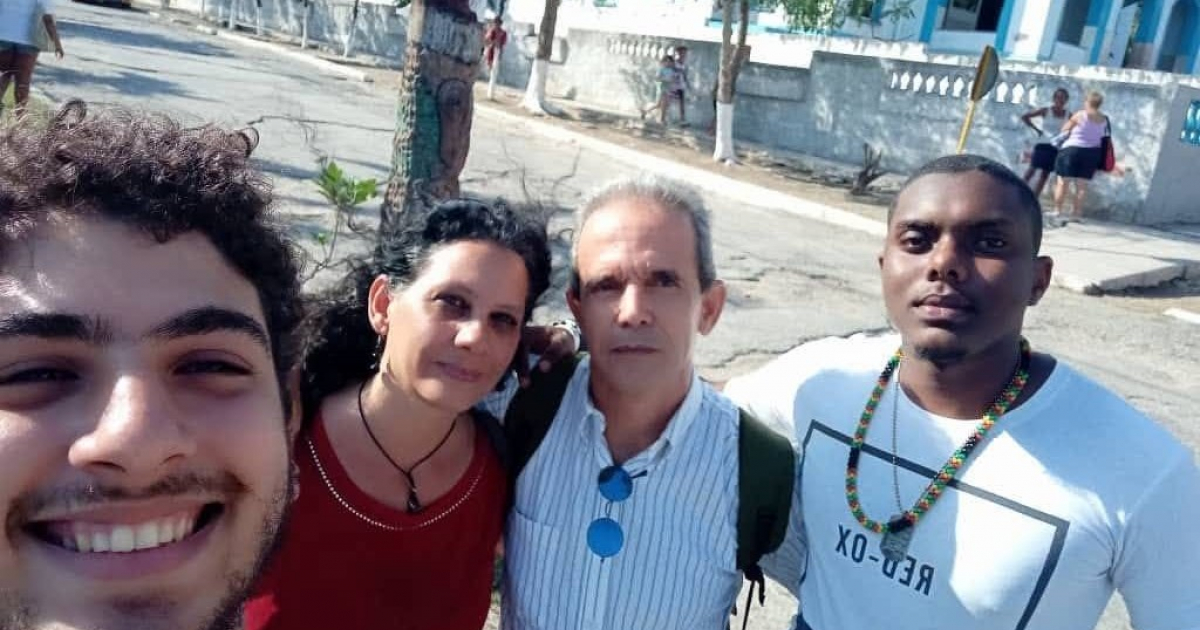
The unexpected dismissal of the criminal case against writer and humorist Jorge Fernández Era was announced on November 20, marking the end of what he describes as nearly three years of repression, physical threats, police harassment, and arbitrary restrictions.
The prosecution has nullified the "Disobedience" case initiated in 2023, along with lifting the house arrest and travel ban imposed on him since April of that year.
For Fernández Era, who has faced summonses, interrogations, and beatings for his satirical critiques of the government, the resolution is a hard-won victory achieved with "sheer determination."
On Facebook, Fernández Era recounted his meeting with Miosotis, the head of the Aguilera Unit, accompanied by an unnamed counterintelligence officer from MININT. He entered the station expecting another arrest, only to be informed that the case was dismissed and the restrictions were lifted—restrictions that had allowed State Security to interfere in his daily life, surveil his home, detain him multiple times, and threaten his family with reprisals.
Before signing the documents, the writer argued that the case was not merely about "Disobedience." He recalled facing charges like "Disrespect to Revolutionary Leaders," "Defamation against Armed Forces Officers," and "Sedition," which, as he claimed, put him under the threat of a potential life sentence.
Throughout this ordeal, he says, he lodged complaints with the provincial and municipal prosecutors, the Palace of the Revolution, and the Ministry of the Interior, yet received no response.
An Unsettling Triumph Against a Repressive System
Although Fernández Era celebrated the conclusion of the case, he described it as a victory that highlights the arbitrary nature of the system that pursued him.
He asserts that his case exposes the impunity of the agents who assaulted, interrogated, and threatened him with death. "None will be demoted or reprimanded," he wrote.
For him, the situation exemplifies a selective mechanism used to divide those who speak out against abuses and to show how punishments and favors are administered according to the regime's political interests.
He noted that satisfaction is hard to find when others remain imprisoned, caught in manipulated proceedings, or barred from leaving the country.
He mentioned cases like Alina and Jenny—prosecuted despite being victims—the academic Alexander Hall, who was prevented from traveling to Ecuador for a course, and Yosvany Rosell, on a hunger strike since being jailed after the 11J protests.
He also recalled the delayed release of Luis Robles, detained for years for holding a sign, and the ongoing imprisonment of hundreds of young people for political reasons.
A Persistent Pattern of Harassment
The prosecutor's decision came just a day after Fernández Era received another summons from a PNR lieutenant who allegedly "did not know" the writer was ill.
The document, as he reported, lacked the full name of the issuing officer and an official seal, reflecting the repeated sloppiness in his police harassment.
The intellectual believes that his journalistic criticism—particularly his work for El Toque—is the reason behind the harassment. The independent media outlet is a target of an especially aggressive official campaign, and he claims what irritates the regime is not its exchange rate but its "reflective and unrestrained" journalism.
Since 2023, the regime has attempted to neutralize Fernández Era with house arrest, detentions, and physical assaults.
In July, he shared images of bruises on his face and body after being detained and reported threats involving "runaway cars," "contaminated food," and traps laid on sidewalks.
On that occasion, he recounted being beaten by a State Security lieutenant colonel whom he called "cynical and fascist."
Despite the risk, he has continued his monthly peaceful protest in Central Park, demanding respect for civil rights and an end to the totalitarian system.
"A Chapter's End, Not the Story's Conclusion"
Although his case has been dismissed, Fernández Era warned that the repressive apparatus could initiate a new process at any moment.
He asserts that he does not fear imprisonment or death threats and will continue to express his opinions. He maintains that those truly acting against the country's interests are those who seek to nullify fundamental rights while claiming to defend justice.
His absolution, far from showcasing state benevolence, exposes the seams of a power that selectively punishes independent thought.
For the humorist, the development is not an act of mercy but another example of the impunity with which authorities operate. He concluded his message by stating that his story is not over: "I prefer to think that, more than an epilogue, this is the end of a first chapter."
Understanding the Case Against Jorge Fernández Era
What charges were initially brought against Jorge Fernández Era?
Fernández Era faced charges including "Disobedience," "Disrespect to Revolutionary Leaders," "Defamation against Armed Forces Officers," and "Sedition."
How did Fernández Era describe his victory in the case?
He described it as a victory achieved with "sheer determination," exposing the arbitrary nature of the system that pursued him.
What actions did Fernández Era take during his legal battles?
He lodged complaints with the provincial and municipal prosecutors, the Palace of the Revolution, and the Ministry of the Interior, though he received no response.
Why does Fernández Era believe he was targeted by the regime?
He believes his journalistic criticism, especially his work for El Toque, prompted the harassment. The regime is particularly aggressive towards independent media.