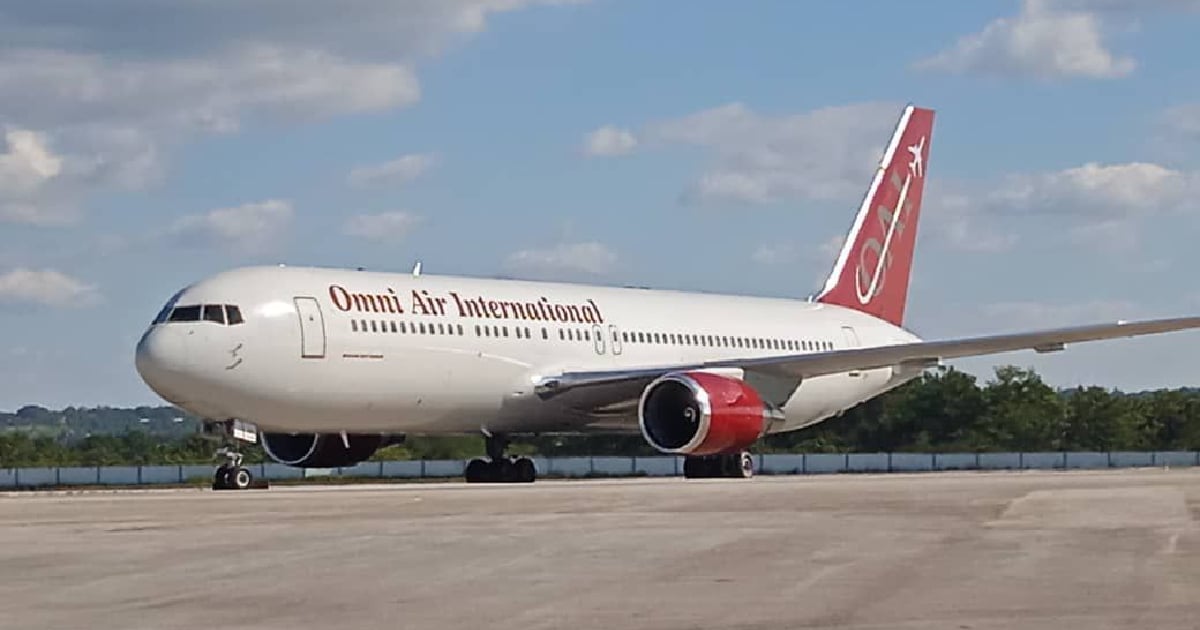
The United States government deported 139 Cuban migrants on Thursday, marking the eleventh flight chartered by Immigration and Customs Enforcement (ICE) to Havana in 2025 and the second one conducted this November.
Cuba's Ministry of the Interior (MININT) reported that the group arriving this afternoon at José Martí International Airport consisted of 109 men and 30 women.
Upon the flight's arrival, authorities detained an individual who was on parole at the time of their departure from Cuba, according to the source.
With this latest operation, the total number of Cuban migrants returned from various countries in the region this year has reached 52, involving 1,535 individuals, as indicated by MININT's report on social media.
Out of these, 1,370 have been deported by the United States, in accordance with the existing migration agreements between the two nations.
Cuban authorities reiterated their "commitment to regular, safe, and orderly migration" and highlighted the dangers of illegal departures for migrants' lives.
Earlier this month, the administration of President Donald Trump set a record by deporting 232 Cuban citizens, the largest operation since the resumption of ICE deportation flights in 2023.
This Thursday's flight coincides with the 10-month mark of Trump’s second term, during which more Cubans have been sent back to the island compared to the nearly two years of President Joe Biden's administration (978), since the resumption of deportations by air.
This move underscores the tightening of U.S. immigration policy under Trump, characterized by a surge in arrests and mass expulsions of undocumented immigrants, many with criminal records.
Many Cubans have also been targeted by this harsh strategy, which does not differentiate between those with pending immigration cases, such as individuals with Form I-220A or in the process of obtaining residency, and those with extensive criminal records, including those with final deportation orders.
According to the Department of Homeland Security (DHS), 42,084 Cubans have final deportation orders. The Havana regime refuses to accept back those who committed crimes and served prison sentences in the U.S., remaining outside the island since before the 2017 migration agreements.
Understanding U.S. Deportation of Cuban Migrants
What is the significance of the latest deportation flight to Havana?
The eleventh deportation flight to Havana in 2025 highlights the ongoing enforcement of U.S. immigration policies, reflecting a continued commitment to existing migration agreements with Cuba.
How has the Trump administration's immigration policy affected Cuban migrants?
Under President Trump's administration, there has been a significant increase in deportations and stricter immigration enforcement, leading to more Cubans being returned to the island compared to the previous administration.