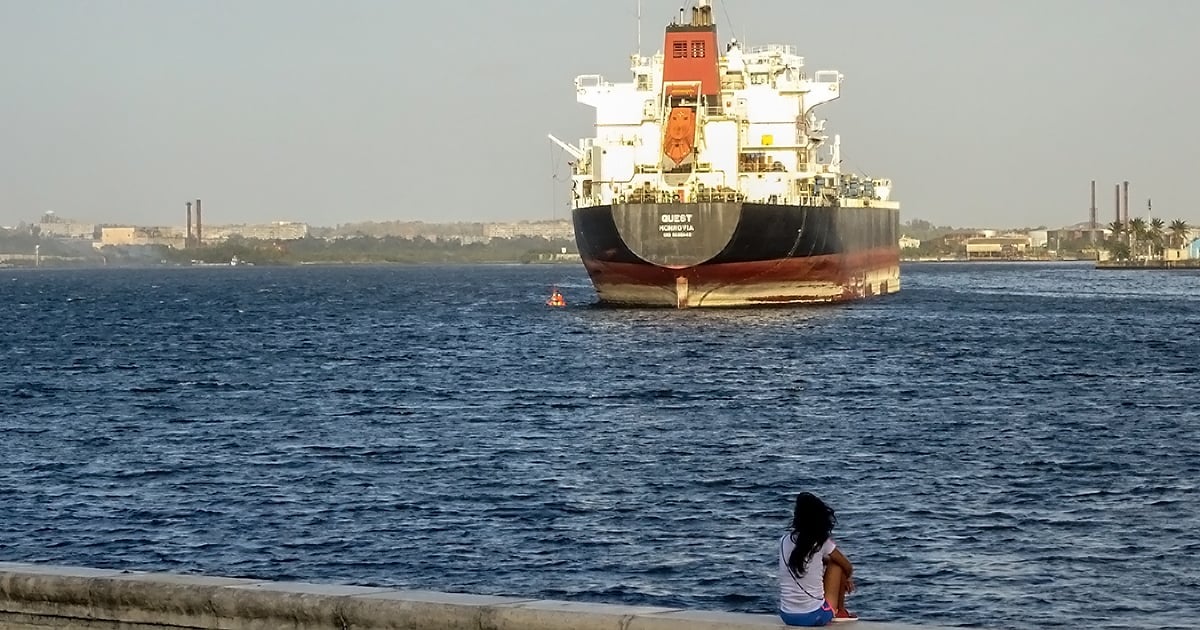
Cuba finds itself grappling with one of the most severe energy supply crises in 2025, as the shortage of oil and fuel has severely impacted the island, pushing its citizens to the brink of collapse.
According to a recent Reuters report, which draws from maritime traffic data and official documents from state enterprises, Cuba's imports of oil and its derivatives have dropped by 35% from January to October compared to the same period in 2024.
The 35% Drop: Unpacking the Numbers Behind the Crisis
The substantial decrease is largely attributed to significant cutbacks in shipments from Mexico and Venezuela, with little to no aid from other partners like Russia.
Between January and October of 2025, Cuba imported approximately 45,400 barrels per day (bpd) of crude oil, liquefied gas, and other fuels. This starkly contrasts with the 69,400 bpd received during the same timeframe in 2024. The reduction of 24,000 bpd equates to a drop of over a third of the supply, directly affecting the country's already struggling electrical system.
Reuters' data highlights that Mexico, which had become a stable provider in 2023 after normalizing the shipment of Olmeca light crude, has slashed its deliveries to Cuba by 73%. This year, shipments plummeted to just 5,000 bpd, down from 18,800 bpd the previous year. Meanwhile, Venezuela also reduced its shipments. Imports from Cuba's main political ally fell by 15%, dropping from 32,200 to 27,400 bpd. This reduction has particularly impacted the supply of fuel oil, crucial for electricity generation on the island.
Exacerbating Factors: Sanctions, Limited Production, and Debt
The collapse in imports is not solely due to political decisions by allied countries. Both Mexico and Venezuela are contending with structural challenges that prevent them from ensuring a steady supply.
Mexican state oil company Pemex saw its oil production fall nearly 9% between January and September 2025, reaching 1.63 million bpd compared to 1.79 million in the same period of 2024. Additionally, crude oil exports dropped by 23%, affecting the availability of Olmeca light sweet crude, favored by Cuban refineries. This type of oil, due to its high value, is reserved for cash-paying, market-priced customers, something Cuba cannot afford amidst its financial crisis.
Venezuela, on the other hand, has had to redirect part of its crude to its own refineries amid constant changes in U.S. sanction regimes. State-run PDVSA has reduced the production of the residual fuel oil demanded by Cuba, according to internal documents cited by Reuters. It also faces logistical challenges: a shortage of ships to transport the oil has disrupted flows to the island.
In this scenario, Russia's involvement has been almost symbolic: throughout the year, it has sent only a couple of cargoes of Urals crude, a volume similar to 2024's figures.
Widespread Blackouts: A Direct Consequence
The fuel shortage directly leads to the collapse of the electrical system. While eastern provinces were traditionally the most affected by power cuts, the situation has now significantly impacted the capital in 2025. Havana is experiencing unforeseen blackouts often exceeding nine hours daily, whereas in other provinces, electricity access is reduced to between two and four hours per day.
This past Thursday, November 20, Cuba's Electric Union (UNE) forecasted one of the most severe power generation deficits in recent times. At peak hours, the entity estimates availability at merely 1,494 MW against a maximum demand of 3,200 MW, implying a deficit of 1,706 MW and a potential impact of up to 1,776 MW if current conditions persist.
According to the official report, 91 distributed generation plants remain out of service due to a lack of fuel, resulting in 767 MW of unavailable capacity. Additionally, 85 MW are down at the Mariel Fuel Oil plant, along with another 75 MW due to a lubricant shortage. In total, 927 MW are out of operation for reasons related to the supply of fuels and lubricants.
The previous day was marked by 24-hour disruptions, with a peak deficit of 1,964 MW at 6:10 PM due to insufficient generation capacity. By 6:00 AM today, the National Electric System (SEN) had a mere 1,340 MW available against a demand of 2,460 MW, resulting in a capacity deficit of 1,145 MW. For midday, the UNE estimates an impact around 1,150 MW.
The difficulties are compounded by outages due to failures in Unit 2 of the CTE Felton and Units 3, 5, and 6 of the CTE Renté. Additionally, Unit 2 of the CTE Santa Cruz, Unit 4 of the CTE Cienfuegos, and the gas treatment plant in Puerto Escondido remain under maintenance.
Conclusion: No Clear Path to Recovery
In 2025, Cuba is caught in a perfect storm of an energy crisis: a drastic reduction in supply from key partners, no ability to pay in cash, a lack of viable alternative options, and an aging infrastructure unable to withstand the pressure. Neither Mexico nor Venezuela, the island's main sources of fuel, have excess capacity to provide. Without a stable flow from Russia or other emerging sources, the country seems doomed to survive under extreme rationing conditions.
The social and economic consequences are already being felt: reduced productivity, transportation breakdowns, challenges in food preservation, and a weary population facing not just literal blackouts but a grim outlook with no clear signs of recovery.
Understanding Cuba's Energy Crisis
What has caused the reduction in Cuba's oil imports in 2025?
The reduction is primarily due to significant cutbacks in oil shipments from Mexico and Venezuela, with additional factors such as structural difficulties, reduced production, and logistical challenges also playing a role.
How has the fuel shortage affected Cuba's electrical system?
The fuel shortage has led to widespread blackouts, severely impacting the electrical system. Havana and other provinces face prolonged power cuts, with limited hours of electricity access daily.
Why can't Cuba import oil from other countries?
Cuba struggles to import oil from other countries due to its financial crisis, which limits its ability to pay in cash and meet market prices. Additionally, there is a lack of viable alternative sources willing to supply the island under these conditions.