Latinos have reached a historic milestone, now making up 20% of the United States' population, fundamentally reshaping the nation's identity.
According to data from the U.S. Census Bureau, as reported by CNN, over 68 million individuals identified as part of the Latino community by the end of 2024.
This transformation extends beyond mere numbers; it signifies cultural, economic, and political shifts. Latinos have emerged as a dynamic force influencing the country's economy, cuisine, music, politics, and media, as emphasized by the referenced source.
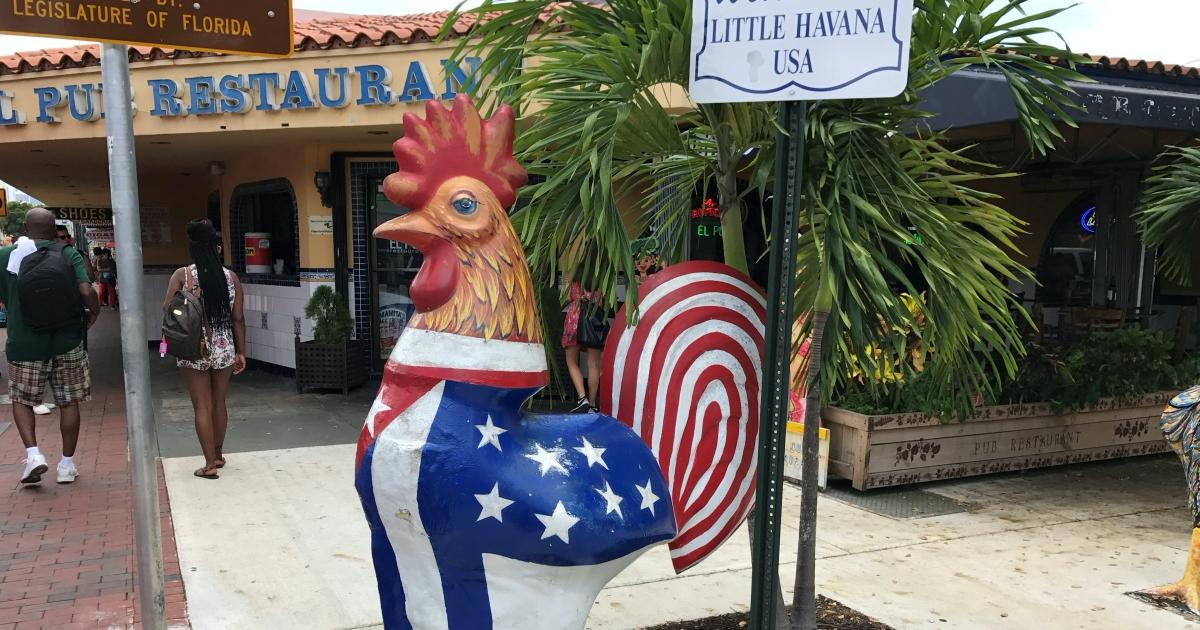
Among the most prominent Latino groups, Cubans stand out in Florida, with a population of 1.8 million, as illustrated by a CNN graphic based on Census data.
This makes the Cuban community the largest in the Sunshine State and one of the most influential nationwide, particularly in South Florida, where Cuban-American identity is woven into daily life.
Florida, along with California and Texas, is home to the largest concentrations of Hispanics in the U.S.
In Florida, Latinos account for 28.7% of the population, a figure that has steadily risen over the past two decades, driven by the influx of Cubans, Venezuelans, Colombians, and Puerto Ricans.
On a national scale, Mexicans remain the largest Hispanic group, numbering 38.9 million, followed by Puerto Ricans (6.1 million), Cubans (2.9 million), Salvadorans (2.7 million), and Dominicans (2.5 million), according to the latest Census report.
The study featured by CNN highlights that the Latino community should not be perceived as a homogeneous entity but rather as a diverse tapestry of traditions, dialects, and generations.
While many Latinos feel fully integrated into American society, the majority maintain strong cultural ties to their countries of origin, preserving their identity through food, language, and celebrations.
In Florida, this dual identity is vividly apparent. Cuban coffee, salsa music, Hialeah's bakeries, and May 20th celebrations—marking Cuba's independence—are emblematic of a community that, despite exile and change, retains a profound connection to the island.
Beyond their cultural impact, Latinos are also an economic powerhouse. An analysis by Arizona State University and the Latino Donor Collaborative estimates the Latino Gross Domestic Product reached $4 trillion in 2023, which, if considered an independent nation, would rank as the world's fifth-largest economy.
Within this context, the Cuban-American community holds a prominent position due to its entrepreneurial influence, its pivotal role in presidential elections, and its presence in sectors like healthcare, services, and commerce.
Experts suggest this demographic trend will continue upward for decades to come.
The current growth of the Latino population is primarily driven by births in the U.S. rather than immigration.
Between 2022 and 2023 alone, there were 722,000 births of Latino origin, compared to 437,000 new immigrants.
“Latinos are the youthful energy sustaining America's future,” stated Frankie Miranda, president of the Hispanic Federation, as quoted by CNN.
“Our community not only contributes labor and talent but also brings a vision of the nation that blends effort, diversity, and optimism.”
The demographic surge and cultural entrenchment of the Hispanic world in the United States underscore an undeniable reality: the 21st-century narrative of the nation is increasingly written in Spanish.
Key Insights into the Growing Latino Influence in the U.S.
What is the current percentage of Latinos in the U.S. population?
Latinos currently make up 20% of the U.S. population.
How significant is the Cuban population in Florida?
Cubans are the largest Latino group in Florida, with 1.8 million residents, significantly influencing the culture and daily life in the state.
What drives the growth of the Latino population in the U.S.?
The growth of the Latino population in the U.S. is mainly due to births within the country rather than immigration.