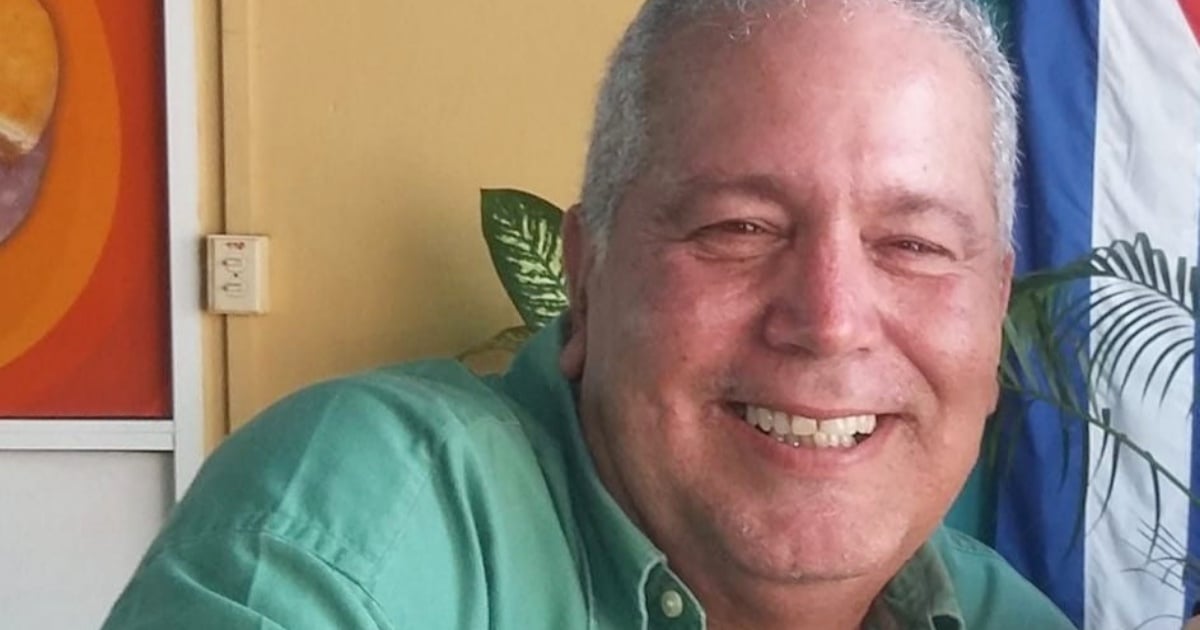
The journalistic community in Villa Clara is reeling from shock following the discovery of reporter Ricardo R. González, who was found deceased at his residence in the city of Santa Clara.
Journalist Francisnet Díaz Rondón confirmed the tragic news, posting a farewell message on Facebook that has sparked an outpouring of grief.
"A sad day for the journalist community in Villa Clara: our colleague, friend, and companion Ricardo R. González has passed away, leaving a significant void at the Vanguardia newspaper of Cuba," Díaz Rondón wrote.
Díaz Rondón noted that "throughout his extensive career, Ricardito was an accomplished journalist who focused on the Cuban Women's Federation (FMC), Health, and Science and Technology sectors, producing numerous reports and interviews with key figures and workers in these fields."
"His loss brings immense sorrow to all who knew him and shared years of work and friendship. Farewell, Ricardito. Rest in peace," concluded Díaz Rondón. This message was echoed by the Villa Clara Journalists' Union and the newspaper where the late journalist worked.
Discovery Circumstances
In the comments section of his post, Díaz Rondón clarified that the official cause of death remains unknown.
Reports indicate that neighbors, concerned after days without seeing him and detecting an unpleasant odor from his home, alerted the authorities.
According to Díaz Rondón, several police officers entered the home by climbing over an adjacent wall and found him lifeless on his bed.
The case has stirred deep concern, not only due to the journalist's sudden passing but also because of the conditions in which he was found.
A Beloved Journalist
Ricardo's death has unleashed a wave of mourning across social media and local news outlets, where colleagues, readers, professionals from various fields, and neighbors have expressed their condolences.
Colleagues have noted that in every story, interview, or report, he prioritized the human and the testimonial aspects. His presence was a fixture in hospitals, schools, underprivileged neighborhoods, or research centers, always aiming to highlight the valuable and call attention to what required institutional focus.
He was well-known for his friendly demeanor, constant smile, and humility that kept him away from the spotlight. Many described him as an "indispensable journalist," both for his ethics and his character.
While his published works are countless, a shared feeling unites them all: the sadness of losing a good man, dedicated to his craft and approachable to everyone.
Numerous messages highlight his warmth, camaraderie, respect for his sources, and the kindness with which he greeted others even in the most tense journalistic scenarios.
Many shared personal anecdotes illustrating how Ricardo was not just a storyteller but someone who engaged with and was part of the stories.
Voices from the journalistic field also remembered him as a regular figure in institutional coverages, scientific events, health tours, and cultural days, contributing not only with his pen but with his close and sensitive presence.
Others noted the poignant symbolism of his death occurring in solitude, despite having forged so many connections in life.
As of the conclusion of this report, no further details have been revealed regarding the cause of Ricardo R. González's death.
Key Questions About the Tragic Death of Ricardo R. González
Who was Ricardo R. González?
Ricardo R. González was a respected journalist in Villa Clara, Cuba, known for his work in the fields of the Cuban Women's Federation, Health, and Science and Technology.
How was Ricardo R. González discovered?
He was found deceased in his home after neighbors, concerned about not seeing him and noticing a foul odor, alerted the authorities.
What was Ricardo R. González known for in his journalism career?
He was recognized for his focus on human stories and his presence in places like hospitals, schools, and research centers, highlighting important issues and advocating for institutional attention.