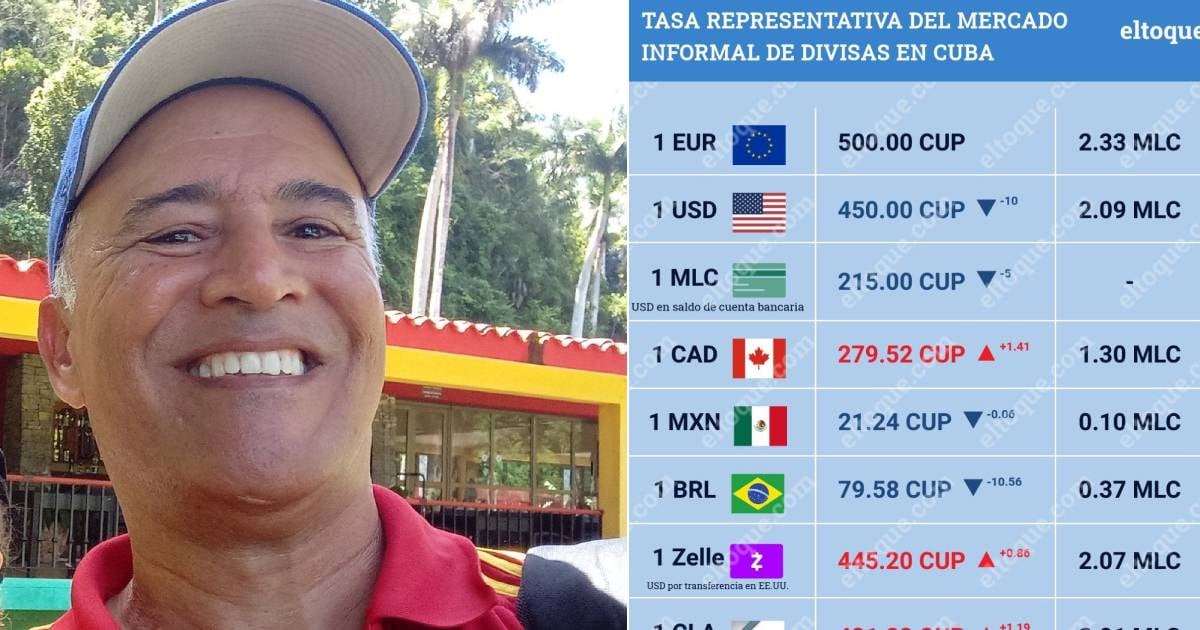
In a new development in the state-led campaign against the independent outlet El Toque, Joel Mayor Lorán, a government-aligned journalist, has joined the fray. Writing for the provincial newspaper El Artemiseño, Mayor Lorán echoed the familiar rhetoric of the State Security, asserting that more individuals are choosing to disregard El Toque. This platform is known for publishing the Informal Market Representative Rate (TRMI).
The piece, provocatively titled "Don't Listen to El Toque," aligns perfectly with the government's ongoing efforts to blame the outlet for inflation, currency devaluation, and exchange market chaos, all while deflecting attention from decades of economic mismanagement. Mayor accuses El Toque of participating in an "informational war against Cuba" and employing "manipulation that disrespects us." He claims the site self-proclaims as an analyst of the informal market's behavior, allegedly fueling speculation and driving up prices simply by sharing exchange rate references sourced from social media data.
According to Mayor, the TRMI published by El Toque is not only illegitimate but is also intentionally crafted to harm the Cuban people's finances. He argues that their reports foster uncertainty and contribute to the informal market, financial stress, and a general sense of chaos.
The official narrative is furthered by allegations of an "alliance with the enemy," with claims that El Toque receives funding from the United States government, thus violating Cuban law by engaging in a "media war" financed by Washington. However, these assertions lack verifiable evidence and merely reiterate the script already presented by national television, the Central Bank of Cuba (BCC), and other key propaganda figures.
The article by Mayor is just another brick in the wall of the state’s orchestrated assault on El Toque. It follows accusations made on the state television program Razones de Cuba, hosted by Humberto López, where the outlet was charged with "financial terrorism," "currency trafficking," and "tax evasion." The show even suggested possible legal actions against its staff and their inclusion on a national list of "entities linked to terrorism."
During the broadcast, López claimed that El Toque uses "U.S. taxpayer funds" to manipulate the informal currency rate and "deprive the Cuban population of income," yet he provided no documentation or proof to support these statements. Despite this, state media outlets have parroted the narrative with headlines such as "El Toque Acts Against the Welfare of the Cuban People" and "From Economic Terrorism to Currency Trafficking."
The Central Bank of Cuba has also joined the campaign. In a recent interview with Granma, Ian Pedro Carbonell, the BCC’s Director of Macroeconomic Policies, focused much of his discussion on discrediting the TRMI and accusing the independent outlet of "distorting" the economy. This was said in the context of claims that the government had managed to "moderate inflation," despite the reality of eroded wages, scarce markets, and a continually rising informal dollar rate.
Simultaneously, government-aligned musician Arnaldo Rodríguez, known as "El Talismán," resurfaced on social media to denounce El Toque supporters, accusing them of losing "shame, decorum, and reasoning capacity," and reiterating that the outlet is part of the "enemy narrative" against the Revolution.
Contrarily, economists like Mauricio de Miranda have publicly debunked the "financial terrorism" narrative. In a widely shared message, De Miranda dismissed the notion that a digital publication could impoverish a nation as a "fairy tale," emphasizing that the roots of the current crisis lie in decades of poor decision-making.
"Enough with deceiving the Cuban people. It’s time to stop scapegoating to hide the negligence, incompetence, and ineptitude of a bureaucracy that only cares about its survival," De Miranda wrote, striking a stark contrast to the appeasing tone of publications like El Artemiseño.
Understanding the Controversy Surrounding El Toque
What is El Toque accused of by the Cuban government?
The Cuban government accuses El Toque of engaging in "informational warfare," manipulating exchange rates, and contributing to economic instability. They claim it receives funding from the U.S. government and participates in a media war against Cuba.
What is the Informal Market Representative Rate (TRMI) published by El Toque?
The TRMI is a reference rate published by El Toque based on data collected from social media, reflecting the informal currency exchange rate in Cuba. It is criticized by the government as illegitimate and harmful to the Cuban economy.
How have independent economists responded to the allegations against El Toque?
Economists like Mauricio de Miranda have refuted the government's claims, arguing that the economic crisis stems from long-term policy failures rather than the publications of an independent media outlet like El Toque.