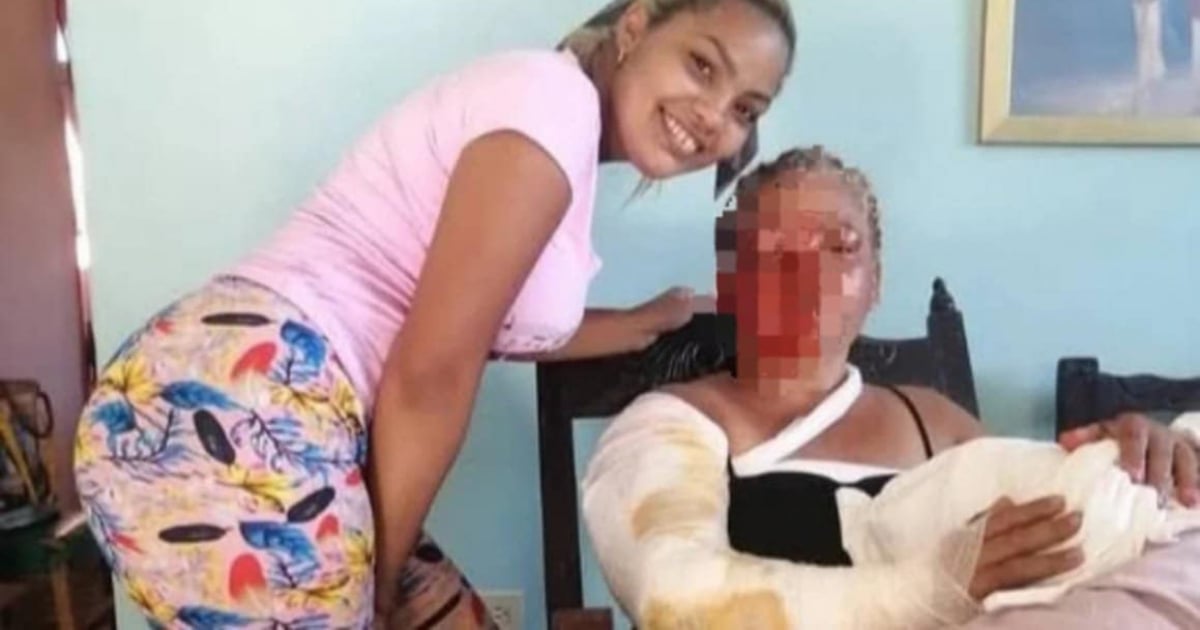
In Bayamo, a daughter's urgent public appeal has become her only hope to save her mother's life.
With no other options, Marilin Polo took to Facebook to make an urgent request for blood donors with B- and O- blood types, emphasizing the critical nature of each passing minute.
"My mother's life depends on these donations," she pleaded, reflecting a distressing reality that has become all too common in today's Cuba.
Marilin even offered to pay for the donations, underscoring the dire situation her mother, Ana María Benítez Pompa, aged 53, faces. The hospital cannot provide the needed blood.
She shared personal details and contact numbers, 51251709 or 5160812, hoping a stranger's kindness would lead them to the Bayamo Provincial Blood Bank before it's too late.
Her messages not only highlight the personal anguish of one family but also expose the systemic failures of the healthcare infrastructure in Granma Province and throughout the nation.
Without the generosity of ordinary citizens, countless patients in Cuba would have no real chance of survival.
Reality Contradicts Official Claims
The plight of this family starkly contrasts with recent statements from health officials in Granma.
In late October, health sector representatives publicly claimed that the Bayamo blood bank was fully equipped and prepared to receive donations as Hurricane Melissa approached.
Provincial Health Director Yelenis Elías Montes assured that staff and resources were ready for any emergency.
Yet, the situation on the ground tells a different story: while the state apparatus boasts of organization and capability, affected families endure daily shortages.
If the institution were genuinely well-stocked, Marilin wouldn't need to resort to social media to beg for her mother's life, illustrating the ongoing disconnect between official rhetoric and citizens' experiences at hospitals.
A Repeated Crisis
The experience of this Bayamo family is far from unique; it's part of an ongoing series of personal emergencies that have become public cries for help.
In recent months, other cases have shaken the community.
One involved a two-year-old girl with leukemia in Holguín needing two platelet donations daily. Her family had to seek urgent assistance online because the hospital couldn't supply what was needed.
A 38-year-old leukemia patient in Ciego de Ávila recorded a plea from his hospital bed: "I need blood. I need help," he implored, facing a lack of reserves at the medical center where he was admitted.
These appeals, echoed across the Island, not only highlight the chronic shortages of equipment, supplies, and medications but also the decline of a healthcare system that struggles to meet even the most basic needs.
Without blood, reagents, or basic conditions, families—not institutions—have shouldered the burden of keeping their loved ones alive.
Social Media: The New Lifeline
In a context of decaying hospitals, under-equipped laboratories, and blood banks that operate nominally at best, Cubans have turned to social media as a collective lifeline.
There, requests for blood, hard-to-find medications, nonexistent reagents, and patient information circulate, relying on the kindness of strangers.
Marilin's story and her mother's plight serve as yet another reminder of the daily neglect faced by Cuba's sick. When the state fails to ensure even the basics needed to save a life, citizens organize, donate, share, and informally provide services that should be the responsibility of institutions.
In Bayamo, as Marilin continues to post and repost her plea with the hope that someone will donate in time, her case adds to the growing list of Cubans whose personal anguish has become a public plea.
A plea that should not exist but is now the only way to save lives in a country where healthcare is no longer a guaranteed right but a lottery dictated by scarcity, deterioration, and official silence.
Understanding Cuba's Healthcare Crisis
Why are blood donations so critical in Cuba?
Blood donations are vital in Cuba due to the severe shortages within the healthcare system. Many hospitals lack the necessary supplies to meet patients' needs, making external donations crucial for survival.
What challenges does the Cuban healthcare system face?
The Cuban healthcare system faces numerous challenges, including shortages of medical supplies, outdated equipment, and inadequate infrastructure, which hinder its ability to provide basic care.
How are Cubans responding to healthcare shortages?
Cubans are increasingly turning to social media to seek help, organize donations, and share information, creating informal networks to address healthcare shortages.