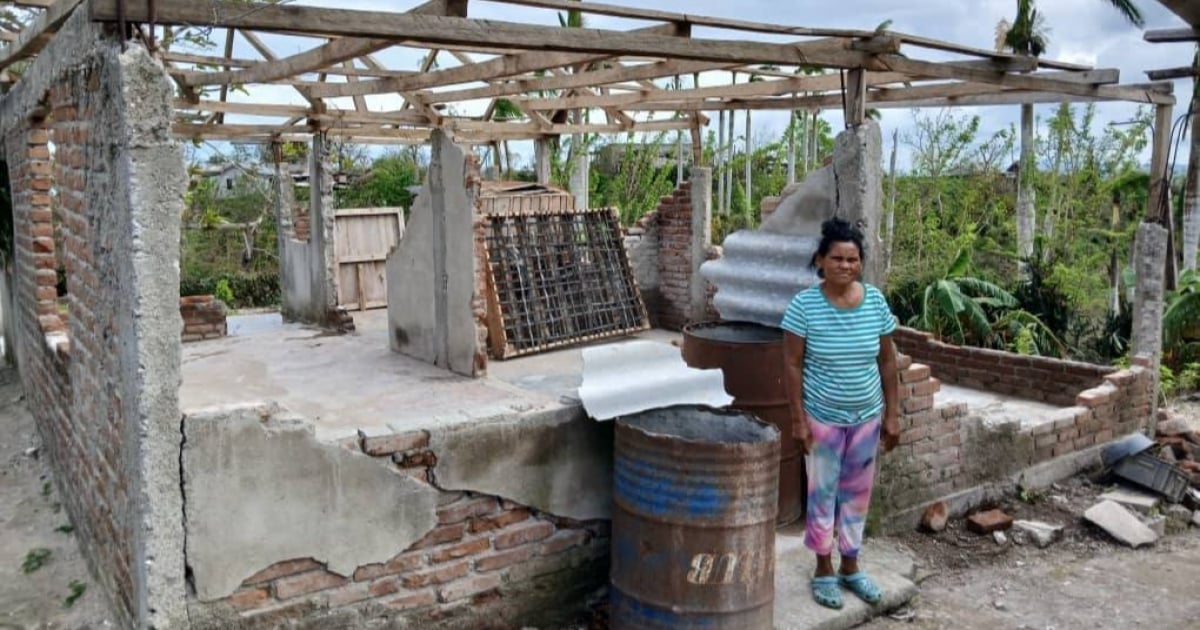
The city of Santiago de Cuba is once again the backdrop of a recurring tragedy every time a cyclone strikes: a landscape marked by destruction, governmental neglect, and a community surviving solely on the solidarity among its citizens.
In the aftermath of Hurricane Melissa, the region lay in ruins, revealing not only the damage caused by wind and rain but also the depth of a systemic crisis that leaves its people utterly defenseless.
An activist, Yankiel Fernández, shared a stark account on Facebook, capturing the silent suffering of many.
"Returning to Santiago, I feel the pain, the suffering, the neglect, and the misery anew. What Melissa's winds didn't destroy, abandonment did," he expressed.
His depiction of the losses is overwhelming: roofs torn off, electric cables snapped, windows shattered, doors ripped away, mattresses swallowed by floodwaters, and refrigerators rendered useless by decades of power outages.
“While life stands resilient, everything else has turned into rubble, murky water, and mud,” he lamented.
What hurts the most, however, Fernández emphasized, is not the soaked wood or lost belongings, but the moral decay that surfaces amid a national crisis, epidemic, and severe shortages.
He expressed dismay witnessing residents profiteering from others' misery by selling bread, candles, and water at inflated prices.
“Human misery piled on top of material misery,” he highlighted.
Even though lives were spared, the community now faces the inevitable reality that governmental response will be as sluggish and ineffective as ever, a cycle that repeats with each cyclone in a "country already broken at its core."
"We know the next scene by heart: months without electricity, water, food, or answers. Absent governments, empty promises, assessments that never arrive, aid that vanishes as if swept away by the wind," he denounced.
"We know help isn’t coming. That knowledge, not the hurricane, is the truly unbearable part," he concluded.
A Flooded Region and a Population Without Resources
The torrential rains led to widespread flooding, swollen rivers, ruined roads, and entire communities cut off from the outside world.
Thousands of families lost roofs, walls, furniture, clothing, food, and any basic tools necessary to start over. In a country where official salaries fall short of covering basic needs, replacing what's lost is an unattainable dream.
The material devastation in Santiago de Cuba is staggering: over 95,000 homes affected. These aren't just destroyed houses; they're homes that never fully recovered from the last cyclone, now set back even further.
Despite official statements from Prime Minister Manuel Marrero Cruz asserting that "no one will be left unprotected," the reality experienced by those affected tells a different story: promises that fade away and official aid announced with great fanfare but absent on the ground.
Grassroots Solidarity: The People's Response
While institutions delay, remain silent, or offer excuses, the real response has come from below. Independent support networks mobilized far ahead of any state structure.
Cáritas Santiago de Cuba immediately activated its parish network, distributing over 4,400 food rations, detergent, and soap to affected families.
Jeweler Mijaíl García traveled hundreds of miles to deliver televisions, clothing, and personal care items to communities in Guamá devastated by Melissa.
Citizens nationwide organized through social media to send donations, gather materials, support isolated seniors, and assist those who haven't even been able to assess their damage because they remain trapped in debris and mud.
These acts—not official statements—are what keep communities standing. Ordinary people navigating impossible roads, erecting temporary walls, sharing meals without cameras or speeches.
A Nation Laid Bare by the Storm
Each cyclone exposes the same wound: chronic poverty stemming not from weather but from decades of decline.
Cuban families face hurricanes without resources, savings, real access to construction materials, and, most importantly, without any assurance of institutional support.
While state television repeats slogans about recovery and unity, the reality in neighborhoods is starkly different: mothers weeping in front of homes that crumbled like paper, elderly lacking the strength to start anew, children growing up amidst blackouts, shortages, and ruins.
And the most painful part, as Fernández wrote, is the shared awareness among everyone: "We know help isn’t coming. That knowledge, not the hurricane, is the truly unbearable part."
Citizen Solidarity Holds the Nation Together
The efforts of independent initiatives like "Breath of Life," the solidarity project led by Yankiel Fernández, demonstrate that day-to-day survival in Cuba relies more on citizen support than on institutions. For nearly a decade, the project has sent food, clothing, hygiene products, and essential items to families in extreme vulnerability.
Last year, they delivered over 540 pounds of donations to Guantánamo for those affected by Hurricane Oscar.
Now, amidst the devastation left by Melissa, Fernández once again witnesses a country sustained solely by the will of its people.
His message, laden with sorrow but also dignity, concludes with a warning that needs no metaphor: the destruction is not solely the cyclone's doing, but the result of a system that has left its people without tools, protection, or institutional hope.
Understanding the Crisis in Santiago de Cuba
What are the main challenges faced by Santiago de Cuba after Hurricane Melissa?
The main challenges include widespread destruction of homes and infrastructure, lack of basic resources like electricity and water, and an ineffective governmental response.
How has the community in Santiago de Cuba responded to the crisis?
The community has shown resilience and solidarity, with citizens organizing themselves to provide aid and support to those affected, including distributing food, clothing, and other essentials.
What role do independent organizations play in disaster recovery in Cuba?
Independent organizations play a crucial role in providing immediate and effective support, often mobilizing faster than state structures to deliver necessary aid directly to affected communities.