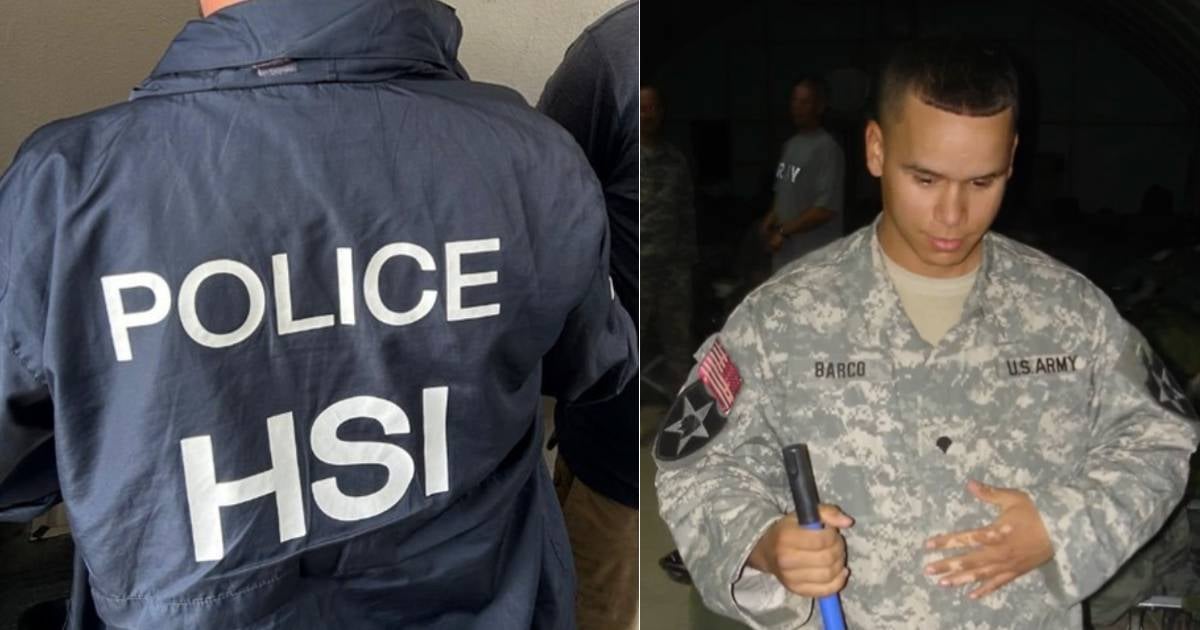
The deportation of Sergeant José Barco-Chirino, a 39-year-old Iraq war veteran awarded the Purple Heart and son of Cuban exiles, has sparked outrage and numerous questions both in Arizona and nationwide.
This highly publicized case highlights the flaws within the immigration system that ultimately expelled a man who once fought for the country. It raises the pressing question: How did the United States come to deport someone it had honored as a hero in the dead of night?
Information from Telemundo Arizona and Conecta Arizona, along with accounts from veterans and activists, piece together how this former soldier became ensnared in what his lawyers describe as an "inhumane" process.
A Journey from Exile to Combat and Back
José Barco arrived in the U.S. at just four years old after his family legally immigrated from Venezuela, having previously fled Cuba due to his father's status as a political prisoner. Barco grew up in the U.S., pursued his education, and enlisted in the military at 17.
During two deployments to Iraq, he bravely rescued fellow soldiers trapped under a burning Humvee, an act that left him with severe burns and a traumatic brain injury. For his valor, he received the Purple Heart, a prestigious military award given to those wounded or killed in action against enemy forces.
However, when Barco attempted to apply for citizenship in 2006 while stationed in a war zone, his paperwork was lost. According to veteran Ricardo Reyes of Vets Forward, even a letter from Barco's commander confirming the submission of his forms could not resolve the issue as ICE claimed they were misplaced. Years later, his efforts to regularize his status failed again.
Struggles After Service: From Combat to Prison
After returning from combat, Barco's life unraveled. He suffered from insomnia, post-traumatic stress episodes, nightmares, and untreated emotional distress, culminating in a tragic 2008 incident where he fired a gun during an altercation, injuring a pregnant woman. Convicted of attempted murder, he served 15 years in prison.
Upon his release on January 21, 2025, ICE was already waiting.
The Immigration Limbo: A Veteran's Fight Against Deportation
Barco's lawyers assert that he was caught in a migratory limbo that led to his deportation. Telemundo Arizona reported that he ceased fighting his immigration case due to the deep frustration of enduring inhumane detention conditions. He told his legal team that he would rather "return to war than continue facing the immigration system."
Initially, ICE attempted to deport him to Venezuela, but the country refused, questioning the authenticity of his birth certificate and claiming he "didn't sound Venezuelan."
His family feared that his Cuban heritage and his father's persecution history would make Cuba an unsafe option. Despite this, ICE persisted.
Meanwhile, Barco expressed his desperation from a Texas detention center: "My service, my sacrifice, my bloodshed didn't matter. I'm essentially a man without a country," he told CNN.
Protests and Calls for Action: A Nation's Betrayal of Its Warriors
Barco's deportation led to immediate protests in Phoenix. Veterans, activists, and lawmakers gathered outside ICE facilities demanding an investigation and a halt to the deportation of former servicemembers.
"It's a blow to all veterans when even one is deported. When the nation abandons its warriors, it undermines the very values we swore to uphold," Reyes stated during a demonstration organized by Conecta Arizona. He added that Barco feared for his life and "we still don't know to which country he was sent."
Former legislator and activist Raquel Terán was direct: "A Purple Heart veteran was deported at four in the morning. This country cannot afford to betray those who gave everything for it."
Local lawmakers criticized the deterioration of the immigration system under the Trump administration, which removed protective measures for veterans. "When America needed José, he was there. Now that he needs his country, they turn their back on him. That's not justice," stated Representative César Aguilar.
After his deportation, ICE claimed he was taken to Nogales, Mexico. However, his family has no real confirmation. Activists suggest he may have been moved to another border point or even a third country. ICE officials in Arizona have refused to provide details, citing internal protocols.
Understanding the Deportation of Veterans
Why was Sergeant José Barco-Chirino deported?
Barco was deported due to complications in his immigration status, which were exacerbated by lost citizenship paperwork and his criminal conviction. His deportation highlights the flaws in the immigration system for veterans.
What was the public reaction to Barco's deportation?
The deportation sparked protests and outcry from veterans, activists, and lawmakers, who demanded investigations and reforms to prevent similar cases in the future.
How did Barco's military service impact his case?
Despite his decorated military service and being awarded the Purple Heart, Barco's case was complicated by administrative and legal hurdles, ultimately leading to his deportation.