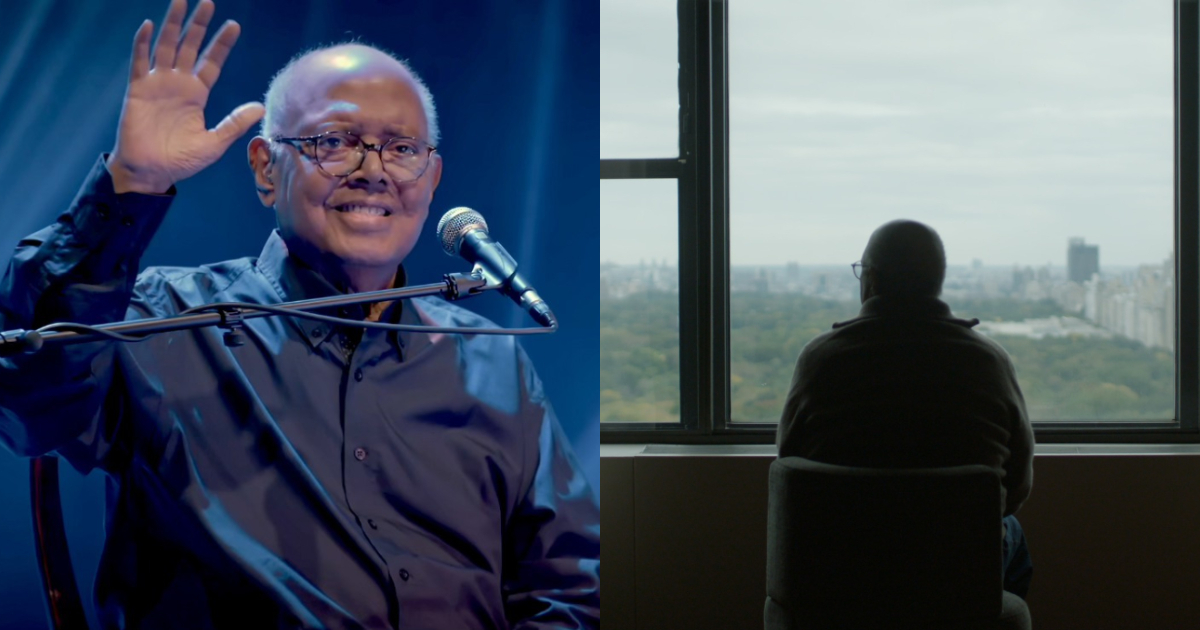
Filmmaker Fabien Pisani has raised concerns over the exclusion of his documentary "Para Vivir," which centers on the life of Pablo Milanés (1943-2022), from the upcoming International Festival of New Latin American Cinema in December. Despite its international acclaim, Pisani attributes the festival's decision to the ongoing cultural censorship in Cuba.
In a Facebook post, Pisani shared that his excitement over the selection of another of his works, "En la Caliente. Cuentos de un Guerrero del Reguetón," was overshadowed by the festival's prolonged silence on "Para Vivir," which was eventually rejected.
He noted that the documentary had already been featured in notable festivals such as Sheffield, Mar del Plata, Morelia, and DOC NYC, suggesting that the decision was not purely based on curatorial standards.
Challenges in Cuban Independent Cinema
Pisani expressed a desire for the documentary to reconnect the Cuban audience with Milanés, whom he regards as a father figure since the age of two. He questioned whether Milanés' legacy was too controversial for Havana's film scene, hinting at bureaucratic interference.
The filmmaker highlighted Cuba's history of suppressing independent cinema and the authorities' previous attempts to hinder Milanés' last concert on the island, months before his death.
Disappointed by the missed opportunity to honor one of Cuba's most beloved figures, Pisani remains committed to creating and sharing challenging stories, even if they can't currently be screened in Havana.
Continued Struggle for Artistic Freedom
Born in Havana, Pisani has spent nearly two decades promoting and producing cultural projects across music, film, and television. He founded the Musicabana Festival and is a key figure in fostering creative economies in Cuba, with notable works like "7 días en La Habana" (2012).
This latest incident adds to the ongoing saga of institutional censorship within Cuban cinema. In mid-October, Cuban director and screenwriter Enrique “Kiki” Álvarez reported that the Cuban Institute of Cinematographic Art and Industry (Icaic) abruptly ended his employment, along with colleague Esteban Insausti, fabricating a "voluntary resignation" without prior notice.
Álvarez, known for films such as "La Ola" (1995), "Jirafas" (2014), and "Venecia" (2016), disclosed on Facebook that their contracts were terminated effective August 1, 2025, without explanation.
At the end of 2024, the Assembly of Cuban Filmmakers (ACC) issued a call to defend creative freedom, condemning the persistent censorship impacting Cuban cinema. The ACC criticized the entrenched censors for the damage inflicted on the island's film structures.
Institutional Violence and Artistic Suppression
The ACC highlighted a recent act of institutional aggression against young filmmaker Orlando Mora, whose film "Matar a un Hombre" was censored at the previous Havana Film Festival.
Additionally, in January, Havana's Provincial Court dismissed filmmaker Juan Pin Vilar's lawsuit against the Educational Channel for unauthorized screening of his documentary "La Habana de Fito."
In April, the Buenos Aires International Festival of Independent Cinema (BAFICI) awarded the Special Jury Prize in the Avant-Garde and Genre competition to "Crónicas del Absurdo" (2024), by Cuban filmmaker Miguel Coyula. The 77-minute documentary, shot with hidden cameras, exposes the state control and harassment faced by independent artists in Cuba.
Moreover, a planned tribute by Teatro El Público and the Cuban Art Factory (FAC) on October 19 to celebrate the centenary of Celia Cruz (1925-2003) was abruptly canceled by the National Center for Popular Music.
Understanding Cuban Cinema Censorship
What was the documentary "Para Vivir" about?
"Para Vivir" is a documentary by Fabien Pisani focused on the life and legacy of the Cuban musician Pablo Milanés.
Why was the documentary excluded from the Havana Film Festival?
Fabien Pisani attributes the exclusion to cultural censorship, suggesting that bureaucratic interference prevented its screening.
What is the Assembly of Cuban Filmmakers (ACC) calling for?
The ACC is advocating for the defense of creative freedom and has condemned the ongoing censorship affecting Cuban cinema.